
2026-09-24
Vol.31
27th Chief Priest of Yamana Hachimangu Shrine, Member of the Gunma Prefectural Assembly
Shunichiro Takai(part 2)
-
The Essence of Tradition, and Design with Underlying Logic
-
The Bond between Mother and Child, and the Sense of Mushi
-
Toward the “Era of the Heart”
-
Building a Framework of Mutual Aid
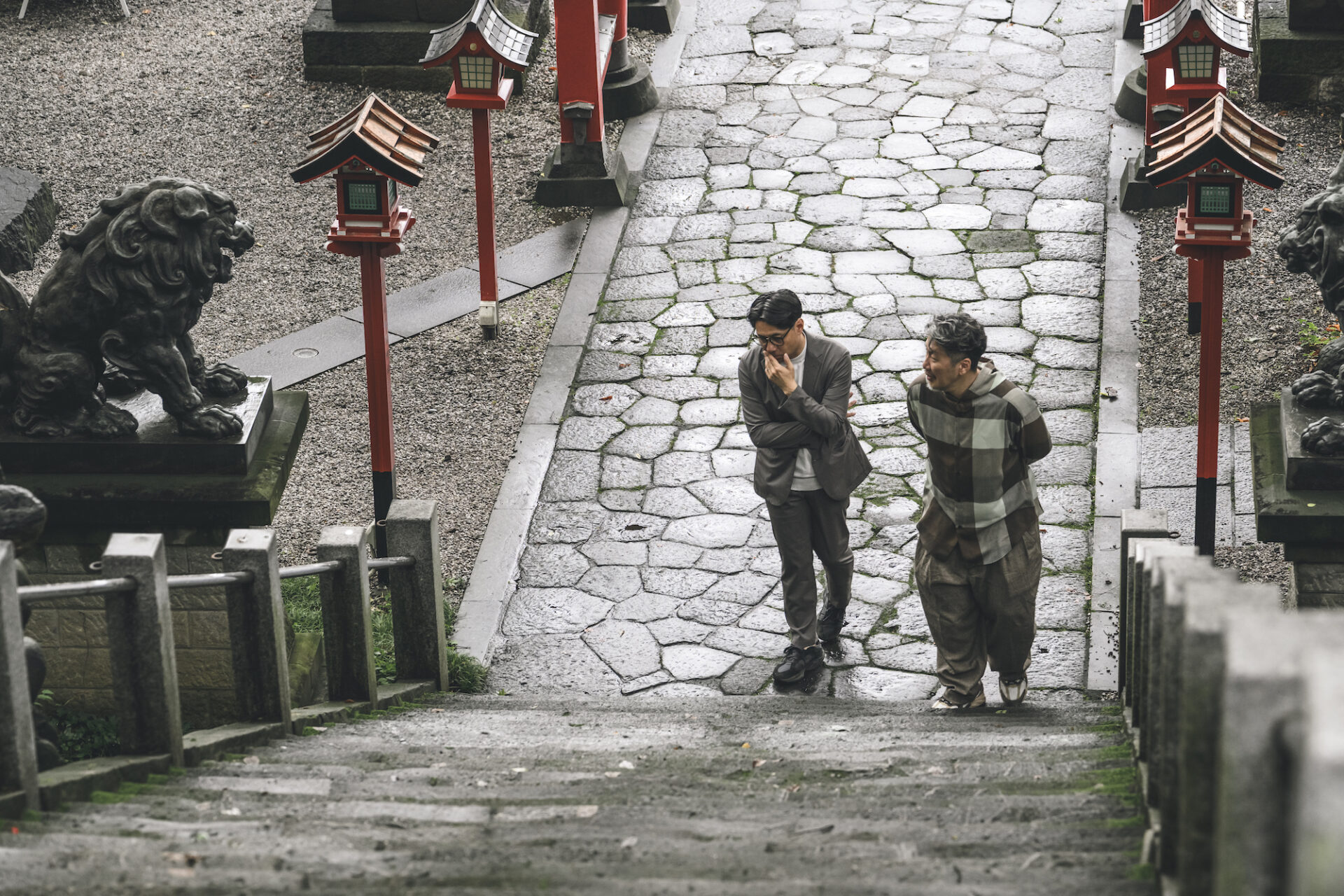
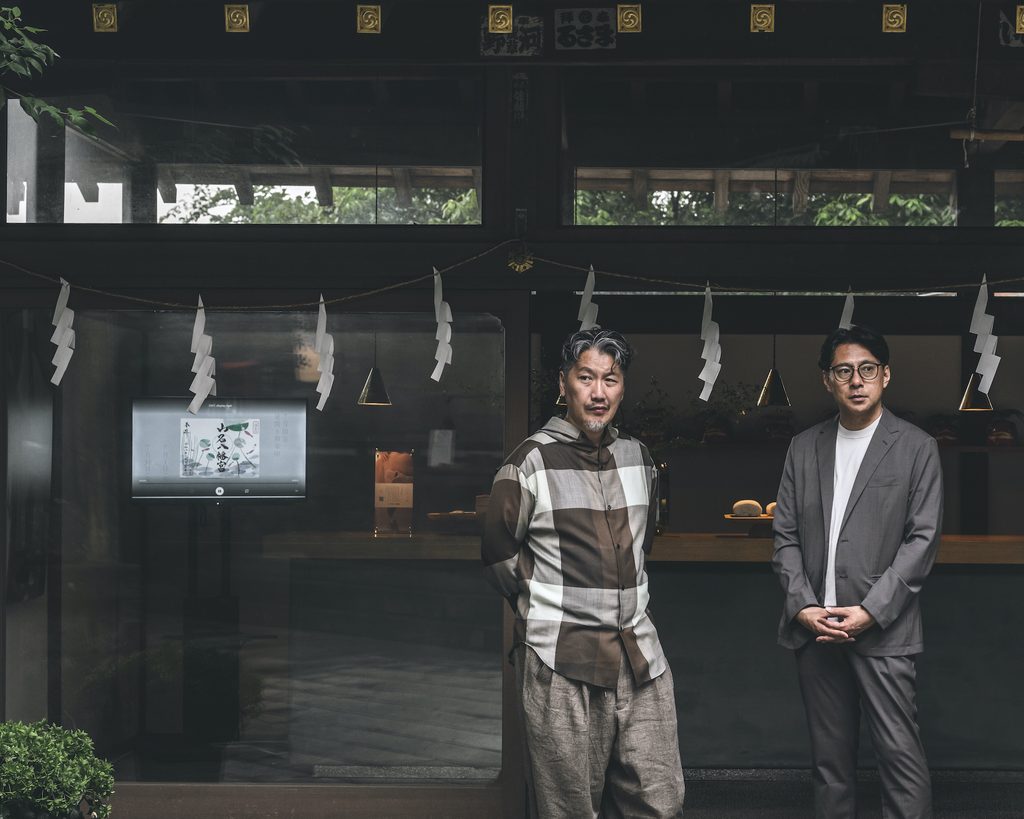
“If you only preserve tradition as it is, it will eventually decay.” So says Shunichiro Takai, the 27th chief priest of Yamana Hachimangu Shrine, a shrine with an 851-year history. Breaking free from conventional shrine practices, Takai has revitalized the place by bringing a bakery and a cafe onto its grounds. Across the table is Masakazu Shigeta, founder of the cosmetics brand OSAJI, who this spring opened a new store in Kyoto inside a building that had housed a sake brewery for 245 years — another example of his ongoing efforts to balance preserving history with keeping economic value circulating.
What began with a familiar question about protecting children from UV exposure has grown, through steady efforts to address local issues such as childcare support and community development, into creative work at the intersection of ancient notions of instinct and intuition, and the genetic phenomenon called microchimerism.
Sharing the belief that “we must keep changing in order to preserve what should not change,” how will these two pass the baton of tradition on to the next generation? Through a conversation exploring the essence of history, design, and the human spirit, the two discuss what transformation and preservation can truly mean in contemporary society.
(Click Here for the First Part of the Interview)
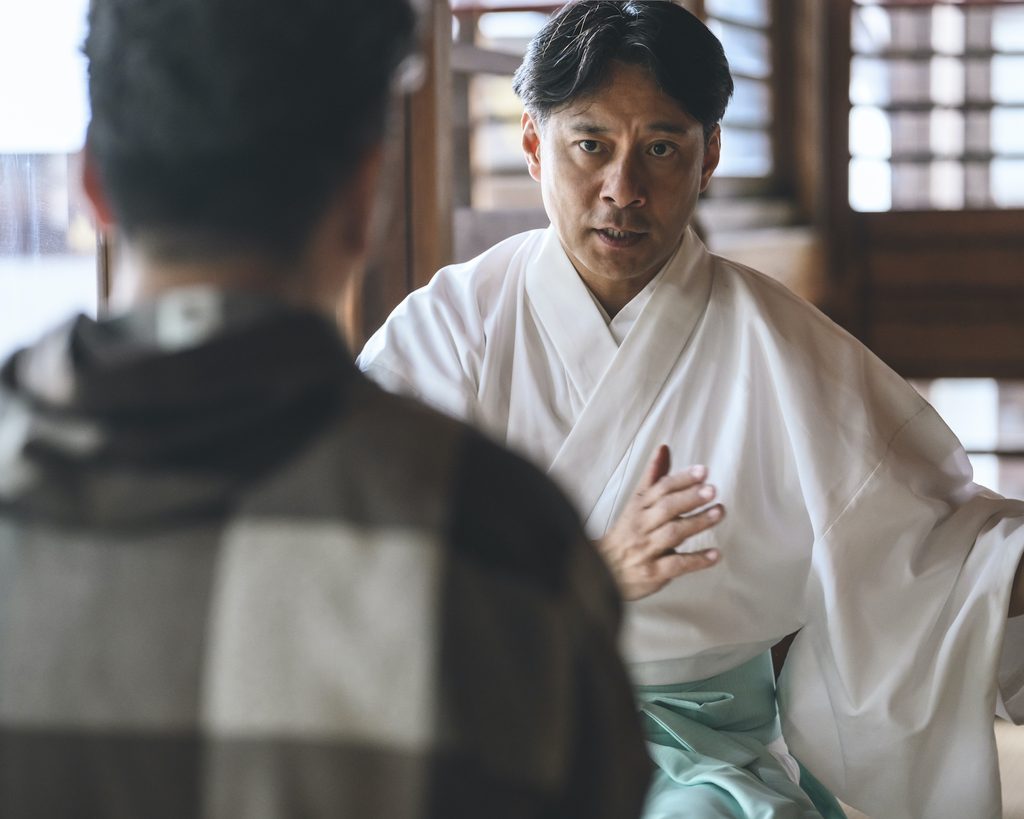
“An economy that secures sustainability is important. However, the basis is not money, but ‘the needs of visitors.’” (Takai)
——Mr. Takai, who carries a shrine with an 851-year history, and Mr. Shigeta, who has taken over a former sake brewery in Kyoto that had been in operation for 245 years and opened a new OSAJI store there. To each of you, we’d like to ask what you think about “preserving history.”
Masakazu Shigeta: Having had the opportunity to take over a traditional place in Kyoto, I’ve come to feel I truly understand the weight of “preserving something with a long history.” Taking on an unimaginable 851-year history and passing it on to future generations is a really difficult task, I thought. Taking on history itself may not be so difficult, but we cannot pass it on to the future if we simply maintain and preserve its form from the past.
——You’re saying that it would be a mere “preservation.”
Shigeta: Exactly. If we simply preserve it, anything with physical form will inevitably decay and disappear. Without new ideas, preservation alone will never carry it forward for the next 100 or 200 years.
A temple called Taizo-in in Kyoto once launched a project in which the vice abbot had young contemporary artists create new fusuma paintings. While most temples in Kyoto spend tremendous energy preserving their cultural assets, Taizo-in had a different idea: “If we focus only on preservation, history will not continue.” That’s why they had young talents create new paintings. This decision was really sensational to me.
That said, to be blunt, passing history on to the future absolutely requires us to create an “economy” in that place — this is something I’ve come to feel strongly about these days. The people working there need to be able to make a living, and economic activity is what keeps the place maintained. Preservation that depends solely on subsidies will collapse once its supporters disappear. I’ve come to think once again that creating a sustainable economic framework is at the heart of what it means to pass something on.
Shunichiro Takai: I can’t agree more with Mr. Shigeta. The same is true for shrines — an economy that secures sustainability is quite important. However, the basis is not money, but “the needs of visitors.” We need to show people a reason and a sense of purpose to visit in a way that responds to the times. Otherwise, people stop visiting shrines.
Potato chips are often called a “taste that never changes,” but in reality, food companies slightly adjust ingredient portions every year based on changing times and needs. Preserving history is the same. My answer to the question “What is conservative?” is that “we must keep changing in order to preserve what should not change.” There is no tradition in history that has survived without change — traditions have survived because people have changed what needed to change with the times while preserving their essential principles and values. The store in Kyoto that Mr. Shigeta has opened is one of the best examples of that.
——Mr. Takai, what’s your thought on the role of design in making shrines respond to the modern era? In a previous dialogue with Mr. Shigeta, you said: “There has to be kotowari — an underlying logic — in good design.”
Takai: Speaking of design in a broader sense — I mean, including social design and framework design — I believe more than 90% of shrine revitalization depends on design. If you simply see design as “stylish appearance” or “superficial appeal,” and change it simply because it looks like it could make money, you will inevitably fail. To make that change, you need that underlying logic — in other words, a clear reason and meaning that answers the question, “Why this design?”
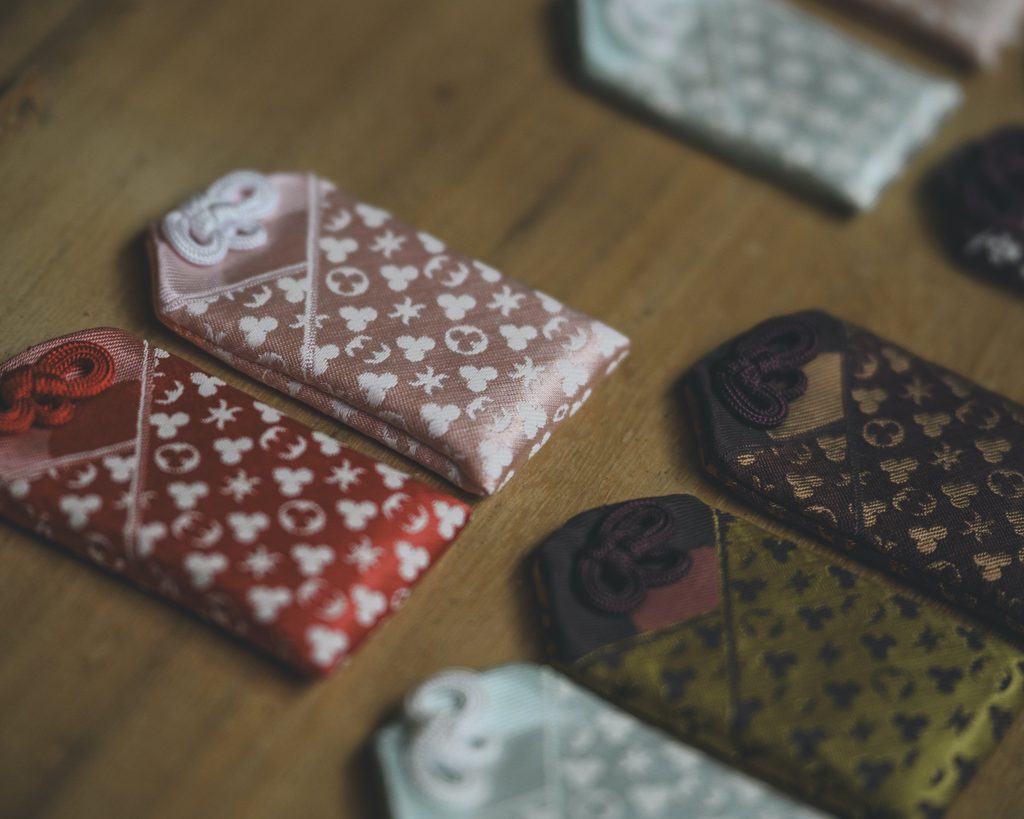
As an example, let me tell you the story of when I changed the design of the charm. At Yamana Hachimangu Shrine, there has long been a unique tradition known as “Futamata Daikon Shinko,” centered on prayers for safe childbirth and child-rearing. However, the charms featured nothing more than an ordinary dog design you could find anywhere, with the words “Yamana Hachimangu Shrine” written on them. I found that deeply unsettling. So, I asked Mr. Yu Yamada, a buyer involved in creating new shops, to collaborate with me. We incorporated the unique history and the meaning of “Futamata Daikon” into a modern design, creating something that shrine staff could explain clearly to visitors. I think communicating this “underlying logic” is what design is truly about.
The same is also true for the bakery, Piccolino. I didn’t create it just because I wanted to have a stylish bakery. This area has excellent water sources and terrain that help produce delicious wheat and rice. But once those products are delivered to the agricultural cooperative, it becomes difficult to tell where they came from. Thinking about how to circulate the local ingredients and provide safe, healthy food to families raising children, I came up with the idea that “we need a natural yeast bakery.” From the perspective of “underlying logic,” the reasoning may be a bit weaker than in the case of the charm, but there’s no doubt that I created the place with the intention of breaking free from conventional thinking and creating new needs.
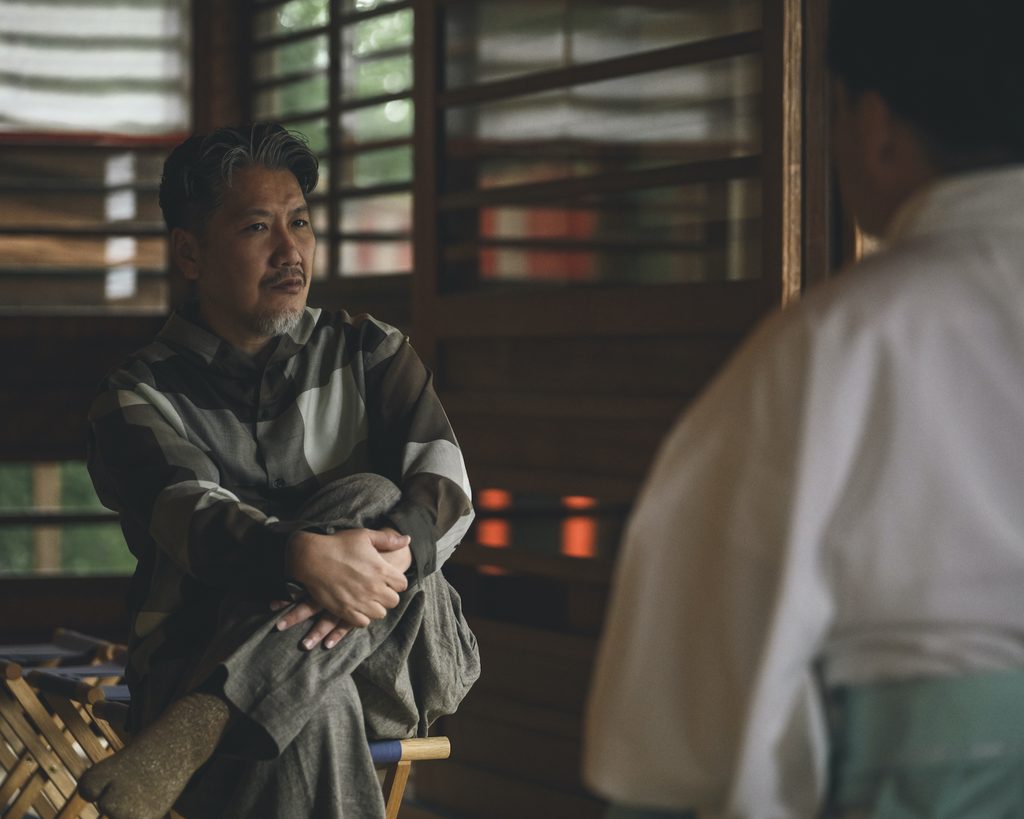
“Mother’s sense of feeling that something is wrong with her child, even when they are far apart, may be a phenomenon in which fragments of the mother’s and child’s cells and DNA resonate with each other at the quantum-mechanical level.” (Shigeta)
——Could you please tell us the story of developing the bar soap TSUNAGU* that you released last year as a collaboration?
Shigeta: Near Yamana Hachimangu Shrine, there is the Yamanoue Stele, one of the Three Stelae of Kozuke inscribed on UNESCO’s Memory of the World Register, as well as one of the oldest stone monuments in Japan. If you read the inscription, you can see that it is a “monument for a mother,” erected by a monk out of gratitude for, and in memory of, his deceased mother.
Takai: Actually, I had been talking about the monument for 10 years. I think the fact that one of Japan’s oldest monuments is for a mother is a really essential and beautiful story. However, no one visits it even after it was inscribed. (laughs) So, I wanted to rebrand its story in a modern context and tell it as a “sacred site for thinking of one’s mother.”
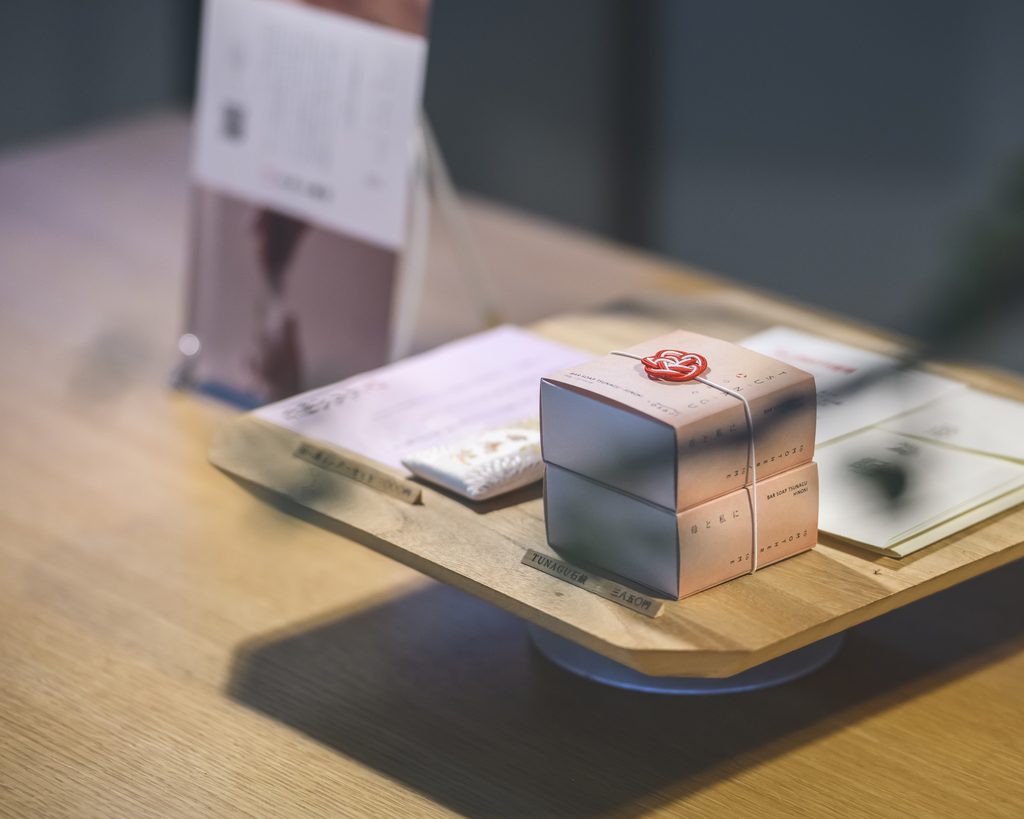
Shigeta: For me, the starting point of the business was developing cosmetics for my mother, who had been struggling with a severe skin disease. I felt a deep connection with the theme of “thinking of one’s mother,” and we started creating a product for Mother’s Day last year. That’s when we started talking about “mushi,” which Mr. Takai and I had often discussed before.
——Mushi?
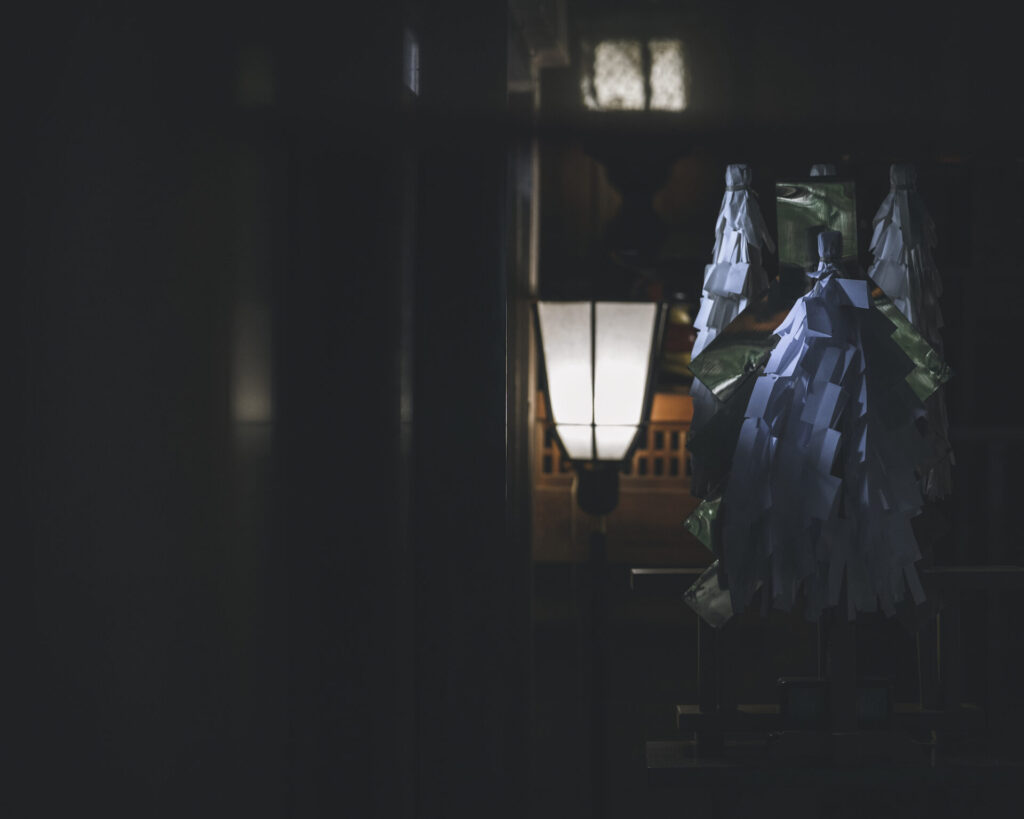
Takai: Yamana Hachimangu Shrine has long been known as a shrine dedicated to Mushifuuji no Kami — a deity believed to ward off the mushi (literally meaning “worms” or “bugs,” referring not to actual insects but to imaginary creatures believed to dwell within the body and cause various ailments). For many years, the shrine has offered prayers to ward off the “kan no mushi” — the “worm of infant nerves,” believed to cause babies to cry and become agitated — and to calm “naki mushi,” or crybaby children. The “charm for children,” whose design is the only one that has remained unchanged over the years, is actually a charm to ward off these mushi.
Shigeta: In Japanese expressions, there are phrases such as “the mushi in my belly won’t settle down (I can’t calm down)” and “news from mushi (an inexplicable instinct, most often that something bad is about to happen).” Mr. Takai and I discussed what this “mushi” truly means. What I highlighted was a concept called “microchimerism,” which is studied in the fields of medicine and genetics.
In the past, it was thought that each human body was made up of a single DNA completely independent of others. However, recent research has shown that, through pregnancy and childbirth, some of the mother’s cells and DNA remain in the child’s body for a long time, while, conversely, some of the child’s cells remain in the mother’s body. This has not been scientifically proven, but I think a mother’s sense of feeling that something is wrong with her child, even when they are far apart, may be a phenomenon in which fragments of the mother’s and child’s cells and DNA resonate with each other at the quantum-mechanical level.
Thinking about it that way, the bodily sensations associated with mushi that people have experienced since ancient times may not be unscientific or occult as they might seem, but rather a sharp, innate human sense. So, rather than the conventional gift in which a child gives a one-way present to their mother on Mother’s Day, we wondered if we could create a new form of gift in which mothers and children share the same products and use them together, allowing them to feel connected. That’s how we came up with TSUNAGU.
Takai: It became a wonderful product that blends the shrine’s tradition of safe childbirth and child-rearing, the Yamanoue Stele’s story of “thinking of mother,” and Mr. Shigeta’s philosophical idea of microchimerism. It’s a slow, steady effort, but by continuing to share these stories for several decades to come, I hope that one day we can create a walking route from here to the Yamanoue Stele where people can walk while thinking of their mothers.
“The sensibility that Nordic people, who consistently rank at the top of the world happiness rankings, have arrived at completely aligns with the belief in Yaoyorozu no Kami in Japan” (Shigeta)
——As technology rapidly advances, what role do you think shrines should play, and what needs do you think they will be expected to meet in the future?
Takai: I definitely believe that we’ll enter the “era of the heart.” As digital technologies such as AI, smartphones, and PCs have rapidly advanced, people today are spending more time engaging with things other than human beings. As a result, I feel that more and more people are unconsciously losing their mental balance. I feel that those who work in the IT industry and other cutting-edge fields, in particular, are experiencing increasing mental exhaustion and seeking peace of mind.
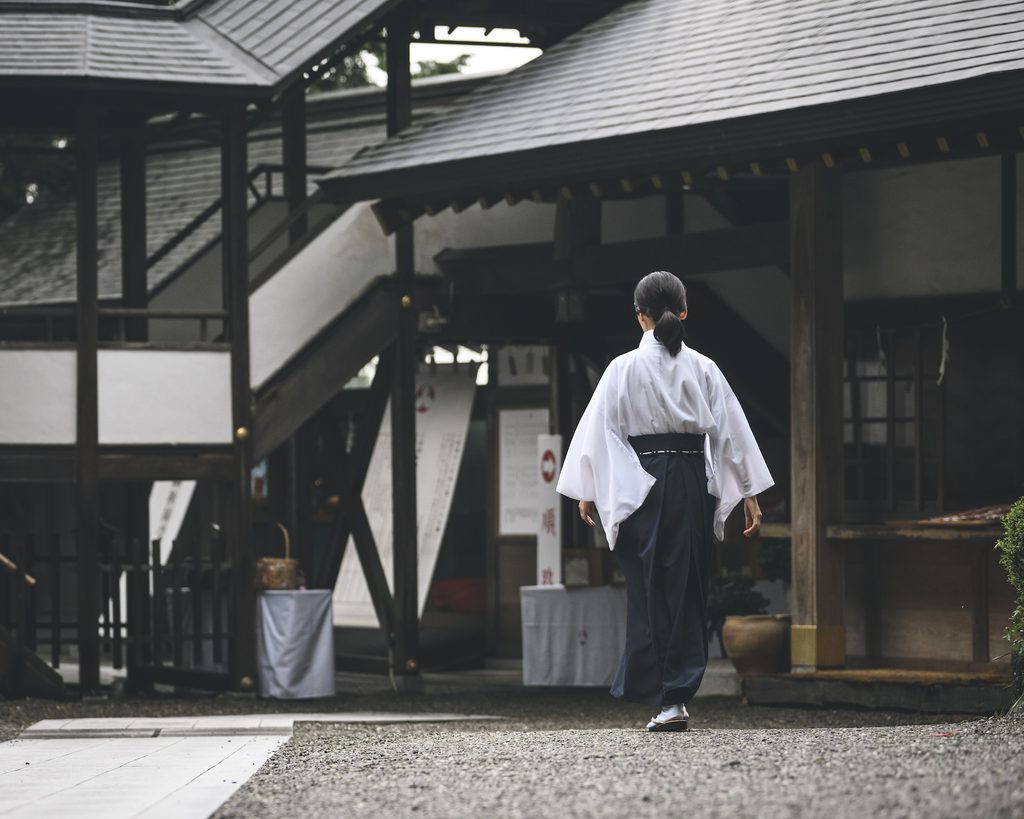
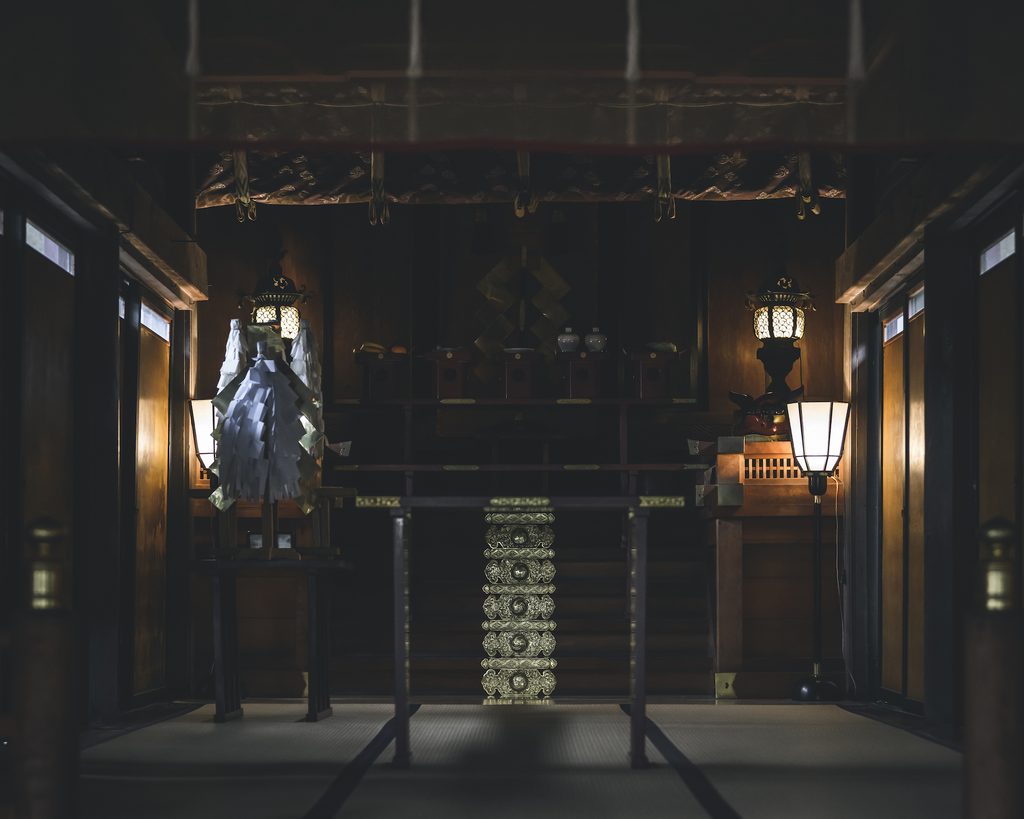
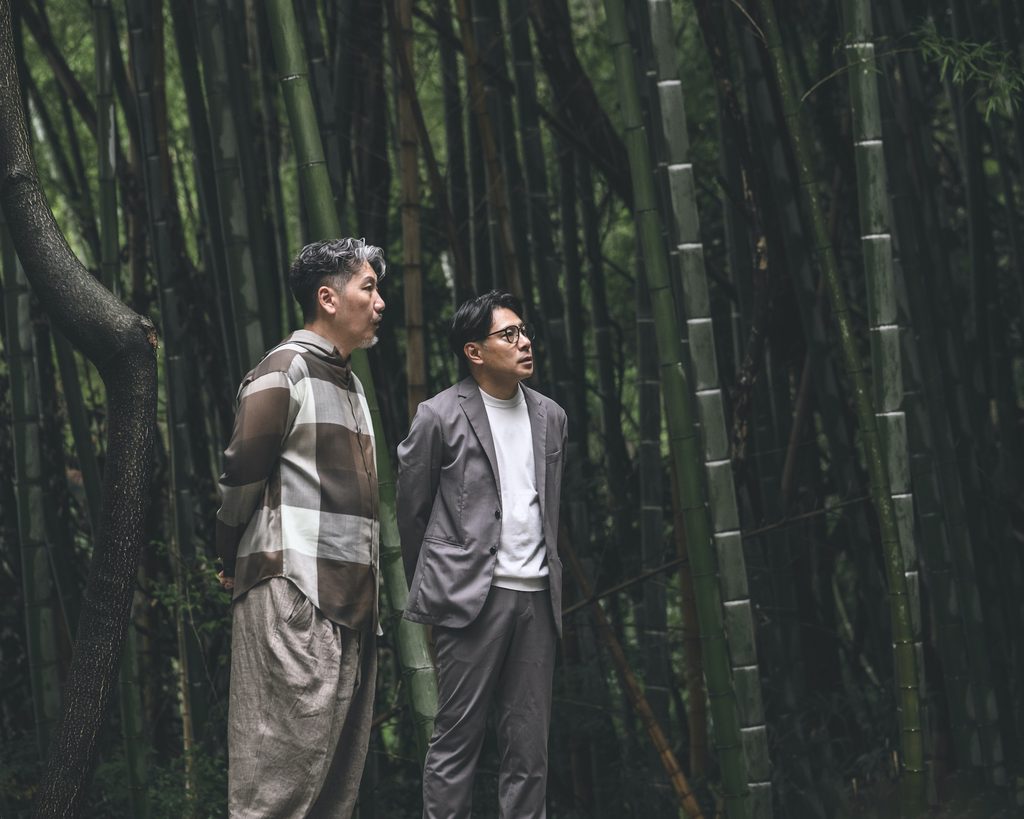
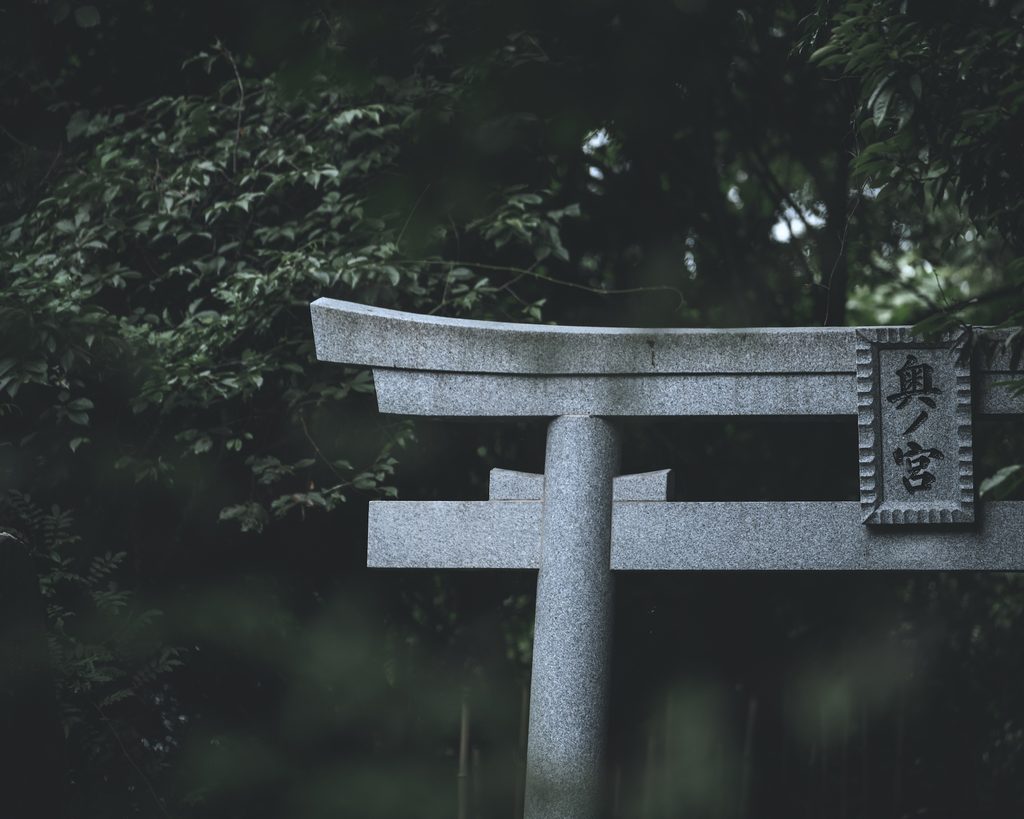
So, what essential role should shrines play in this era? It is a place where you can set your smartphone aside, put your hands together in a quiet forest, and engage in dialogue with yourself through the presence of the deity. The bamboo forest at the back of the shrine grounds and Okunomiya — a space we recently created — are specifically designed for self-reflection and meditation. For people living in the modern era, it is increasingly important to have places where one can step back from daily noise, face oneself, and return to daily life with peace of mind.
——Can’t it be replaced by digital space such as online platforms or the metaverse?
Takai: Absolutely. It has to be a “real, living space.” Japanese religious belief arose from simple, instinctive sensitivity to the overwhelming presence of nature — things such as “bubbling up spring,” “meteorite falling from the sky,” and “dense forest.” Religion is what the geniuses of each era have edited and systematized from those wild, instinctive sensations. Rather than watching it through a screen at home, you walk into the forest on the shrine grounds on your own feet, feel the air on your skin, put your smartphone aside and close your eyes. Our senses and sixth sense can only be sharpened through experiences like that. I believe creating such places is a role shrines must play and a need they need to fulfill in the next era.
Shigeta: I strongly agree with what Mr. Takai just said. The other day, I visited Copenhagen and Stockholm, and also had a chance to talk with people at the Finnish Embassy. These days, a style called “Japandi,” which blends Nordic design and Japanese aesthetics, is attracting attention worldwide. I believe the underlying idea behind both is the value embedded in Yaoyorozu no Kami — the belief that divinity resides in all things.
Both find divinity and beauty in things as they are in nature, without adding unnecessary decoration, and respect them in their natural state. I heard Finnish people say, “We were not originally Christian, and we have long respected nature itself. So, religion in a strict sense is not always necessary.” When I think about how the sensibility that Nordic people, who consistently rank at the top of the world happiness rankings, have arrived at completely aligns with the belief in Yaoyorozu no Kami in Japan, I feel that shrines may come to be reevaluated around the world as places where people can recover their innate sixth sense and their capacity for engaging in dialogue with nature.
Takai: In the end, I think the idea of Yaoyorozu no Kami, which respects nature itself, comes most naturally to human beings. With a form of worship centered on a single absolute deity, as in monotheism, distortions can arise as the times change, and conflicts can emerge from differences in values and ethnicity.
Shigeta: I think the same way. Thinking about it that way, the sense we’ve been discussing around “mushi” is exactly this sixth sense — this dialogue with nature.
“If we rely entirely on public support from the government, people may lose their strong will to stand on their own feet, as well as the warm, supportive power of local communities.” (Takai)
——To close this conversation, we’d like to ask what society should look like in the future. Mr. Takai, you earlier said that “the people around me come together and help me because I’m not perfect.” Do you think a society in which this can happen naturally for everyone will come?
Takai: Speaking of how society should be, I often think in terms of the framework of self-help, mutual aid, and public support. What’s important is that, first of all, everyone has a sense of self-help — the will to stand on their own feet and live in their own way. And, more importantly, there is everyday mutual aid, where people in their communities naturally help each other.
In the past, when you were drunk and sleeping on the Shinkansen, you might ask the person sitting next to you, “Could you please wake me up if I’m still asleep when we get to Takasaki station?” There used to be these ordinary exchanges between strangers. I feel that a society where such “one-word conversations” and “small acts of kindness” are welcomed would naturally help resolve the difficulties people face in their daily lives and the issues associated with them. If we rely entirely on public support from the government for everything, people may lose their strong will to stand on their own feet, as well as the warm, supportive power of local communities.
——So, this spirit of mutual aid is the safety net that allows us, as imperfect beings, to live our lives.
Takai: Exactly. People are imperfect beings with many shortcomings. That’s exactly why it’s so important to have places and frameworks where people can naturally help each other within communities. I once heard a story of a mother who felt lonely and cried as she struggled with her first experience of raising a child, and that’s exactly why I made Mico Cafe on the shrine grounds as a space where people could connect with one another. My mission is to carry Yamana Hachimangu Shrine into the future as a living place where imperfect human beings can find peace of mind and help one another. That’s the mission I’ve devoted my life to.
Shigeta: From Yaoyorozu no Kami to the role of shrines in the “era of the heart,” everything you told me really resonated with me. Thank you so much for today.
*TSUNAGU
A cypress-scented bar soap created in collaboration between Yamana Hachimangu Shrine and OSAJI, launched in April 2025. Inspired by the story of the Yamanoue Stele, a UNESCO Memory of the World site located near the shrine, the product draws on the story of the stele as a “monument for a mother,” erected by a monk to express gratitude for, and in memory of, his mother. It presents the genetic concept of microchimerism — the idea that some of a mother’s and child’s cells and DNA can remain in each other’s bodies — as a contemporary interpretation. To give form to the feelings of mutual care between mother and child, TSUNAGU comes as a set of two soaps that can be shared and given to each other. The product is currently available at the shrine’s gift shop and online.
Profile
-
Shunichiro Takai
Born in Takasaki, Gunma Prefecture, in 1975, Takai graduated with a degree in Shinto Studies from the Faculty of Letters at Kokugakuin University and spent time overseas before joining the service at Yamana Hachimangu Shrine in 2002. In 2012, he became the shrine’s 27th chief priest. Guided by his belief in “making shrines hubs of local communities,” he has led a sustainable revitalization of the shrine through unconventional approaches, such as bringing a bakery, cafe, and unlicensed childcare facility to the shrine grounds. While expanding his knowledge of management and business by earning a master’s degree in public management from the Graduate School of Political Science at Waseda University and studying at Globis, he served on the Takasaki City Council and was first elected to the Gunma Prefectural Assembly in 2019, where he is now serving his second term. Bringing together the different perspectives of a shrine priest and a politician, he takes a multifaceted approach to preserving history and addressing local issues.
-
Masakazu Shigeta
Shigeta began his career in a technical role in the music industry before becoming a cosmetics developer in 2001. Beginning in 2004, he led the development of various cosmetics brands within the healthcare division of Nitto Denka Kogyo Co., Ltd., a metal surface treatment company founded by his great-grandfather. In 2017, he founded OSAJI, a skincare lifestyle brand, and became its brand director. In 2021, as a new store under the OSAJI brand, he launched kako, a specialty shop dedicated to home fragrance blending, and in 2022, he opened OSAJI’s first restaurant, enso. In 2023, leveraging Nitto Denka Kogyo’s technical expertise, he launched HEGE, a tableware brand, and became CEO of OSAJI Inc. in October of the same year. In 2026, as a personal project, he opened Shirakabaso, a private rental lodging facility in Sarugakyo Onsen, Gunma Prefecture, and launched OSAJI Kyoto, the brand’s global concept store in Kyoto’s Gosho Minami district. In the same year, he launched soca, a fragrance brand rooted in Japan’s unique aesthetic sensibilities. He has published books on beauty and regularly holds cooking classes and events focusing on food as the foundation of beauty.
Publications
Taberu Biyou (Eating for Beauty) (SHUFU TO SEIKATSU SHA, 2024)
42-Sai ni Nattara Yameru Biyou, Hajimeru Biyou (Beauty Routines to Quit and Start at 42) (Takarajimasha, 2022)
Information
Yamana Hachimangu Shrine
Located in Takasaki, Gunma Prefecture, Yamana Hachimangu Shrine has long been worshiped as a shrine for safe childbirth and child-rearing, and boasts a history spanning 851 years. From around 2015, it began a major renovation and revitalization project with architect Yuko Nagayama and her team. In addition to redesigning its logo, charms, and amulets, the shrine has promoted the creation of spaces that blend the weight of tradition with a contemporary perspective, including bringing a natural yeast bakery and a cafe onto its grounds. Going beyond its role as a place of prayer, the shrine has come to serve as a new community hub where local residents gather and find peace.
https://yamana8.net/
-
Photographs:Eisuke Komatsubara
-
Text:Masahiro Kamijo
NEWS LETTER
理想論 最新記事の
更新情報をお届けします
ご登録はこちら
ご登録はこちら
メールアドレス
ご登録ありがとうございます。
ご登録確認メールをお送りいたします。