
2026-08-20
Vol.30
Art Director and Designer
Tetsuya Uehara(part 1)
-
Where Is the True Ideal?
-
When Opposite Sensibilities Resonate
-
Self-Taught and Setbacks
-
After Six Years
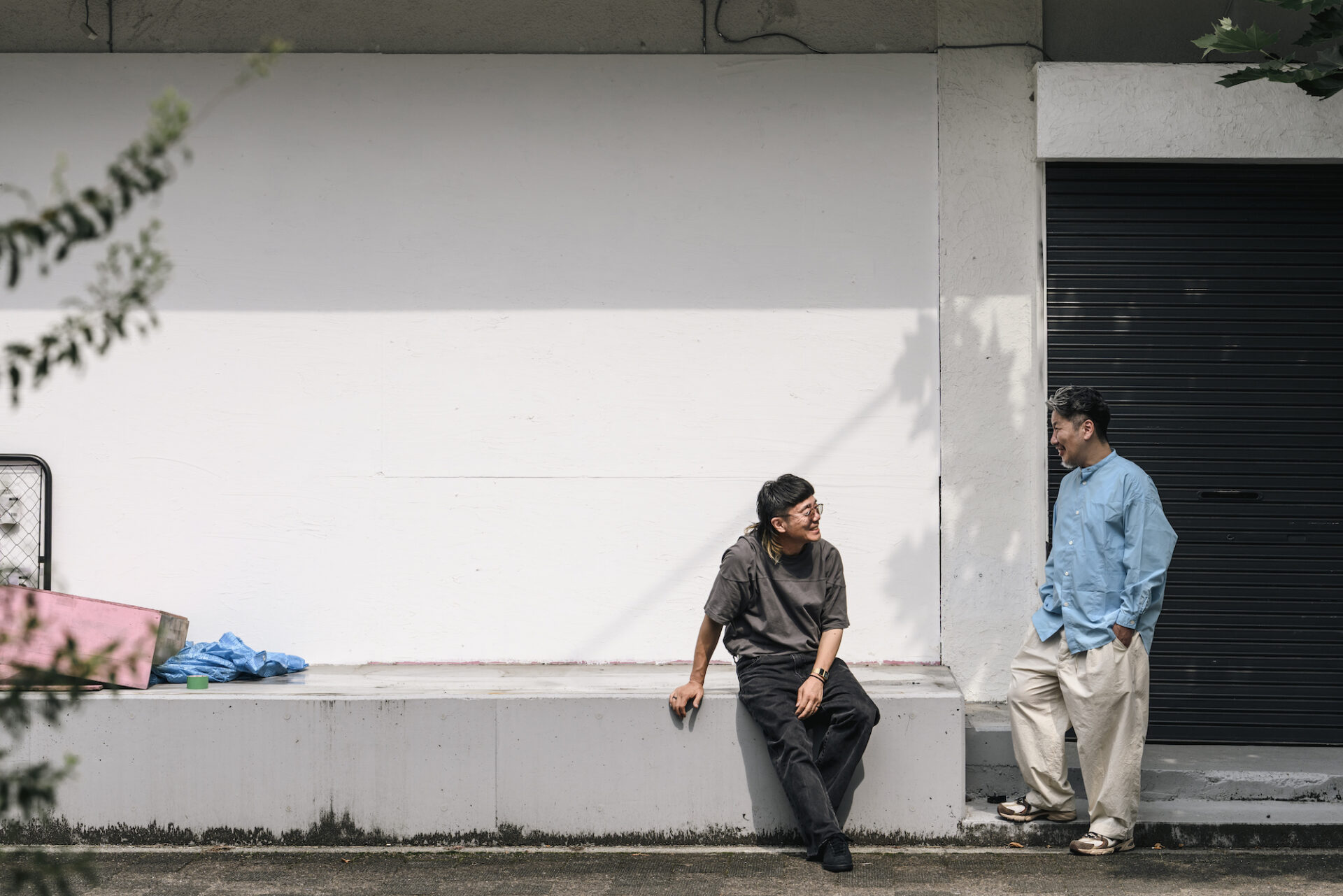
There are two guys who have made their way up from the streets, armed with nothing but their own intuition and self-taught knowledge, without formal training in design or a systematic education in business — Masakazu Shigeta, founder of the OSAJI brand, and his longtime friend and fellow designer Tetsuya Uehara.
The two first met amid Takasaki’s street culture in the 1990s. Through clashes, setbacks, and even a period of nearly six years without contact, they continued to develop their creative practices, which are now taking tangible form and reaching an ever-wider audience.
Their journey is a story of two people who, despite constantly struggling with the gap between ideals and reality, and between their passion for creativity and the demands of business and growth, never abandoned their naive dreams. We explore the truth of design and branding forged by the “self-taught bad boys” who have carved out their own path.

“What Kazu really wants to do is something beyond business in the narrow sense.” (Uehara)
——Today’s guest is Mr. Tetsuya Uehara, who has been a friend of Mr. Shigeta for thirty years.
Masakazu Shigeta: It’s a bit awkward to have an old friend here.
——Mr. Uehara, as someone who has known Mr. Shigeta since those early days, how have you viewed his activities and what he has talked about in this Idealism series?
Tetsuya Uehara: I thought, “That’s idealism,” quite literally. I’ve never told him in person, but he’s been that kind of guy since the old days. When you’re young — I was the same way myself — you want to pursue your ideals and talk about big things. But he could never quite manage to turn those ideas into reality. So I suppose that’s why he’s now putting them into words and trying to give shape to his ideas, even if a little.
——From the outside, Mr. Shigeta runs a cosmetics company, has built a successful brand, and even organizes cooking classes. It looks like he has achieved everything he set out to do.
Uehara: I don’t think Kazu has achieved what he really wants to do yet. Probably that’s something beyond business in the narrow sense. He’s always said since he was young that he wanted to be in business, and he has actually turned that ambition into reality. But I don’t think his ideals lie in mere business success.
——Today, we’d really like you to draw out the ideals that Mr. Shigeta holds deep in his heart.
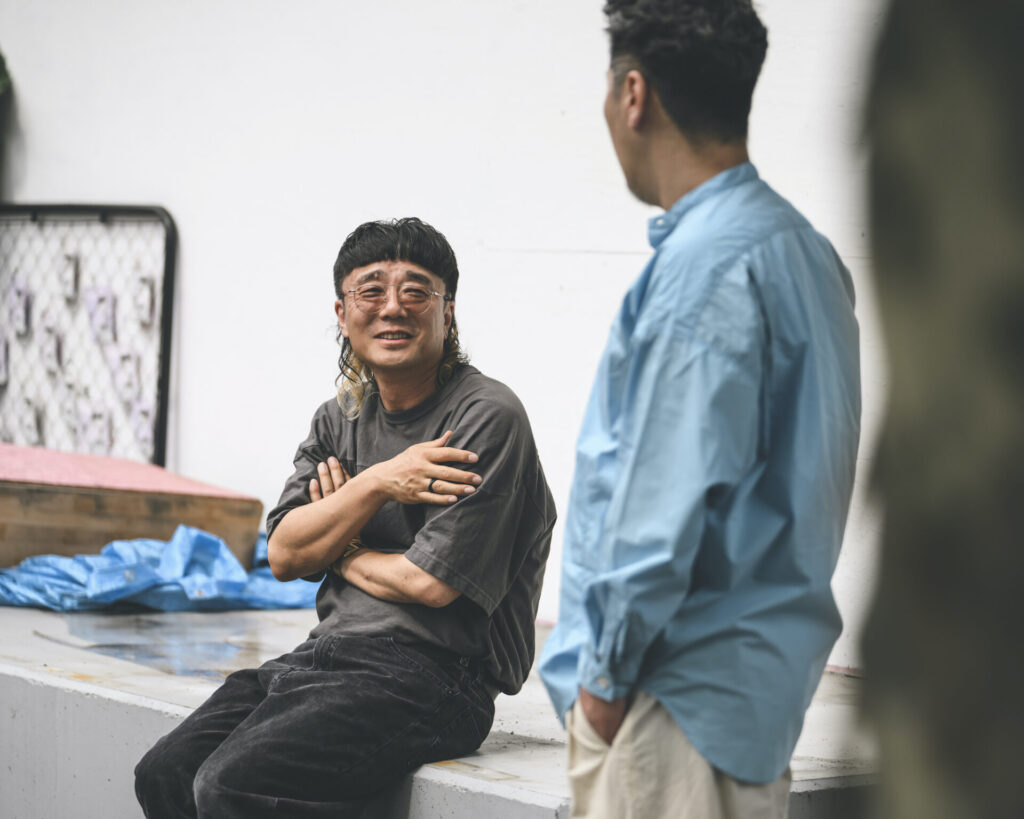
Uehara: I’m five years older than Kazu. Originally, he was kind of a friend of a friend. People I knew from a club I used to hang out at back then would talk about him, saying, “There’s this high school guy doing some unusual things.”
Shigeta: I think I met Tetsu-san around the time I graduated from high school.
Uehara: That was around the time Kazu was doing radio, right?
Shigeta: I started working as a radio DJ when I was 19, so I think it was a little earlier than that.
——I didn’t know that you used to work as a radio DJ.
Shigeta: A community FM radio station called “Radio Takasaki” had just started in our hometown, and we were given a regular slot. At first, the club I used to hang out at had one time slot, and everyone was excited about it. But over time, people gradually lost interest, and eventually I ended up doing it on my own.
At first, it was a one-hour program where I just played music, but I thought, “This isn’t much fun if I’m only playing records,” so I switched to a talk-based program that I recorded at home. Tetsu-san came on as a guest, too.
Uehara: I remember that very well — it was around the time Pink Spider by hide of X Japan came out. Did Kazu already know who I was before we actually met? I think I was fairly well known around Takasaki’s street scene at the time because I was creating T-shirts.
——So, you were designing apparel back then.
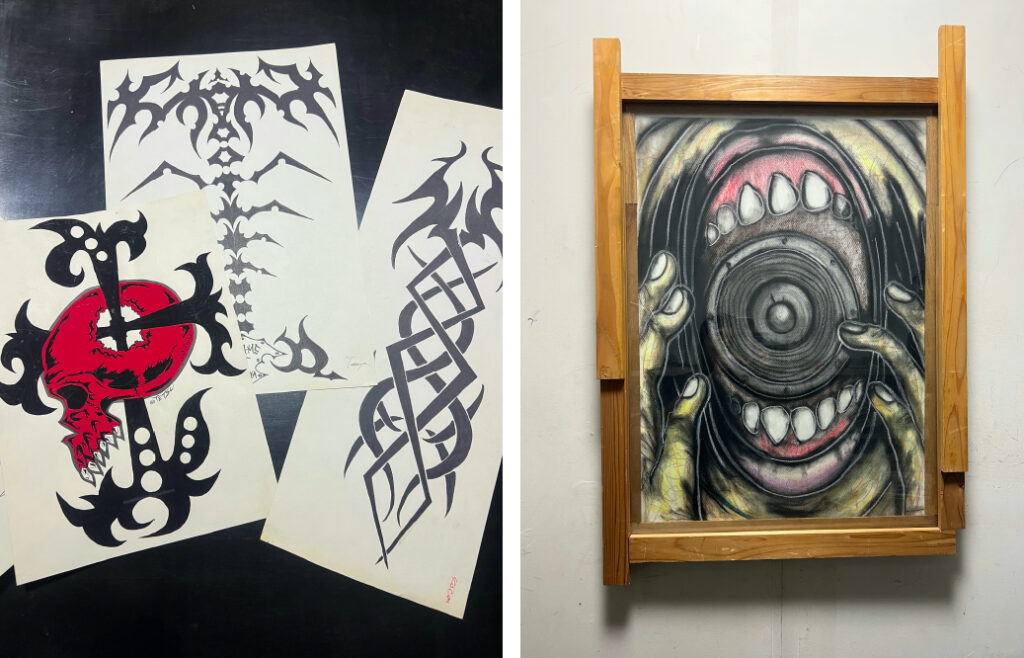
Uehara: It all started when the owner of the clothing shop I was working for asked me to design something. Everyone knew I was good at drawing, and I often drew tattoo designs while working there. So, that’s how I made T-shirts with that kind of artwork on them — and they sold really well.
Shigeta: I knew who he was because all my high school classmates were wearing T-shirts and windbreakers he had designed. Even Takuya Kimura wore them. But I am a contrarian by nature — when everyone was wearing something, I didn’t want to wear it. The more popular something became, the more I wanted to distance myself from it. That was just the kind of person I was. It wasn’t that I wanted to distance myself from what he made.
“Our tastes in music were polar opposites. Even so, I kept hanging out with him, telling myself that I had nothing to lose by staying connected with someone like him.” (Shigeta)
——What actually brought the two of you closer?
Shigeta: At that time, I was making flyers for events I organized using a pretty unusual way. I would type the text on a word processor, print it out, soak it in water, wrap it in plastic wrap, and then run it through a color copy machine. One day, when I was handing them out on the street, Tetsu-san came up to me and said, “This is pretty cool.” Later, he directed a fashion show for a select shop, and I did an improvised installation where I played saxophone. I guess it was through things like that that we gradually grew closer.
——So, you hit it off over your shared taste in music and culture.
Shigeta: No, we actually didn’t hit it off at all — in fact, it was quite the opposite. (laughs) I was playing saxophone, heavily influenced by jazz musicians like Mr. Sadao Watanabe and by acid jazz. On the other hand, Tetsu-san was all about rock and punk. One time, he brought me to a hardcore music live show in Maebashi. There was this guy holding his bass down around knee level and screaming at the top of his lungs, and I had no idea what he was singing. I remember being completely shocked by that culture. I actually wondered, “What’s so enjoyable about this kind of music?” That’s how different our musical tastes were — they were polar opposites. Even so, I told myself that I had nothing to lose by staying connected with someone who was considered such a charismatic figure, so I kept hanging out with him. (laughs)
Uehara: When I first met Kazu, I never would have guessed that his taste in music leaned toward jazz. I had him pegged as a young guy who was good at scratching and played abstract music. My musical journey started with BOØWY and BUCK-TICK, and in junior high school and high school, I was exposed to Japanese hardcore and punk.
But after a while, I found it a little uncomfortable to relate to the punk culture’s emphasis on ideology. Then, when I started working at a clothing shop, I became deeply immersed in psychobilly, grunge, Nirvana, and The Red Hot Chili Peppers. At the same time, I was also into British trip-hop artists like Massive Attack and Tricky, as well as underground club culture. I really wanted him to listen to my favorite music, like Screamadelica by Primal Scream, Aphex Twin, and Steve Reich. Even though we both felt like, “I don’t wanna know about that,” we started finding things that struck a chord with both of us, and I guess that’s how our relationship deepened.

“It was the first time we had worked creatively together toward the same goal, so we had an incredible amount of fun just making the place.” (Uehara)
——So, that’s how the two of you came to open a space in Takasaki in 1999 that combined a live venue and an apparel shop.
Shigeta: We opened it on December 31, 1999, right as the new millennium was about to begin. An architect who would later design my house told us, “I have this space I’ve been renting as a gallery, but I’m not really making use of it. I want Kazu and Tetsu to use it. You can pay me back once you make it.” That’s how we started a space called arizona forty-five degrees*.
Uehara: We were both still kids, so I think our attitude was basically, “Why don’t we just go for it?” We made the first floor an apparel shop and the second floor a live venue. We bought plywood and drywall in bulk at a home improvement center and spent a year completely renovating the place with two other friends we both knew. It was the first time any of us had worked creatively together toward the same goal, so we had an incredible amount of fun just making the place.
Shigeta: I feel like that’s where I learned how to make a living. Tetsu-san would buy cheap T-shirts somewhere, bleach them, and draw on them by hand to sell. As for me, Asian cuisine had become popular at the time, so I made and served Thai curry during the day. I also made uniforms for Asian restaurants in the neighboring areas.
Uehara: Yeah, you did things like that, too.
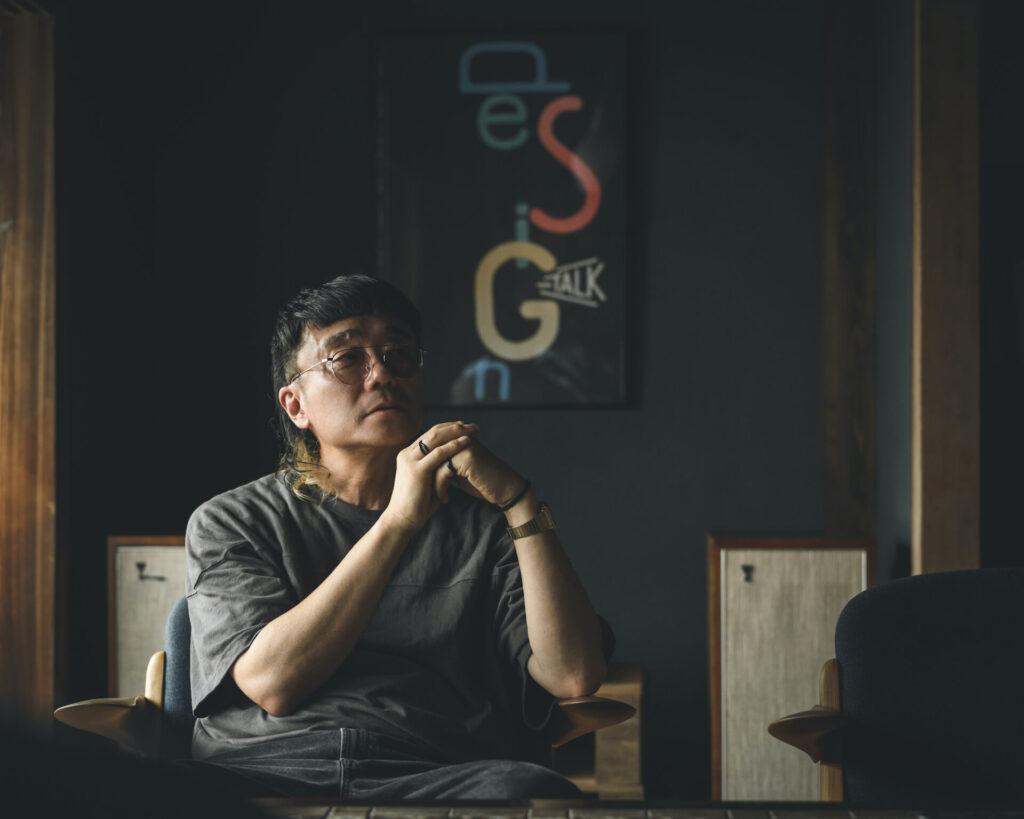
——Did the shop and live venue do well?
Shigeta: Not at all. (laughs) The clothes didn’t sell, and hardly anyone came. The only real source of income was events featuring drag queens, held every two months, which would draw a full house. We didn’t have even the slightest interest in making music that would appeal to anyone, so it was no wonder we couldn’t attract an audience. In the end, we closed the place after about a year.
Uehara: But there’s no doubt that having a Mac at arizona forty-five degrees was a decisive turning point in my life. Kazu had a Mac and knew a lot about digital things, so someone like me, who had always drawn by hand, got access to a digital tool, Illustrator, and started studying DTP and printing techniques intensively on my own. I read books like “All About DTP” so many times that I almost wore them out. (laughs) If Kazu hadn’t had a Mac, I’m 100 percent sure that I would never have ended up working as a designer.
Shigeta: I’m not saying this to be cynical, but I feel like if I hadn’t met Tetsu-san, I could have gone pretty far by conforming to what society expected of me.
Uehara: Yeah, you probably could have.
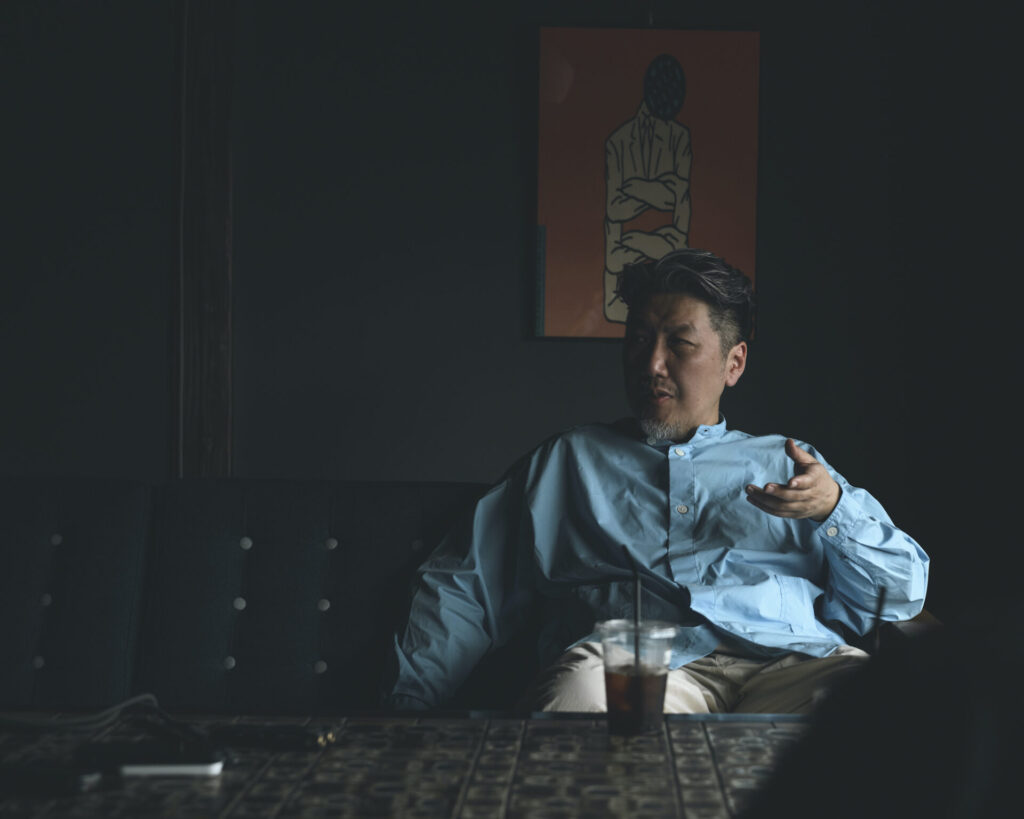
“Working with Tetsu-san, every single exchange can be really frustrating. But in the end, what he creates always goes far beyond what I imagined.” (Shigeta)
Shigeta: At heart, I’m not an “artist” but an “entertainer.” I succeeded in filling the club event I organized when I was in high school because I was sensitive to what people wanted and knew how to give it to them. But after I met Tetsu-san and was exposed to his deeply niche ideas and forms of expression, my own tastes began to diverge from what people wanted. Right after arizona forty-five degrees closed after just one year, I made a firm decision: “We can’t make a living like this. If we’re going to make it in the real world, we need to shift our mindset and start thinking about how to make money through business.”
——After those setbacks you experienced with arizona forty-five degrees, what path did the two of you take?
Shigeta: After closing arizona forty-five degrees, I started making cosmetics for my mother in our kitchen at home, and that led me to establish a company called “OS Institute,” which specialized in cosmetics planning and development. Later, I joined my family business, Nitto Denka Kogyo, where my father was president, and launched a cosmetics brand called “nesno” as a new business. Of course, I asked Tetsu-san to design its packaging.
Uehara: It was like I was helping with the cosmetics business Kazu had started from the design side, so I was completely dependent on him. A lot of things didn’t go as I expected since I didn’t know the first thing about design at the time, but I didn’t mind helping someone through my work. I’m optimistic on the one hand but also neurotic, so I would tell myself, “I might die tomorrow, so I should do what I can today.”
Shigeta: But somewhere along the way, a conflict arose between the two of us and my father. That’s when Tetsu-san told me, “Kazu, I’m really sorry. I can understand what your dad was saying from the perspective of a business owner, but I can’t live with that stance — so I’m going to quit.” I think it was around 2005, and that was when we truly went our separate ways. I had family ties to the business, and the plating side of the family business wasn’t doing well, so I couldn’t afford to sit around saying, “This is what creativity is supposed to be.” We went completely out of contact for about six years.
Uehara: During that period, I lived more or less like someone without a regular job, while doing odd jobs at a cap shop or apparel store. But after various problems piled up, I thought, “I’m done with apparel,” and walked away from everything. That was when Kazu suddenly reached out to me. He said, “I’m going to start design again, so I need your help.”

——So, it was a reunion after six years, and the restart of the project.
Shigeta: I immersed myself in the plating business for six years, and grew the company’s annual sales from ¥600 million to ¥1.2 billion. Just when I had achieved that, my father said to me, “Who told you to help with the plating business? You’re here to get the new cosmetics business on track.” I was like, “Wait, what!?” I had been thinking, “This company would have gone bankrupt without me.” But that was when I made up my mind — I declared, “There’s no room for growth if I stay in Gunma, so I’m going to take the business to Tokyo.” That’s when I pleaded with Tetsu-san, “Let’s work together again.”
Uehara: While we were out of touch, Kazu launched a cosmetics brand called “You by U,” working with a creative team from an advertising agency. Watching it from the sidelines, I honestly thought, “Why doesn’t he ask me?” But I knew the pressure he was under at the company and understood his relationship with his father, so I deliberately did nothing.
Shigeta: I got all kinds of design proposals from an external creative team for You by U, but everything they came up with was more or less what I had imagined, and very few ideas exceeded my expectations. But when I gave them detailed feedback because I wasn’t satisfied, the output would end up becoming “what I wanted to create.” But I’m not a creator, so something I make myself can have only so much appeal — the moment it was released, I lost any attachment to it. I was stunned that, despite spending so much money, this was all we could create.
——So, those bitter lessons led you to rediscover how valuable it was to work with Mr. Uehara.
Shigeta: When I work with Tetsu-san, even when I say “I want it to be like this,” he’ll say, “That’s not how it should be,” and every single exchange can be really frustrating. But in the end, what he creates always goes far beyond what I imagined. Paying a lot of money doesn’t guarantee good design. I think it was then that I realized, for the first time, how fortunate I was to be able to create something with Tetsu-san.
Uehara: Because we know each other personally and can be completely open with one another, we can see through each other’s true intentions.
(To be continued in Part Two)
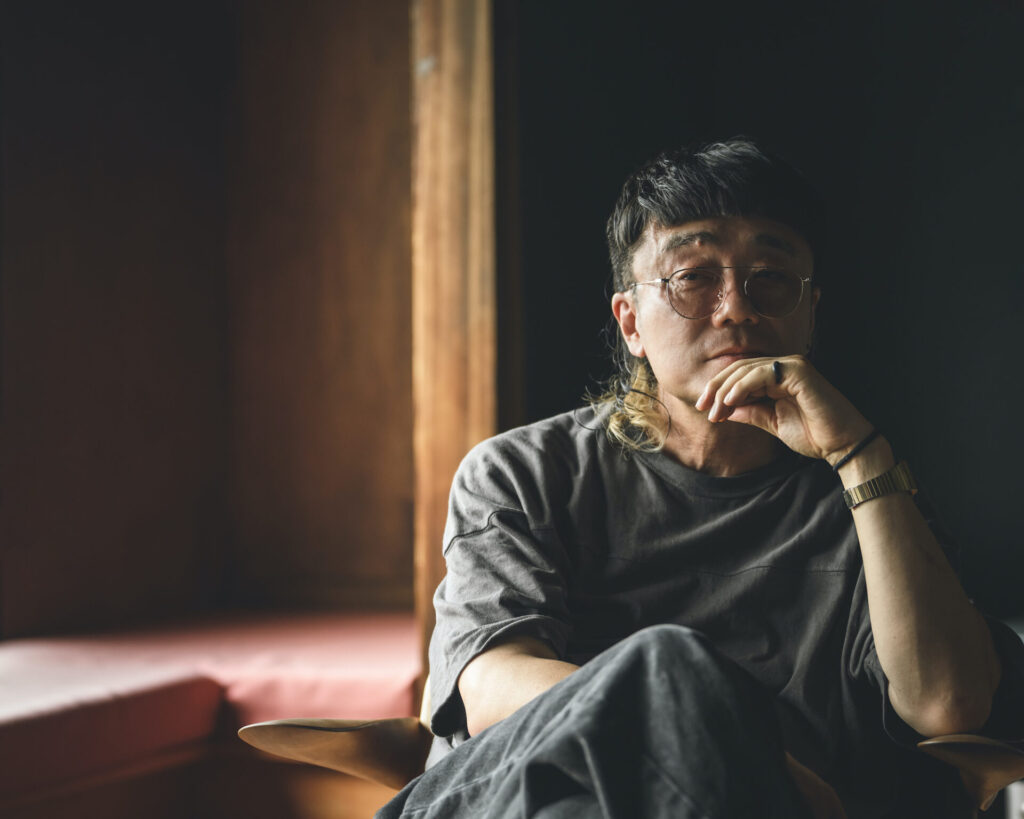
Note:
arizona forty-five degrees
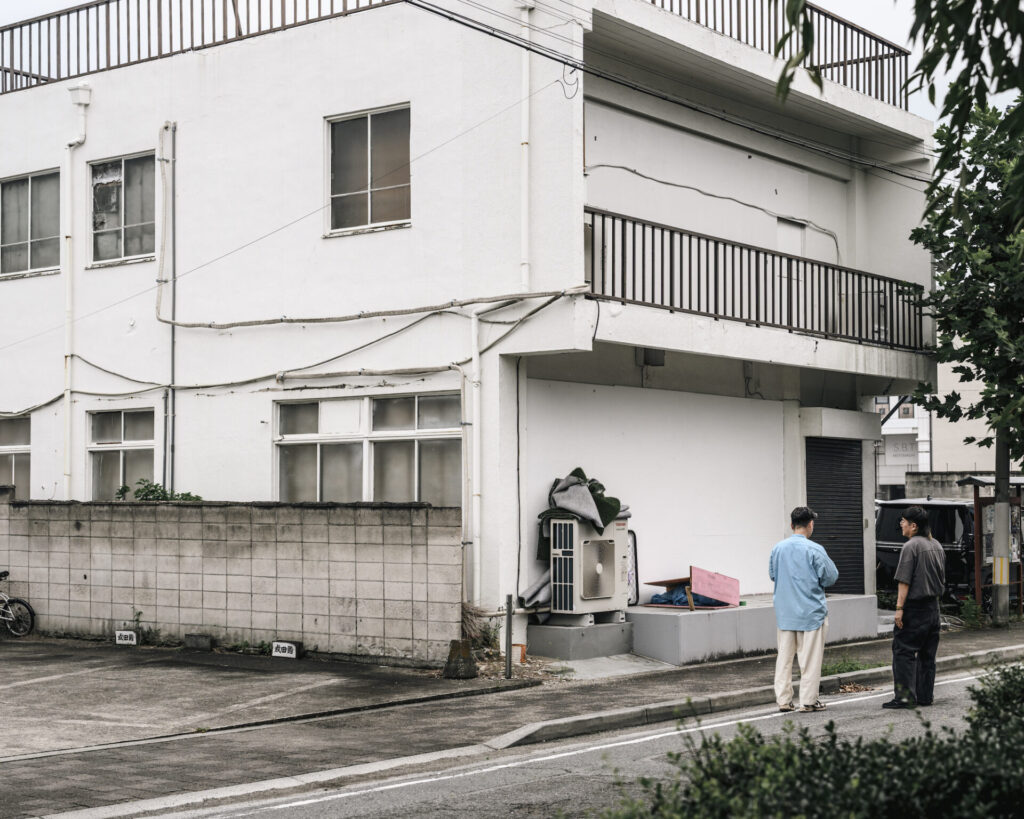
A combined apparel shop and live venue that operated for about a year from the end of December 1999, with the apparel shop on the first floor and the live venue on the second. Before opening, Shigeta, Uehara, and others spent a year completely renovating the space themselves, doing everything from cutting steel plates to installing electrical wiring. The building still stands at 156 Motomachi, Takasaki City, but there is no way to tell what it looked like back then.
Profile
-
Tetsuya Uehara
Born in Gunma Prefecture in 1973, Tetsuya Uehara began his career in the early 1990s, when his hand-drawn T-shirts featuring skateboarding culture and tattoo design drew attention in the street scene and led him into apparel design. In 1998, he held his first solo exhibition.
His relationship with Masakazu Shigeta began when he commissioned Shigeta to frame one of his works. At the end of 1999, they opened a combined shop called “arizona forty-five degrees,” with the apparel shop on the first floor and the live venue on the second. Around this time, Uehara began teaching himself digital tools, including the Mac, as well as DTP and printing techniques.
Alongside running the shop, he began taking on design work. Later, he worked as an in-house designer at Nitto Denka Kogyo before becoming independent in 2006. In 2011, he established Mountain Name Inc., where he currently serves as the president. When OSAJI launched in 2017, he handled everything from naming the brand to its logo, packaging, and overall graphic design. His recent works include logo design and branding for Kako, Hege, and Shirakaba-so.
Unbound by conventional design theory, Uehara quickly senses his clients’ true intentions and the mood of the times through his intuition and instinct. With a raw, unpretentious sensibility and a sharp eye, he specializes in transforming ideas into forms that exceed his clients’ expectations. His office name, Mountain Name, comes from Yamana-machi in Takasaki City, where Uehara was born.
https://mountain-name.com -
Masakazu Shigeta
Shigeta began his career in a technical role in the music industry before becoming a cosmetics developer in 2001. Beginning in 2004, he led the development of various cosmetics brands within the healthcare division of Nitto Denka Kogyo Co., Ltd., a metal surface treatment company founded by his great-grandfather. In 2017, he founded OSAJI, a skincare lifestyle brand, and became its brand director. In 2021, as a new store under the OSAJI brand, he launched kako, a specialty shop dedicated to home fragrance blending, and in 2022, he opened OSAJI’s first restaurant, enso. In 2023, leveraging Nitto Denka Kogyo’s technical expertise, he launched HEGE, a tableware brand, and became CEO of OSAJI Inc. in October of the same year. In 2026, as a personal project, he opened Shirakabaso, a private rental lodging facility in Sarugakyo Onsen, Gunma Prefecture, and launched OSAJI Kyoto, the brand’s global concept store in Kyoto’s Gosho Minami district. In the same year, he launched soca, a fragrance brand rooted in Japan’s unique aesthetic sensibilities. He has published books on beauty and regularly holds cooking classes and events focusing on food as the foundation of beauty.
Publications
Taberu Biyou (Eating for Beauty) (SHUFU TO SEIKATSU SHA, 2024)
42-Sai ni Nattara Yameru Biyou, Hajimeru Biyou (Beauty Routines to Quit and Start at 42) (Takarajimasha, 2022)
-
Photographs:Eisuke Komatsubara
-
Text:Masahiro Kamijo
-
Location:Motomachi Shimotaya

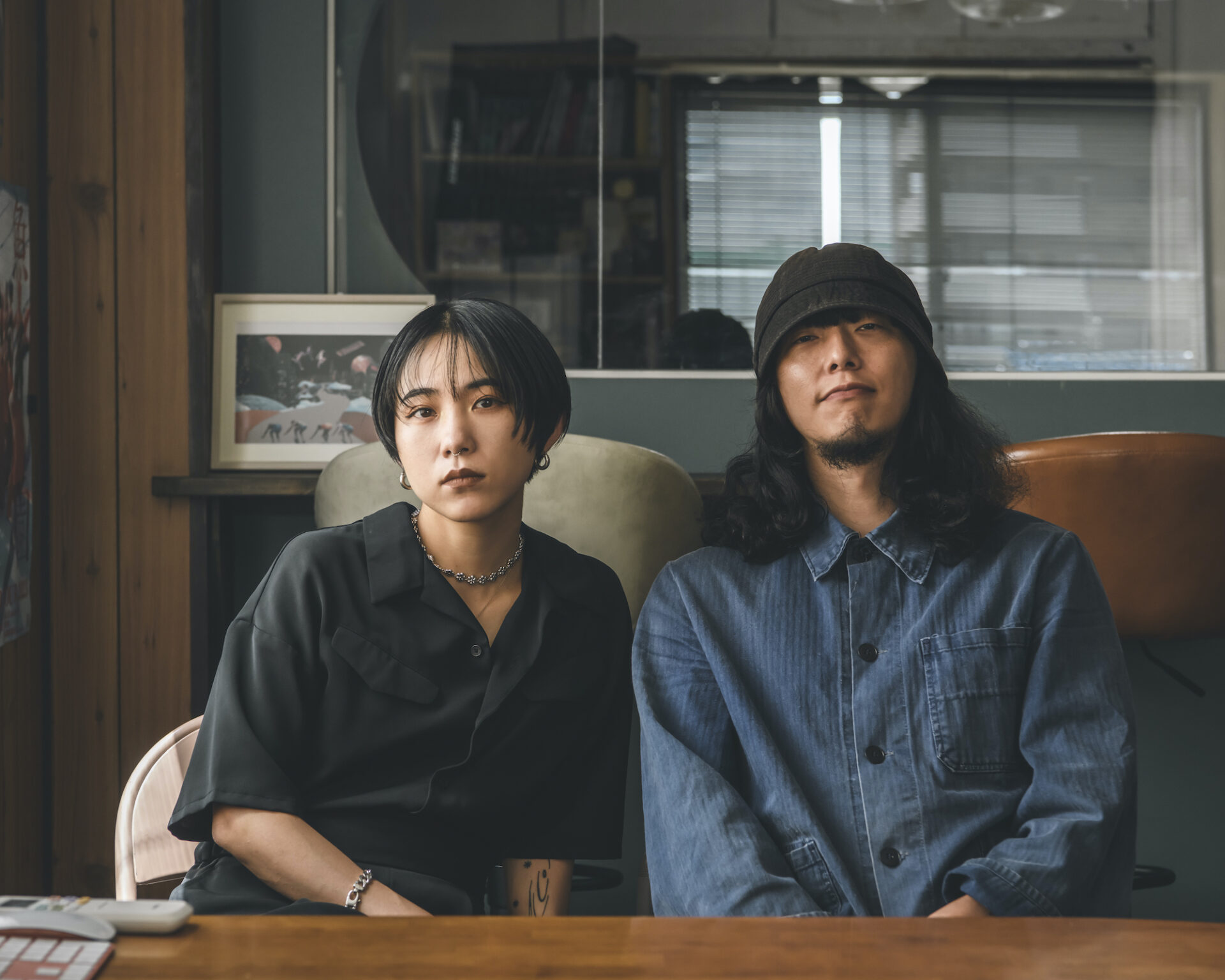
NEWS LETTER
理想論 最新記事の
更新情報をお届けします
ご登録はこちら
ご登録はこちら
メールアドレス
ご登録ありがとうございます。
ご登録確認メールをお送りいたします。