

2026-11-05
Vol.32
President of Hida Sangyo
Akiko Okada(part 2)
-
Rethinking Who We Quantify Things For
-
Building Guiding Principles for the Next 100 Years
-
The Hida Model: Creating an Economic Cycle between Forests and the Region
-
Design and Comfort
This time, Masakazu Shigeta, founder of the OSAJI brand, visited Akiko Okada, president of Hida Sangyo. With more than 100 years of history, Hida Sangyo is a furniture company that continues to explore the potential of wood in Takayama City, Gifu Prefecture. At first glance, the two work in different manufacturing fields, but the underlying perspectives overlap remarkably. Articulating philosophy, building organizations, recognizing non-financial values that do not show up in short-term figures, and circulating value back to the local community — perhaps sustainable business can exist only where the cycles of nature resonate with the well-being of the people involved. In an era when efficiency and business growth come first, what does it mean to stay true to one’s own principles while carrying history forward? What does it mean to pass traditions on to the next 100 years while establishing new principles that will endure for another century? Through their conversation, the two leaders, who grapple with change while remaining true to their own principles, explore the philosophy of manufacturing for the era ahead.
(Click Here for the First Part of the Interview)

“Ultimately, I think the most correct approach is agile management.” (Shigeta)
——Ms. Okada, you previously worked for a major apparel company. How do you make use of those experiences in management?
Akiko Okada: I don’t simply copy what bigger companies do, but my experience in a large organization with a fully developed system has served me well. When I joined Hida Sangyo, what surprised me most was that the company had “no standards.” In my previous job, standards were clear, and it was straightforward — you built on them and aimed for something extra. Here, however, if I wanted to know something and asked A, A would say, “Ask B.” B would say, “Ask C.” And C would say, “Ask A” — we went around in circles. In that sense, there’s no doubt that my previous experience really helped me when I worked to establish a more structured organization, including articulating the company’s philosophy and drawing up the mid-term management plan.
Masakazu Shigeta: What ratio of qualitative to quantitative goals are you aiming for in the mid-term management plan?
Okada: In our case, it’s roughly 50-50. How about your company?
Shigeta: I’m the type of person who wants around 80% of our goals to be qualitative. But since we have stakeholders such as shareholders and banks, we have to present quantitative figures. Ultimately, though, I think the most correct approach is to manage on a make-it-up-as-you-go basis. Or, that phrase has a bad ring to it, so maybe I should call it “agile management” instead.
Companies in their seed and founding phases are exceptionally strong because they are agile, allowing them to adapt quickly to changes in scale, personnel, and funding. Communication within these companies is very efficient, and because people who share the same direction have come together, they can act flexibly. However, once a company enters the growth phase, its headcount increases rapidly, and external capital begins to flow in. Then voices, particularly from mid-career hires, start raising concerns such as “We need clear standards” or “We don’t know how things work because there’s no established system.” Putting in place salary-increase criteria, HR systems, and expense-approval procedures, and quantifying things further, can certainly help maintain organizational stability and reduce dissatisfaction. But if that goes too far, breakthroughs stop happening.
Agile organizations like Netflix, which operate without expense-approval procedures or even performance reviews, only work because of a premise unique to the United States — fluid rules on dismissal. In Japan, where employment is protected by a legal system that imposes strict restrictions on dismissals, we can’t simply adopt the same approach. The challenge for us is how to maintain organizational agility within these constraints. At the end of the day, no matter how efficient it is in quantitative terms, quantification fails unless the process genuinely aims to enhance the value of customer experience. Even if you chase only metrics like NPS, truly passionate fans just keep using the product quietly, so they never show up in the data. That’s why we have to put the “purpose” and “vision” behind those figures at the center of our thinking. Precisely because we nearly lost our agility amid rapid growth, we constantly re-examine, “Who are we quantifying things for?”
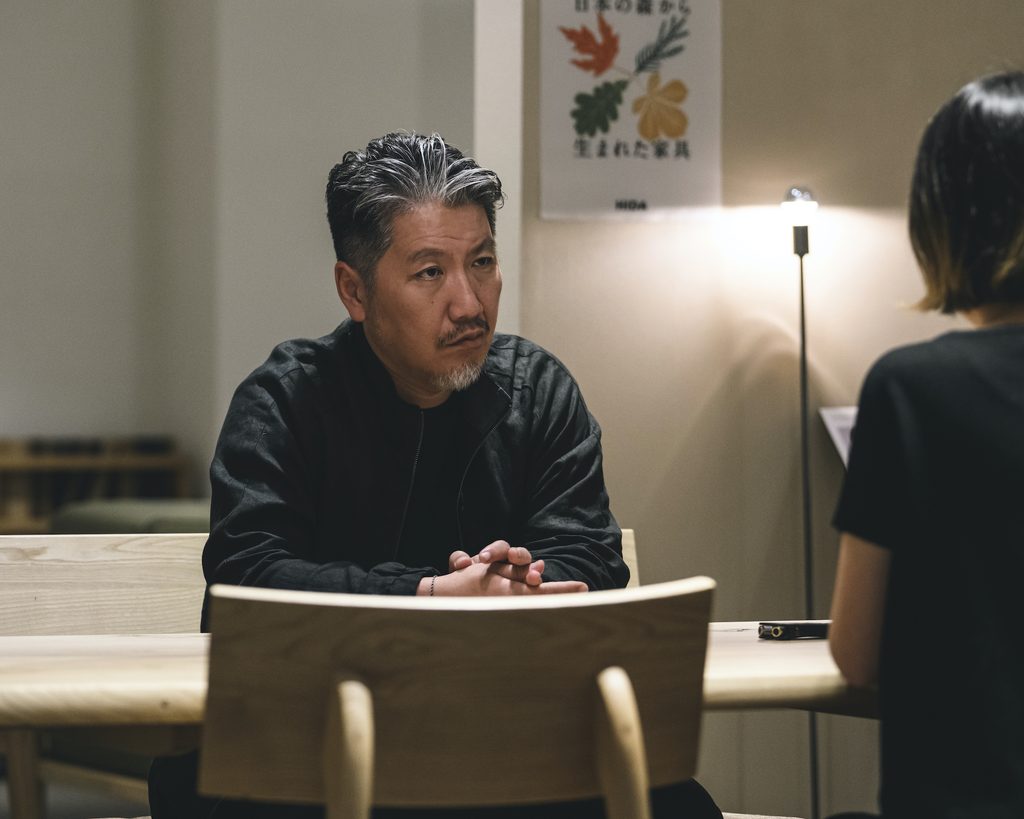
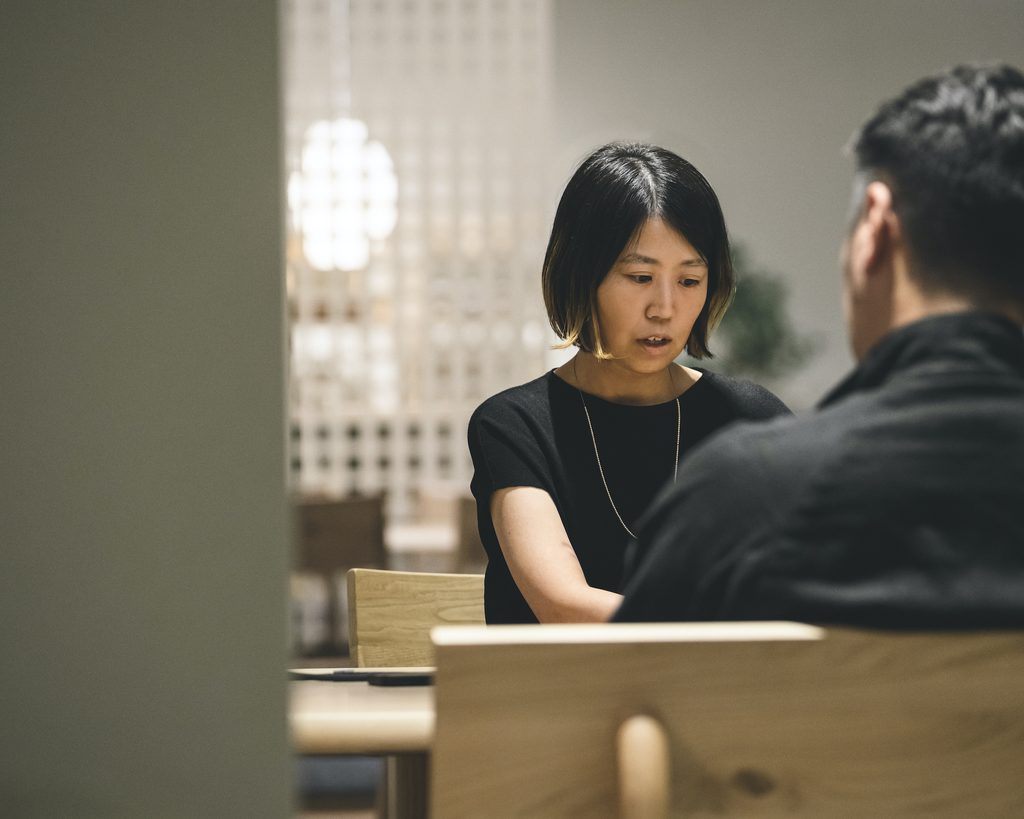
Okada: You just mentioned that you “nearly lost your agility amid rapid growth.” Where would you say the dividing line was? Was it growth in sales scale, or was there another reason?
Shigeta: The main reason was the rapid increase in the number of people in the organization. As the business expanded, the number of mid-career hires increased all at once. Right around that time, we received a series of applications from people with experience in the beauty industry who wanted to “take on something interesting at OSAJI.”
Okada: I imagine OSAJI was attracting attention in the industry as an appealing brand where people could take on new challenges. When was that, roughly?
Shigeta: It’s not that long ago — it was around 2022 to 2023 when the pandemic started to settle down. When we last visited Hida Sangyo, we were still a very agile organization. However, the situation changed rapidly, and we ended up accepting investment from a major trading company. Of course, I’m not saying that accepting investment is a bad thing. Still, with external investment, we partly lost the speed and flexibility of decision-making we once had, and that became a turning point, too.
——So, while adding headcount and forming capital partnerships as the brand expanded meant success as a business, they also made things harder for you as a business leader and deepened your inner conflict.
Shigeta: Looking back now, if I were asked: “If you could redo just one thing, what would you choose?” I would respond without hesitation, “I’d want to redo the rapid growth itself.”
Okada: Do you mean that, rather than growing the business rapidly, you would deliberately control the speed of growth?
Shigeta: Exactly.

“At the heart of a century of technological innovation is the fact that we have people here who love making things and want to explore their craft in depth.” (Okada)
——Woodworking is often seen as a conservative field. But seeing Hida Sangyo’s 100-year history, it feels like the company has an entrepreneurial spirit of venture business, continuously taking on challenges in cutting-edge technology. How do you see this point?
Okada: It’s true that, as a long-established company, we have some conservative aspects. But when it comes to technology, from the old days, we have always had a strong entrepreneurial spirit, eagerly embracing new ideas and taking on new challenges.
Rather than pursuing stability, people here are those who love making things and want to explore it in depth. That spirit is at the heart of a century of technological innovation. As for the conservative aspects, I want to keep changing it by showing directions.
Shigeta: When you became president, did you bring in people from outside the company to serve as your right-hand or left-hand people?
Okada: People around me strongly recommended that I have a right-hand person. In my father’s era, there was someone like that, but I wasn’t sure if I really needed such people. I intuitively thought that having people in those roles might make things more difficult.
Now, our organization has four broad functions: sales, production, design, and administration. Each has its own head, and I run the organization by working closely with them as part of a more multidimensional management structure.
Shigeta: I feel we are in a difficult era when it’s genuinely difficult to define what makes a good organization, including whether or not to have people serving as your right hand.
Okada: I think it’s hard to generalize — it largely depends on the kind of culture a company wants to build.
Shigeta: Ultimately, I want work to be more enjoyable than difficult for the staff. So I always think about how I can help them enjoy their work. However, when this results in an outcome that differs from what I envisioned, how much I should accept—that’s something I constantly struggle with.
Okada: Well, you’re the founder, after all. I feel that highlights the fundamental difference between the founder who started the business from scratch and me, who inherited one.
Shigeta: But I’ve always wanted to pass the baton to the next generation soon. I want to see my successor reach a point where they can take ownership of the business and enjoy running it, and then hand it over while I’m still able to provide hands-on support. That is part of my responsibility as a founder.
Okada: Some brands leave a powerful impact on society but come to an end after just one generation. What kind of company do you want to build, and what do you want most to pass on to the next generation?
Shigeta: The biggest reason we entered into a capital partnership with a major trading company was that we could include the shared goal in the contract: “building a brand together that will last 100 years.”
Over the past 20 years, the cosmetics industry has repeatedly gone through a cycle of building brands up and then shutting them down. However, this kind of consumer behavior is bad for the environment and only leaves customers confused. As the person who launched the brand, I feel it’s my responsibility to establish a foundation that will allow it to last 100 years.
Ultimately, what I want to pass on is “Keep delighting our customers, and never let them down.” That’s all. It’s easy to delight customers for a moment by chasing trends, but if all you do is follow trends, you’ll eventually reach a limit.
There is a sake brewery called Kenbishi in Hyogo Prefecture, and its company policy is “Stop the clock and wait.” Rather than chasing the constantly moving hands of the clock — that is, trends in Japanese sake — they continue to produce sake of consistent quality, staying true to their own standards. The idea is that, within every 24-hour cycle, a moment will inevitably come when the moving hands align perfectly with their unwavering quality. That’s what the policy means.
We take the same approach — no matter how much the world moves toward flashy trends, we will never change our core principle: “Anyone in any skin condition can use our products without any worry.” We wait for the hands of the clock to come around to us. Our commitment is to ensure that people can use our products safely and without worry — in other words, “never make our customers sad” — and keep delighting them. As long as the core principle is passed down, I think the next generation should be free to decide how to put it into practice.
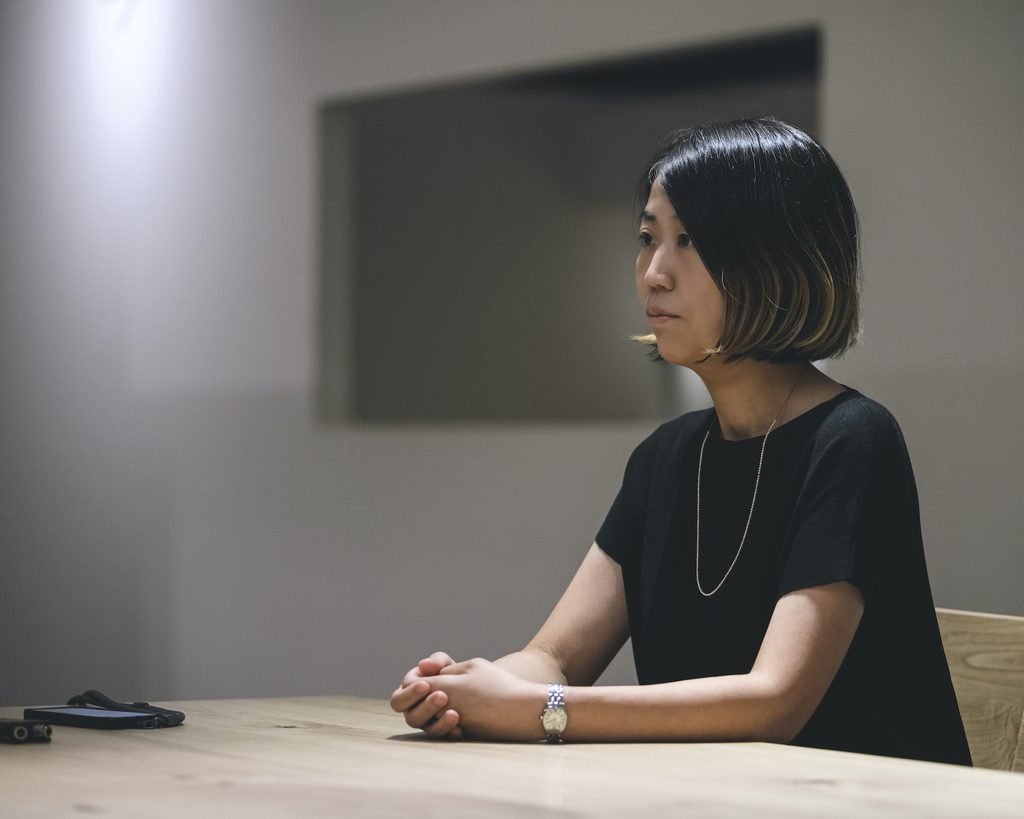
“I want to build an economic cycle across the entire region, in which everyone from upstream (forestry) to downstream (furniture and sales) shares a strong will and a common vision.” (Okada)
——In recent years, Hida Sangyo has been focusing on the distillation business, and it has produced not only aroma oils, but also unique products such as Sugisansui(*5), an agricultural material made from byproducts generated during the distillation of Japanese cedar. Do you see the possibility of this business expanding in the future and eventually becoming independent of the furniture business?
Okada: I think that’s certainly a possibility. Furniture is a long-cycle business — once purchased, it typically doesn’t need to be replaced for 20 to 30 years. On the other hand, agricultural materials such as Sugisansui and essential oils are consumable items with much shorter product cycles. I find this business model very interesting. The business is still small in overall scale, but I’m hopeful that if it scales up, Hida’s industrial structure will change. Forests would be properly managed, allowing not only planted coniferous forests but also diverse broad-leaved forests and mixed woodlands to expand and flourish. That kind of gradation of environmental change is bound to emerge. If that happens, foresters who are currently struggling will be able to stand on their own and earn a living, sawmills will become profitable, and young successors will grow into the business.
It’s not simply about increasing the volume of distillation. What I want to build is an economic cycle across the entire region, in which everyone from upstream (forestry) to downstream (furniture and sales) shares a strong will and a common vision.
Shigeta: Is a community connecting upstream to downstream already beginning to take shape?
Okada: With initiatives from local governments and new partners such as a company called Hidakuma(*6), we’ve reached the phase where people visit one another’s workplaces and learn about each other’s constraints and challenges.
The next phase will likely be to explore concrete ways to make the best use of resources for everyone involved, as well as the best approaches to logging and placing orders.
Shigeta: I initially thought “Hallowed Ground for Woodworkers” and “Walking with the Forest” were two distinct concepts, but now I see they are actually the same. What you just explained really made it click for me.
“Hallowed Ground for Woodworkers” doesn’t simply mean creating an industrial region that takes pride in its furniture production volume. As with the Shikinen Sengu (the rebuilding of the shrine buildings every two decades) we mentioned earlier, it means a social community where the people involved in the region are connected through a mutually beneficial cycle, and where appropriate human involvement plays a role in sustaining a thriving forest.
I now understand that the true meaning of “Hallowed Ground for Woodworkers” encompasses this entire picture, including that cycle.
Okada: Exactly.
Shigeta: In that sense, are there any regions or initiatives that you would like to use as a model case?
Okada: A model case……Well, there are initiatives related to forest resources taking place in many different areas, and there are aspects of each that I pay attention to. However, I haven’t yet found an example that I would want to emulate as a whole. That’s why we want to be the first to develop a “Hida Model” and present it to the world.
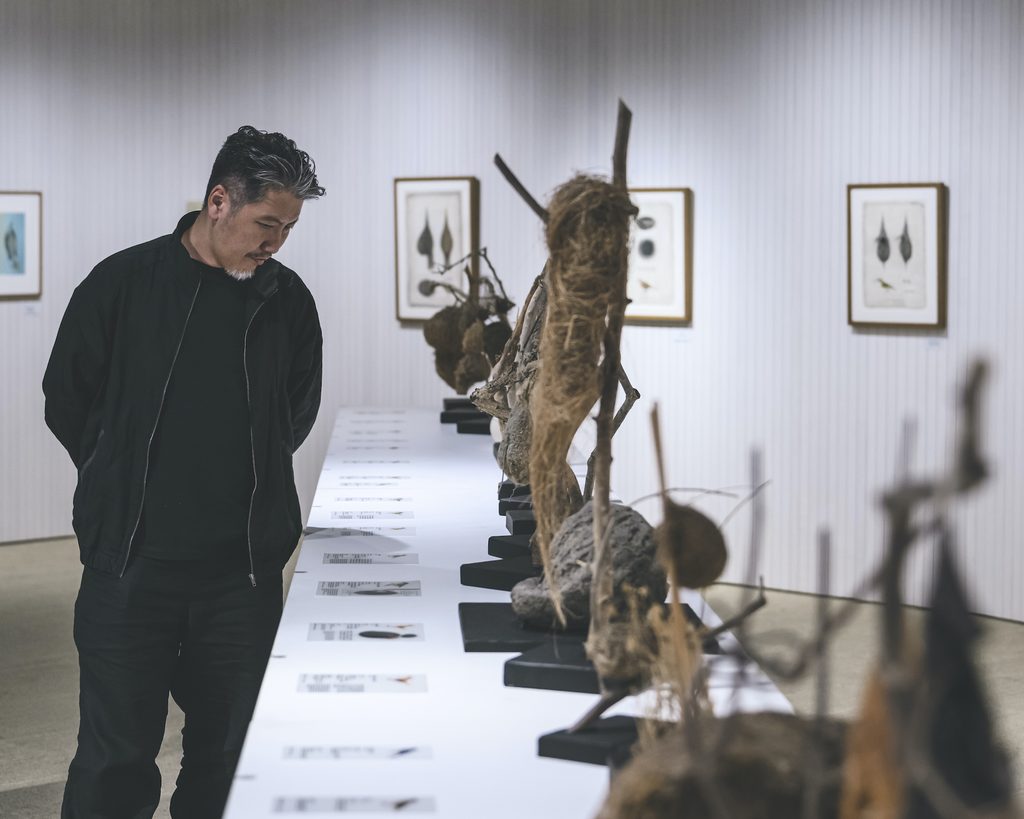
“As the highest compliment I can pay, I feel that Hida Sangyo’s products have that same ‘Yuskin-ness.’” (Shigeta)
Shigeta: I’d like to ask one final question as we close this conversation. For Hida Sangyo, and also for you personally, Ms. Okada, what is the role of design? Seeing your products at the showroom, I sensed a deeper philosophy in your work — something beyond simply making products that look good, a philosophy that doesn’t limit who uses them.
Okada: Design has many definitions, and what influenced us most in our furniture making was the words of Enzo Mari(*7), a maestro of Italian design who was also a philosopher. He once said, “Design is a public value that protects human dignity and allows everyone to benefit equally.”
It’s not merely about decoration — it’s about thinking everything through in human-centered terms about the entire process, including the manufacturing process. This is the essence of design that I learned from him, and it is something we want to keep passing on, unchanged. If I may turn the question around, what does design mean to you, Mr. Shigeta?
Shigeta: My answer is, “It should be comfortable.” The cosmetics industry is interesting because if a product’s design is too sophisticated, people may hesitate for a moment before using it, wondering, “Does this really work well?” Conversely, a design can also create a placebo effect, making people think, “With a design this good, it must work well.”
If I use a city as an analogy, it’s like the human instinct that draws us to a slightly old-fashioned Chinese restaurant next to a stylish, sophisticated restaurant. I think it’s very important that people intuitively feel, “That looks delicious” or “I want to try using it.”
That said, the product shouldn’t feel out of place on the bathroom counter every morning. It needs to strike a balance that makes people feel genuinely comfortable with it. I keep experimenting through trial and error every day to find the right balance of comfort.
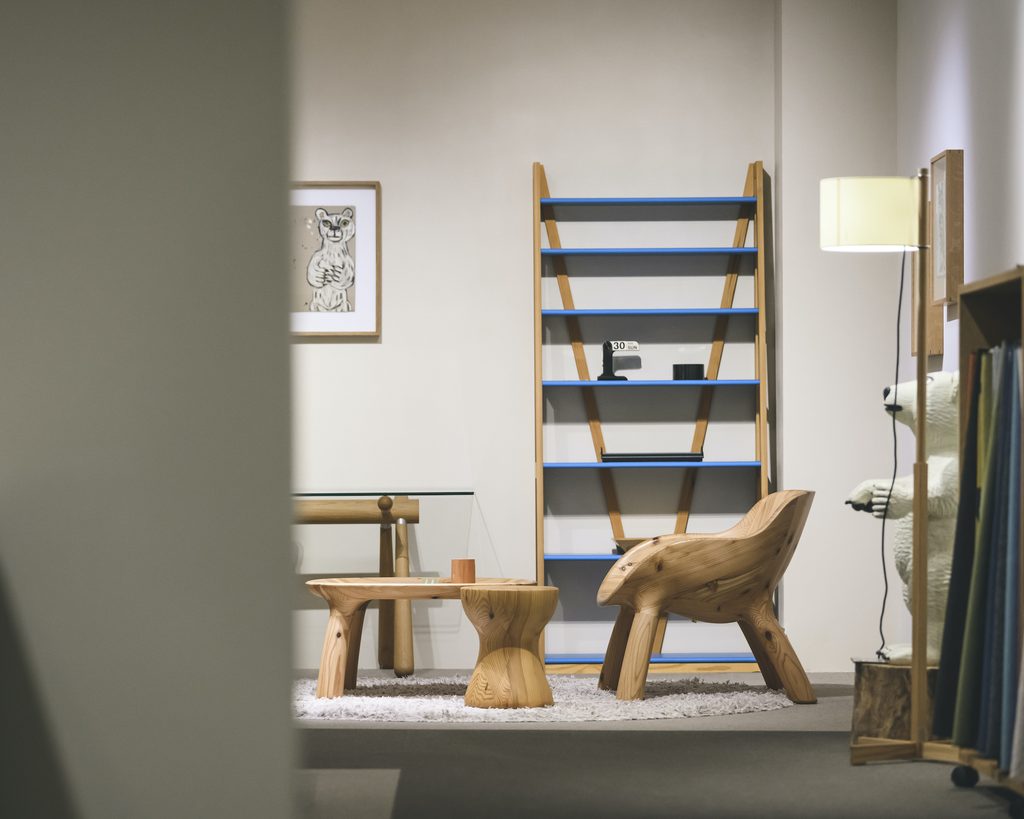
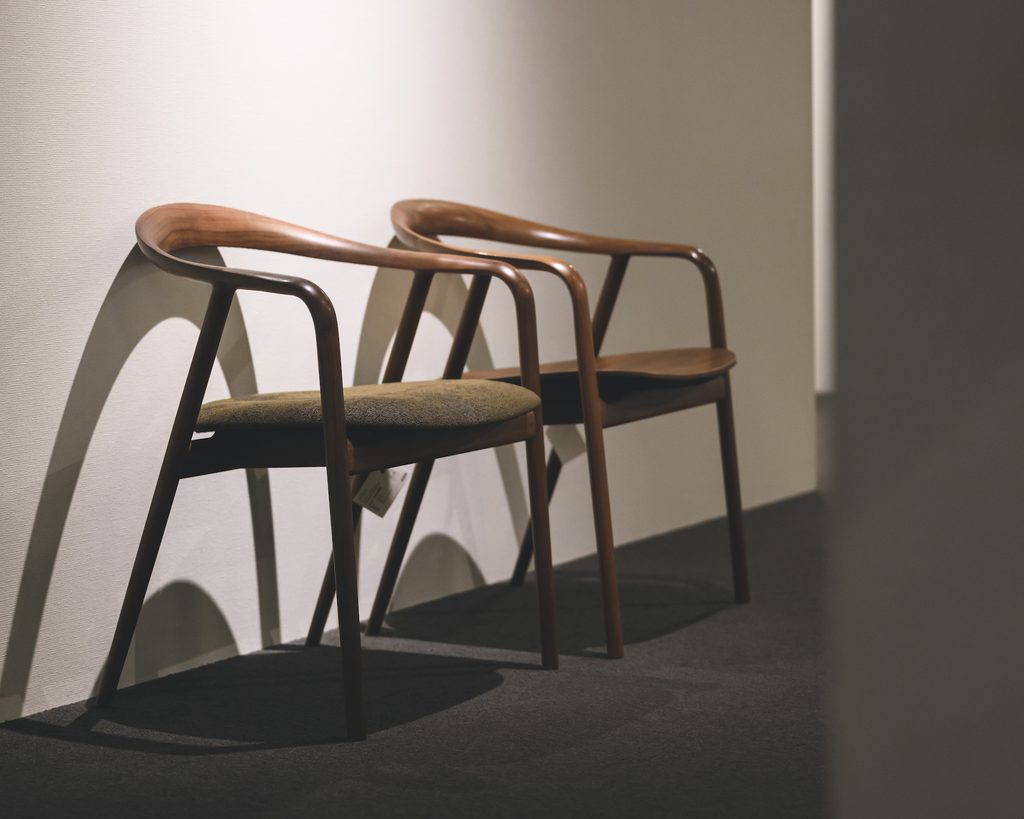
Okada: It’s the same with chairs — refined, sharp design doesn’t always translate into comfort when you sit on it.
Shigeta: This might be a slightly odd comparison, but my daughter once said to me, “Dad, Yuskin is the brand you admire most, right?” Probably she must have heard me talking about it somewhere before (laughs)
For people in my generation, whenever we went to our grandmother’s house, there was always an orange-colored Yuskin product next to mandarins. It was something you’d find in every home. As someone engaged in manufacturing, I often think about how happy I would be if I could ultimately achieve that status.
You could argue that Yuskin isn’t exactly cosmetics, but it doesn’t quite feel right to classify it simply as a medicine, either. And yet Yuskin has established itself as Yuskin, right? The same is true of Coca-Cola, Pocari Sweat, and Cup Noodles. They transcend their categories and become things people feel comfortable having at home.
Rather than selling our products with an air of luxury in high-end shopping malls, we want to be a personal-care brand that stays as close as possible to people’s everyday lives. And actually… as the highest compliment I can pay, I feel that Hida Sangyo’s products have that same “Yuskin-ness.”
Okada: Wow, really? (laughs) But it’s true that our classic sofas have been passed down from the Showa to the Heisei, and then to the Reiwa era, quietly finding their place in the reception rooms and living rooms of all kinds of homes. I really appreciate your words.
Shigeta: When you touch one and sit down on it, you feel your heart relax and unwind. There’s an overwhelming sense of security, in the best possible way — it puts you completely at ease.
Okada: It makes me happiest when customers tell us, “I just can’t help wanting to run my hand over some part of it.” Perhaps that’s exactly what you’re describing.
Shigeta: In the sweeping changes of our times, I feel I’ve found the essence of the value we should offer through this conversation. Thank you so much for today.
Okada: Thank you, too, for such a wonderful conversation.
Notes:
*5_Sugisansui
Sugisansui is an agricultural material developed through Hida Sangyo’s distillation business, using distilled water extracted from Japanese cedar branches and leaves. This unique product makes effective use of branches, leaves, and other forest resources unsuitable for furniture production, ensuring these resources do not go to waste. As a consumable product with a relatively short distribution cycle, it helps accelerate the circulation of forest resources through an approach distinct from the furniture business, returning value to forestry and the local economy. It is one component of the “Hida Model.”
*6_Hidakuma
Its full name is Hida no Mori de Kuma wa Odoru. It is a private company that uses Hida’s abundant forest resources to create new value from broadleaf trees, promote collaborations with creators, and advance regional circular manufacturing. Hidaguma connects local stakeholders, including Hida Sangyo, local governments, and forestry professionals. By bringing them together to visit one another’s workplaces and explore the optimal use of forest resources, it serves as a key hub for building an ecosystem across the region.
*7_Enzo Mari
Enzo Mari (1932–2020) was an Italian product designer and philosopher. He advocated the idea that “design is a public value that protects human dignity and allows everyone to benefit equally.” Throughout his career, he pursued an essential, human-centered approach to making things, free from unnecessary ornamentation. Hida Sangyo began working closely with him in the early 2000s. Challenging the then-prevailing belief that Japanese cedar was too soft for furniture, they introduced the HIDA collection, which made extensive use of compressed cedar. This initiative, which brought together Hida craftsmanship and Mari’s design philosophy, decisively influenced Hida Sangyo’s approach to using forest resources and its broader design philosophy.
Profile
-
Akiko Okada
Born in Takayama City, Gifu Prefecture, Okada graduated from Nanzan University and joined a major apparel company, where she gained experience in store operations. Deeply inspired by the philosophy of “Walking with the Forest,” which had been passed down within the company, she joined Hida Sangyo, where her father was president, in 2011. After becoming president in 2021, she spent two years articulating and bringing the company’s philosophy into focus, guided by her belief in “leadership rooted in being who you are.” Moving away from reliance on charismatic individuals, she transformed the company into a bottom-up organization built on dialogue with the staff. Building on more than 100 years of traditional woodworking skills and the philosophy of “Walking with the Forest,” she is driving change for the next 100 years.
https://hidasangyo.com/ -
Masakazu Shigeta
Shigeta began his career in a technical role in the music industry before becoming a cosmetics developer in 2001. Beginning in 2004, he led the development of various cosmetics brands within the healthcare division of Nitto Denka Kogyo Co., Ltd., a metal surface treatment company founded by his great-grandfather. In 2017, he founded OSAJI, a skincare lifestyle brand, and became its brand director. In 2021, as a new store under the OSAJI brand, he launched kako, a specialty shop dedicated to home fragrance blending, and in 2022, he opened OSAJI’s first restaurant, enso. In 2023, leveraging Nitto Denka Kogyo’s technical expertise, he launched HEGE, a tableware brand, and became CEO of OSAJI Inc. in October of the same year. In 2026, as a personal project, he opened Shirakabaso, a private rental lodging facility in Sarugakyo Onsen, Gunma Prefecture, and launched OSAJI Kyoto, the brand’s global concept store in Kyoto’s Gosho Minami district. In the same year, he launched soca, a fragrance brand rooted in Japan’s unique aesthetic sensibilities. He has published books on beauty and regularly holds cooking classes and events focusing on food as the foundation of beauty.
Publications
Taberu Biyou (Eating for Beauty) (SHUFU TO SEIKATSU SHA, 2024)
42-Sai ni Nattara Yameru Biyou, Hajimeru Biyou (Beauty Routines to Quit and Start at 42) (Takarajimasha, 2022)
Information
Exhibitions
Special Exhibition: Mori to, Kurashi (The Forests, Hida and Daily Life), supervised by woodworker Ryuji Mitani
Dates: Saturday, October 3 – Sunday, November 15, 2026
Venue: Yuhokan HIDA GALLERY
https://hidasangyo.com/exhibition/the-forests-hida-and-daily-life/
DESIGN LIVE 2026
Dates: Friday, October 16 – Wednesday, November 4, 2026
Venue: HIDA Tokyo Midtown Store
https://www.tokyo-midtown.com/jp/event/designlive/
DESIGNART TOKYO 2026
Dates: Friday, October 30 – Tuesday, November 3, 2026 (national holiday)
Venue: AUTOBAHN (former Tokyo Expressway, also known as “KK Route,” now Tokyo Sky Corridor)
Note: Admission ticket required
https://www.designart.jp/designarttokyo2026/
JAPAN FURNITURE SHOW by IFFT 2026
Dates: Saturday, October 31 – Tuesday, November 3, 2026 (national holiday)
Venue: Midtown Garden, Tokyo Midtown
https://japanfurniture.jp/jfs2026/
-
Photographs:Eisuke Komatsubara
-
Text:Masahiro Kamijo


NEWS LETTER
理想論 最新記事の
更新情報をお届けします
ご登録はこちら
ご登録はこちら
メールアドレス
ご登録ありがとうございます。
ご登録確認メールをお送りいたします。