
2026-10-29
Vol.32
President of Hida Sangyo
Akiko Okada(part 1)
-
Circulating Local Materials
-
Leadership Rooted in Being Who You Are
-
Hallowed Ground for Woodworkers, and Passing Down Tools
-
The Pursuit of Non-Financial Values, and an Ecosystem Spreading Across the Region
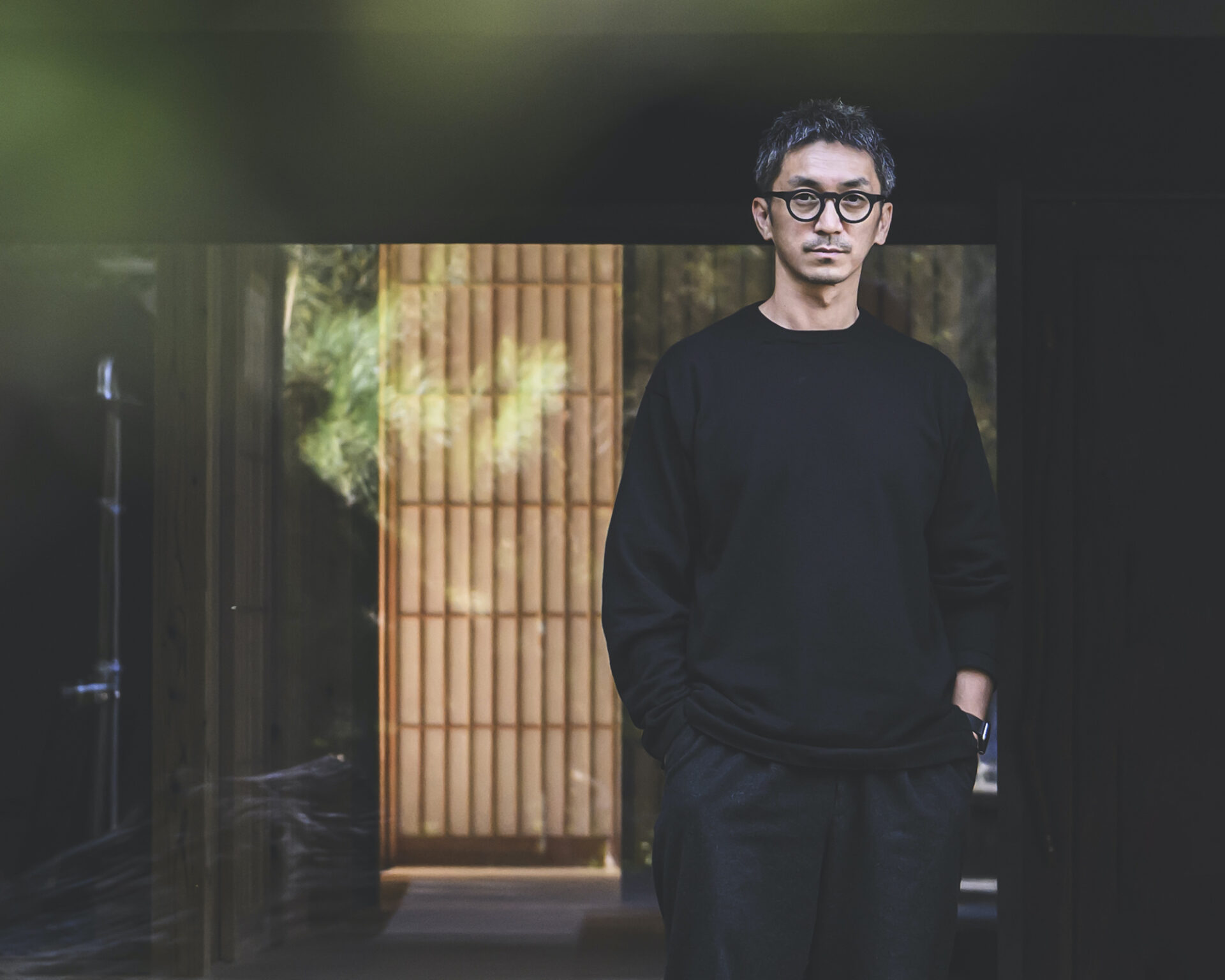
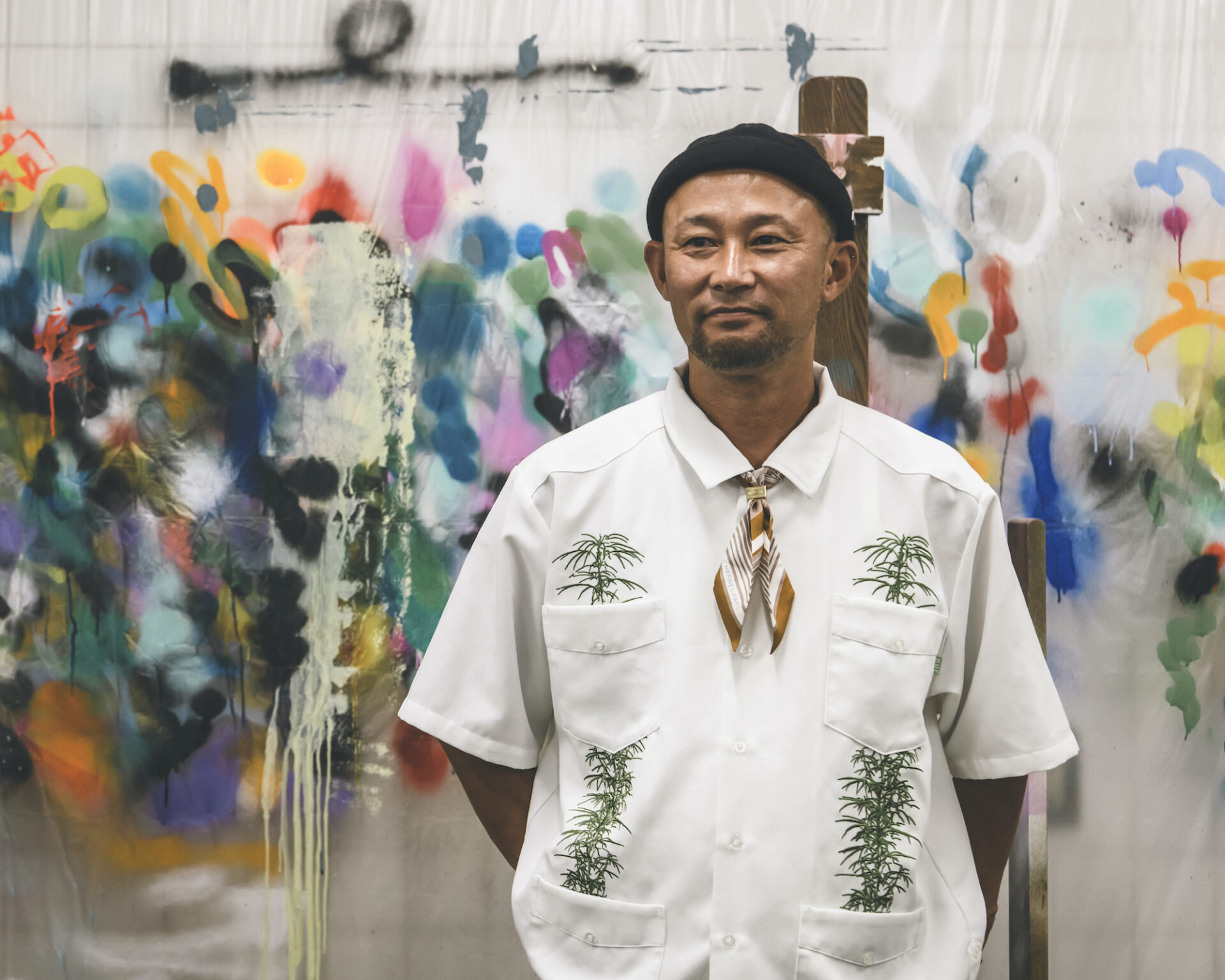
This time, Masakazu Shigeta, founder of the OSAJI brand, visited Akiko Okada, president of Hida Sangyo. With more than 100 years of history, Hida Sangyo is a furniture company that continues to explore the potential of wood in Takayama City, Gifu Prefecture. At first glance, the two work in different manufacturing fields, but the underlying perspectives overlap remarkably. Articulating philosophy, building organizations, recognizing non-financial values that do not show up in short-term figures, and circulating value back to the local community — perhaps sustainable business can exist only where the cycles of nature resonate with the well-being of the people involved. In an era when efficiency and business growth come first, what does it mean to stay true to one’s own principles while carrying history forward? What does it mean to pass traditions on to the next 100 years while establishing new principles that will endure for another century? Through their conversation, the two leaders, who grapple with change while remaining true to their own principles, explore the philosophy of manufacturing for the era ahead.
“The more we use locally sourced ingredients, the more our products gradually take on a distinctive nuance that other countries can’t produce.” (Shigeta)
Masakazu Shigeta: Creating fragrance is part of my own work. I installed a distiller in Minakami Town, Gunma Prefecture, to distill Lindera umbellata. I also harvested lavender growing on a ski slope just before it opened for the winter season, and distilled that. Another time, I visited the home of an elderly local resident who couldn’t take care of their yuzu tree anymore, so I harvested the fruit, peeled it, and distilled it.
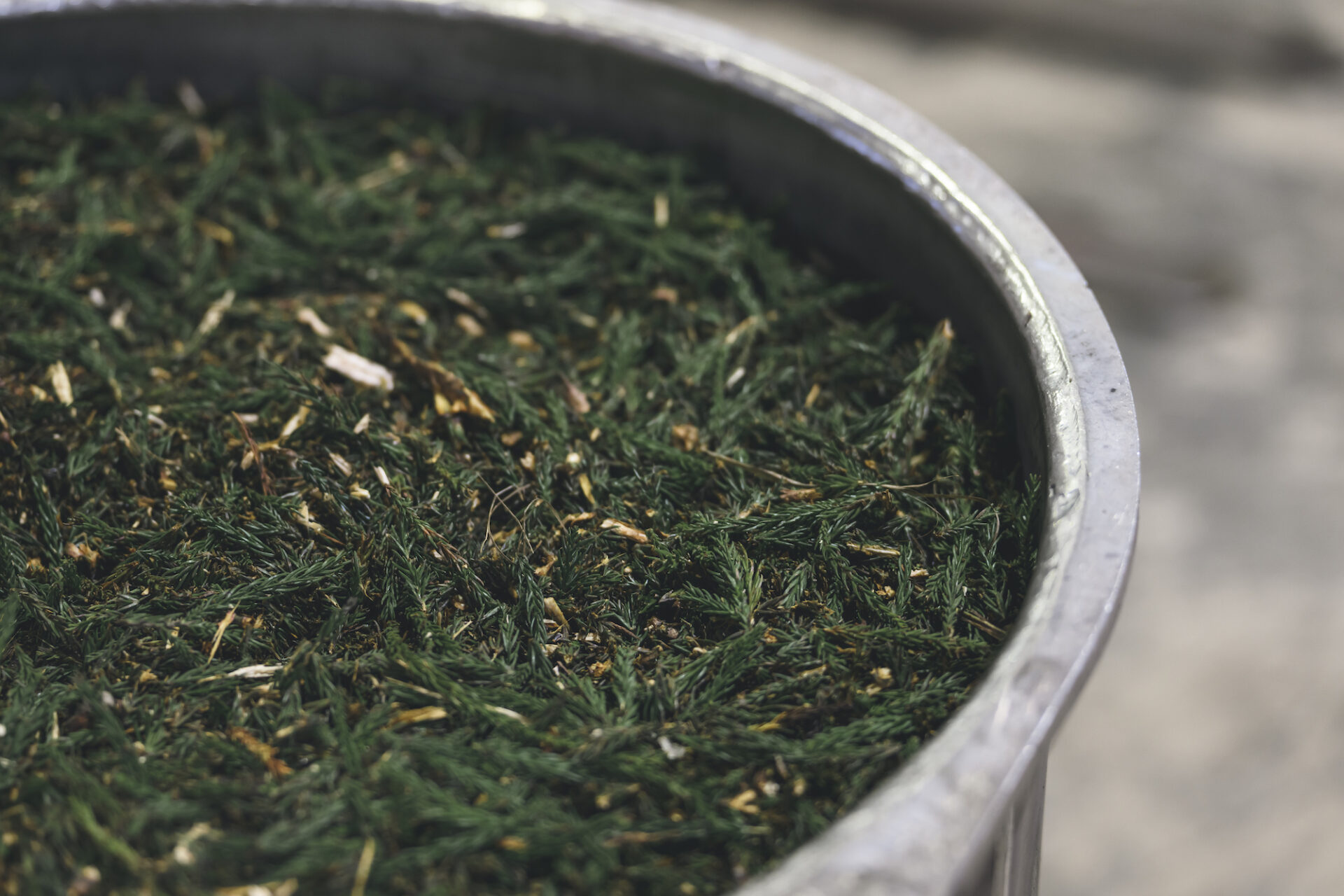
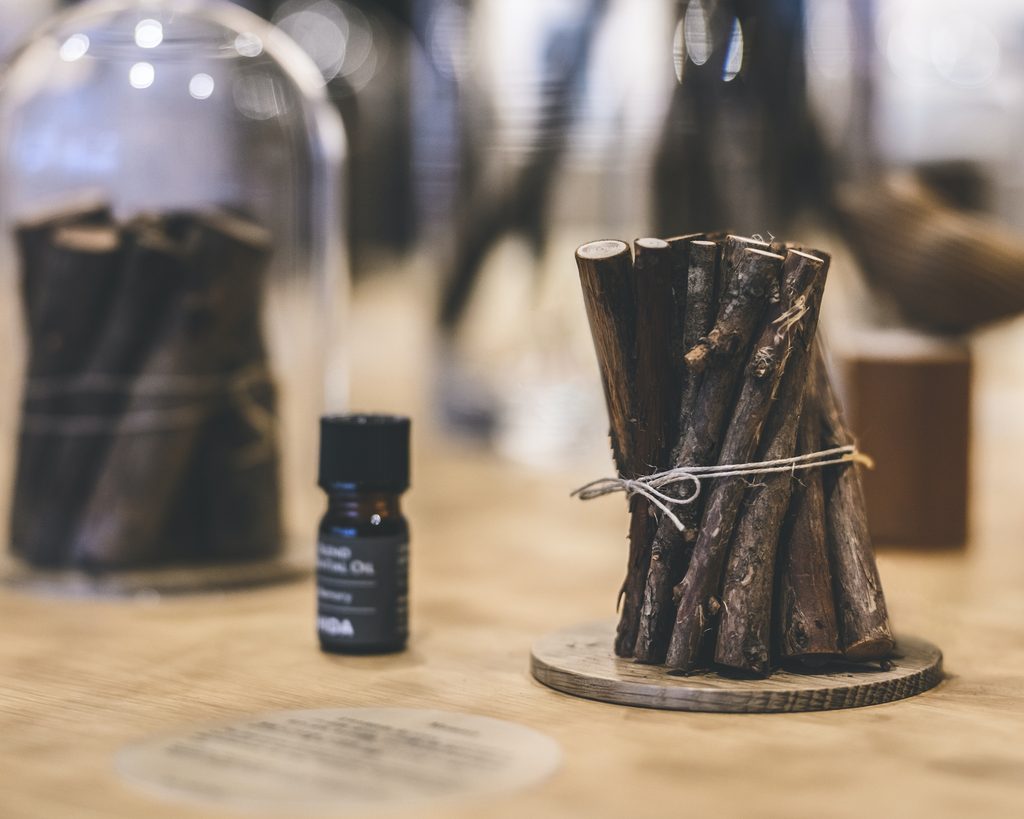
But what I felt then was a bitter sense of disappointment. The plants gave off such wonderful scents, yet after distillation I’d think, “Huh? Why does it end up smelling like this?” That’s when I happened to come across essential oils from Hida Sangyo, sold at its store in Tokyo Midtown in Roppongi. Whether it was Lindera umbellata or hinoki cypress, I found myself wondering, “How can they produce such a wonderful fragrance?” and I grew intensely curious. With so few domestically produced essential oils and fragrances around, I wanted to learn how they distilled such wonderful scents. I immediately contacted them to ask if I could visit. That was in 2022, when I visited Hida Sangyo together with our fragrance development team.
——That was just about four years ago, right?
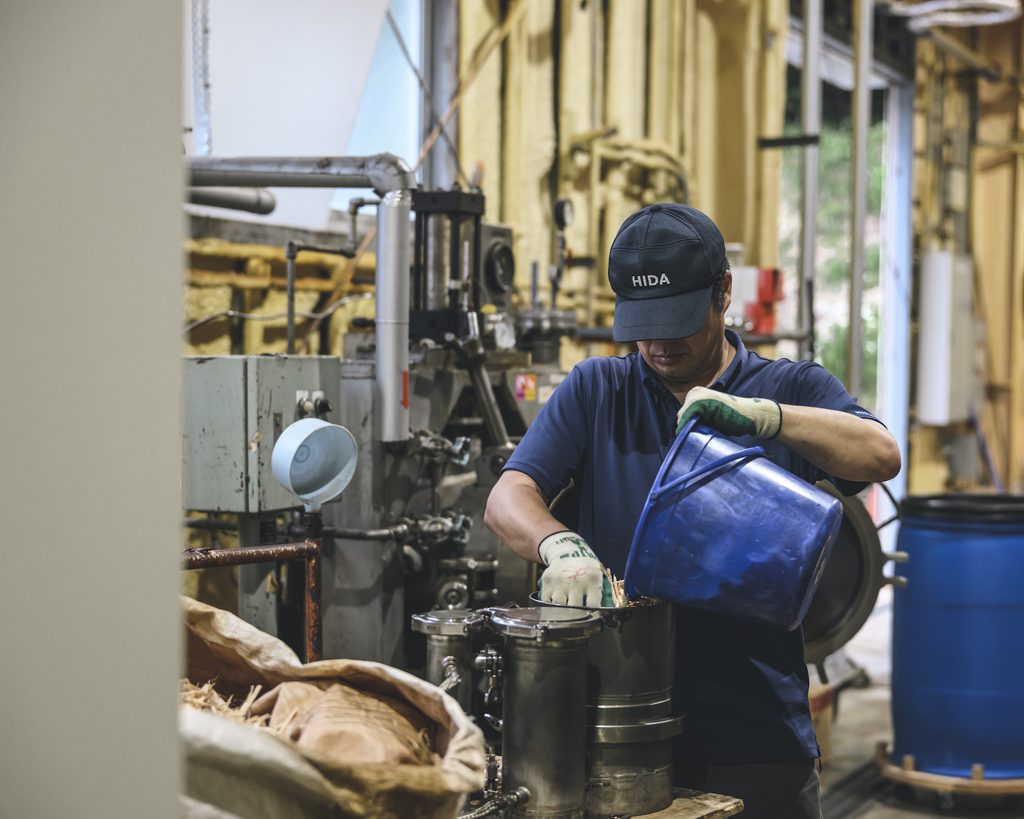
Shigeta: In the fragrance industry, vacuum distillation, which doesn’t raise the boiling point, is the mainstream method. However, Hida Sangyo used high-pressure distillation. Many of the aromatic compounds in trees have relatively high melting points, so I thought, “Oh, that makes sense.” At the same time, I understood why they could extract such wonderful scents. Since then, I’ve become a complete fan of Hida Sangyo’s fragrances. I kept telling people at our company that we should find a way to use their essential oils in our products. That effort eventually led to Toka(*1), an essential oil designed specifically for whetstones, created in collaboration with Kamaasa Shoten, a long-established cookware shop in Kappabashi, Asakusa.
——It was released in February 2023, right?
Shigeta: Yes, it was just around the time the pandemic was beginning to settle down. I created it with the aim of helping users focus and settle their nerves by adding a few drops of the oil to the whetstone when sharpening a knife.
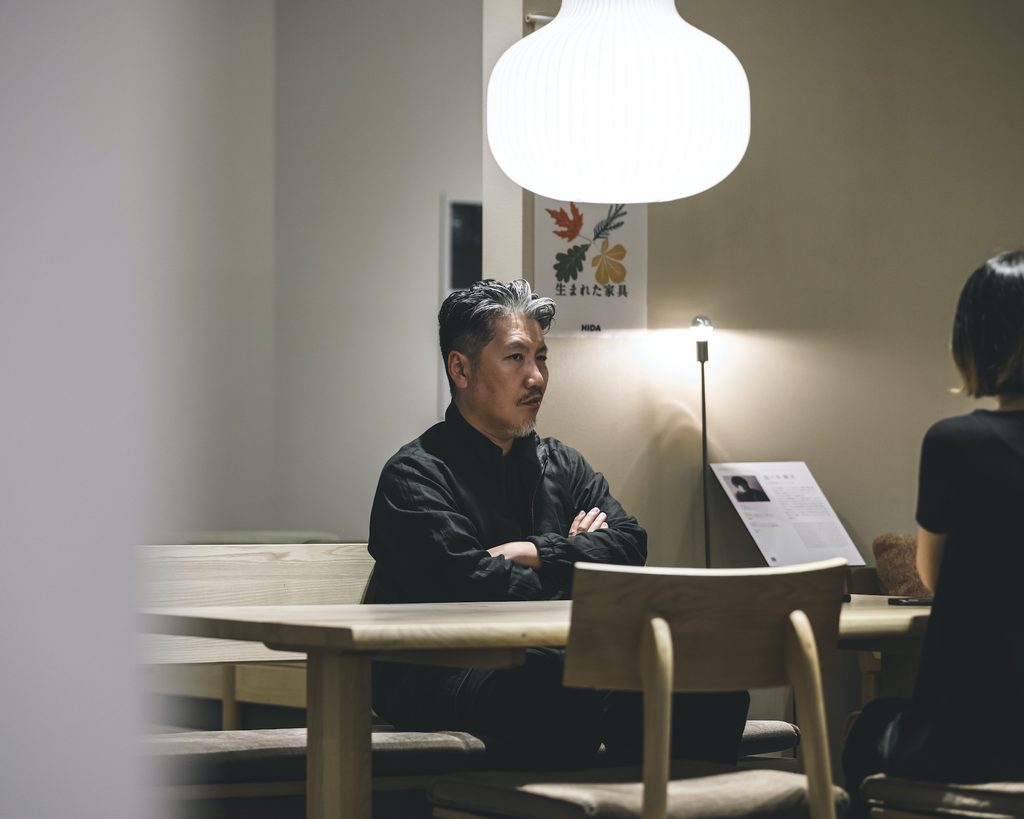

Akiko Okada: I had no idea there was such a connection. Was the scent used at the time hinoki cypress?
Shigeta: In addition to hinoki cypress, we used Lindera umbellata. We’ve also used Hida Sangyo’s fragrance materials in our new eau de parfum, which we released this autumn. It’s a perfume that layers four aromas on a base scent developed with a focus on the effects of phytoncides and fluctuations in female hormones, so you can enjoy how the scent changes. Three of those four are fragrance materials from Hida Sangyo.
Okada: Thank you so much.
Shigeta: When we visited the distillation lab in 2022, I was impressed not only by your use of high-pressure distillation, but also by your research into turning the wood leftover after distillation into usable lumber.
Around 80% of the ingredients in our cosmetics are imported, so our self-sufficiency rate is very low. Our efforts to grow sunflowers and extract oil in Minakami, as well as our research into turning sake lees — which breweries have to discard in large quantities because there is no demand for them — into cosmetic ingredients, are among the measures we’re taking to increase our self-sufficiency.
Interestingly, although these initiatives began as efforts to address social and environmental issues, the more we use locally sourced ingredients, the more our products gradually take on a distinctive nuance that other countries can’t produce — something like terroir in wine.
On the other hand, K-beauty is gaining ground globally, and Japanese cosmetics no longer hold the same unshakable position they once did. If we want to regain our place at the top of the global market, I don’t think the answer is to focus on making products that meet global quality standards as efficiently and cheaply as possible. Instead, I think we should communicate to the world what can only be created in Japan. And if we depend on imports for 80% of our ingredients, that’s a non-starter.
——So, you’re saying that by making use of local resources and keeping them in circulation as you make products, you can naturally create products that carry a Japanese identity — and that, in turn, becomes a winning strategy.
Shigeta: Exactly. When we exhibited at a design event in Copenhagen this year, visitors there responded to our products with comments such as, “This scent is wonderful,” and “This is a scent you can’t experience in Europe.” The experience convinced us of the potential of local materials and scents, and I think that was also part of why we were drawn to Hida Sangyo’s initiatives.

“I wanted to build an organization in which each person is motivated by genuine resonance with the vision and values that Hida Sangyo has cultivated.” (Okada)
Shigeta: I’d like to know how Hida Sangyo came to adopt a circular approach to manufacturing that goes beyond furniture-making to include distilling aromatic compounds from branches and leaves and turning leftover wood into usable lumber, so that nothing from the forest goes to waste. Also, since you became president in 2021 and took on the responsibility of carrying forward the company’s tradition and philosophy, what has been the core of your approach as you pursue changes and work to keep the company going in a world that is changing so dramatically? I’d very much like to hear the underlying idea.
Okada: Actually, it was my father, the previous president, who started the effort to make full use of forest resources without waste. My father originally worked in the retail industry, and through a personal connection, he became president of Hida Sangyo. Precisely because he came from outside the furniture industry, he wasn’t bound by conventional ideas in the industry — he asked fundamental questions like, “Where did this wood come from?” and “Should we really throw this away as a defective product?” From there, he introduced various reforms, including launching a furniture business using Japanese cedar.
To further explore wood’s potential, he invited a professor from Gifu University to collaborate with the company in setting up an in-house research lab. This was right around 15 years ago, when he was president. Although it’s now put into words as a value, “Walking with the Forest,(*2)” that philosophy had already been continuously handed down within the company long before I became president. In fact, I joined the company because I strongly identified with it.

When I took over as president in 2021, the first thing we did was to ask ourselves, “What is it that we really need to value most in order to keep the company going for the next 100 years?” Then, we spent about two years on a project to put the company’s philosophy into words. As a result, it took shape as our “Vision” and “Four Values.” Under the vision, “With the heart and skill of craftsmen, Make Hida hallowed ground for woodworkers,” we established four values: “Keeping People in Mind,” “Continuity over Time,” “Perfecting our Art,” and “Walking with the Forest.” These values were not formally documented in my father’s time, but the people working here had long put them into practice. I think putting them into words made it clear throughout the company what we should hold at our core and protect.
On the other hand, one thing we were determined to change was the way leadership worked within the company. My father was a strong top-down leader who had the drive to push things forward with his own will, even when those around him objected. The staff followed his lead, but I couldn’t imitate his charismatic leadership style.
In the company where my father’s presence had set the standard, I struggled for a long time with the gap between his style and my own. Eventually, the answer I arrived at was that I had no choice but to be who I really am. Rather than relying on the strong gravity of a single individual, I wanted to build an organization in which each person is motivated by genuine resonance with the vision and values that Hida Sangyo has cultivated over the years. Convinced that this was what I could do for the company, I steered it toward a bottom-up organizational structure.
Of course, when I first presented the philosophy, there were harsh comments such as, “If you have time to play around with words, why don’t you raise our salary?” However, one-way communication from management alone doesn’t reach people’s hearts. So, I divided the staff into small groups and held session after session, speaking directly to them from the heart and building up dialogue.
Shigeta: Actually, we’ve just renewed our corporate message this year. When it comes to getting our philosophy to take root and deciding what kind of organization we should be, we’re in the middle of the same struggle.
There’s a concept often discussed called a “teal organization,” where everyone runs toward a shared purpose without a hierarchy. It’s a bit like the Brazilian national soccer team, where everyone runs after the goal together without being bound to their positions. However, in reality, the more you eliminate defined roles, the more you hear people say things like, “We need more direction,” “We want someone to show us how to do it,” or “We want rules to be established.” What did you try, and what difficulties did you run into, in building an organization where employees take the initiative on their own?
Okada: When we first introduced the philosophy, even when we brought the staff together to discuss it, they either remained silent or voiced their opposition. My intentions weren’t getting through to them at all. Our company culture up to then had led many staff to assume, “If we get together to talk, we absolutely have to reach some kind of conclusion before we leave here.” As a result, they were confused by the idea of having “dialogue without a conclusion” to share the company’s philosophy.
So, with the help of an external consultant, we earnestly kept organizing workshops called “Dialogue Sessions,” where everyone in the company was required to participate once a year. We encouraged employees to express whatever they thought about the company’s philosophy and try putting those thoughts into their own words. By refining the questions we posed to help them explore their thoughts more deeply and repeating these sessions two or three times, there finally came a moment when it truly sank in for everyone: “Oh, we don’t have to force ourselves to reach a conclusion here.”
Over time, more and more staff members came to recognize that, although they spend their days focused on the tasks in front of them, thinking about what lies beyond those tasks is essential to putting the company’s philosophy into practice.
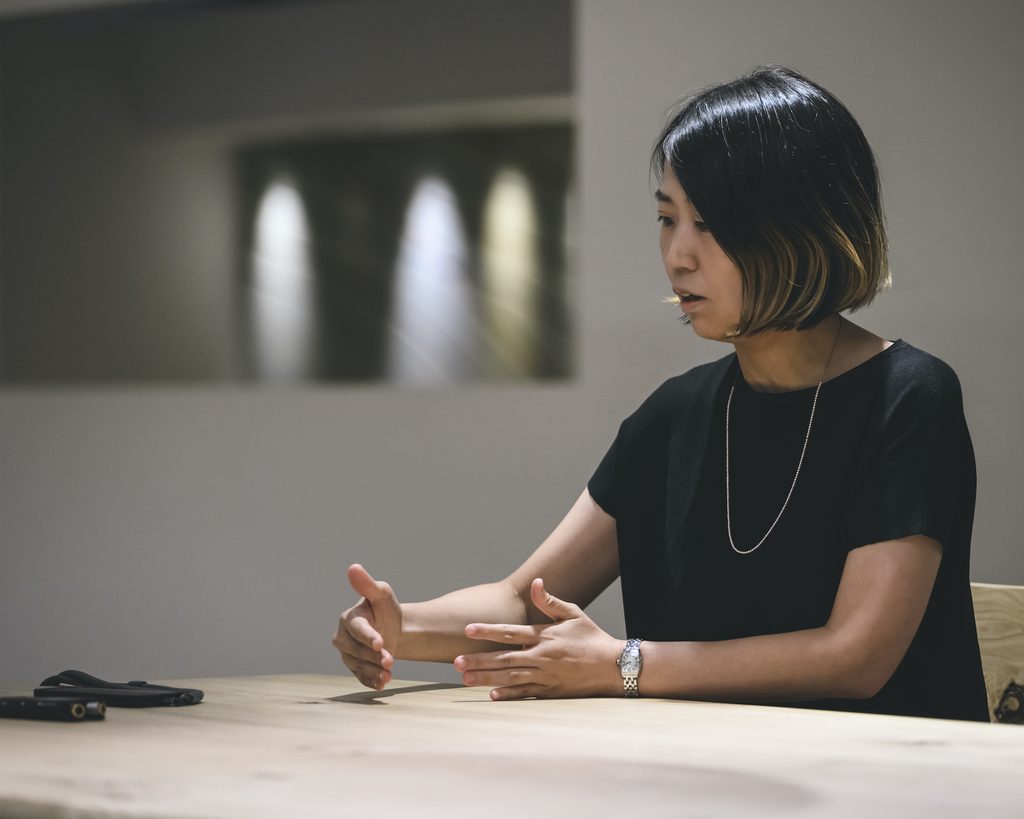
“As a hallowed ground for woodworkers, we want to train people who can use hand tools skillfully. Having the tools alone is not enough — without someone to use them, the wisdom they embody cannot be passed down to the next generation.” (Okada)
——Ms. Okada, it’s been about five years since you put your vision and philosophy into words. Do you feel that they are understood throughout the company?
Okada: Now, even in meetings, each staff member values those words and uses them as a basis for decision-making, saying things like, “We should do it this way because we are a company that walks with the forest.” In the mid-term business plan that we make every three years, we set non-financial goals in addition to financial KPIs — for example, “We will increase the percentage of domestically sourced wood to 30% by 2030.”
These goals don’t directly improve our financial performance. In the past, someone would surely have questioned why we were setting such a goal. But now, people naturally say, “Well, of course — we are a company that walks with the forest.” In that sense, I feel that the company’s guiding principles are steadily taking root among our employees.
Shigeta: What does the “hallowed ground for woodworkers” that you hold up in your vision look like in concrete terms?
Okada: It’s still difficult to explain it in concrete terms, but I think the first thing to do is build up tangible examples. One is making the flagship store in Takayama City a place that welcomes all kinds of people. Another is Yuhokan HIDA GALLERY(*3), which we opened in October last year. Located in the central tourist area of Takayama City, Yuhokan is a mixed-use facility that incorporates a shop, a gallery, and a restaurant. We expect it to bring in more visitors, including international tourists.
——I understand that you sell woodworking tools, such as hand planes, at Yuhokan.
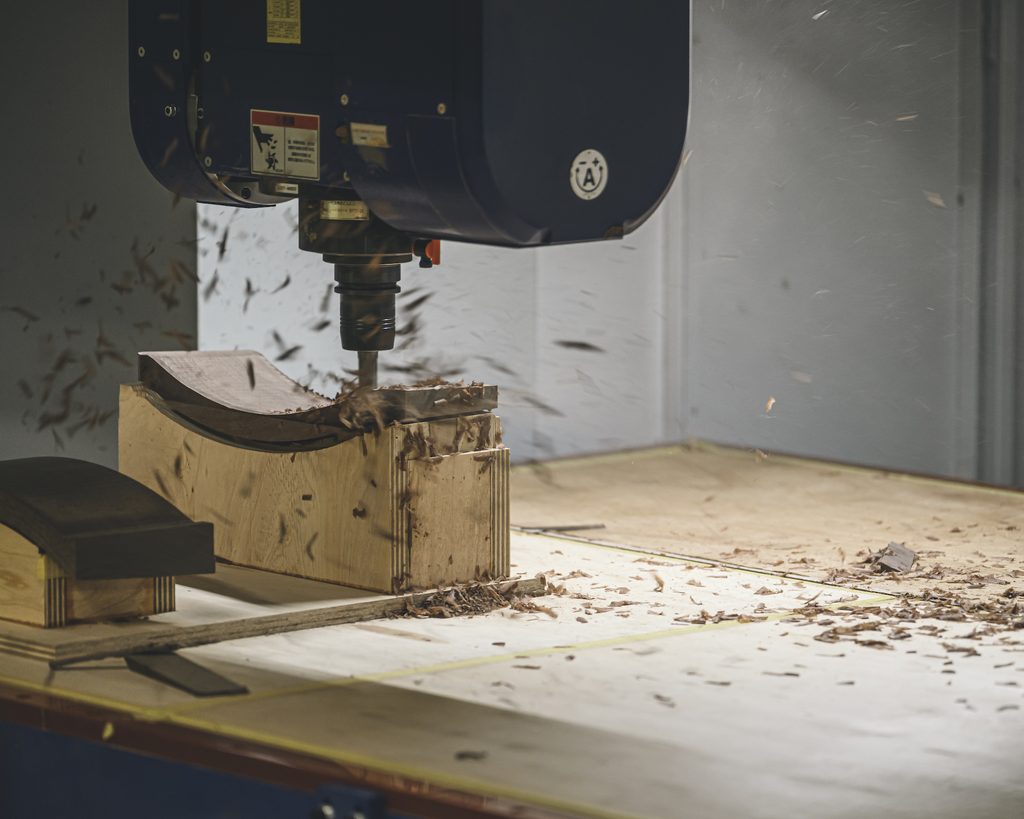
Okada: What we value in this space is expressing our approach of passing down woodworking culture to future generations. At the core of this is selling high-quality hand tools, such as hand planes, chisels, and saws. Even in our own factory, many processes are mechanized, and hand tools are now rarely used except at certain stages of production. However, these tools represent a wealth of accumulated woodworking wisdom, refined over more than 1,000 years. Collecting and preserving these tools is important, but more importantly, as a hallowed ground for woodworkers, we want to train people who can use them skillfully. Having the tools alone is not enough — without someone to use them, the wisdom they embody cannot be passed down to the next generation.
In fact, as hand tools have fallen out of use, regions traditionally known for forged blades — such as Yoita in Niigata Prefecture and Miki in Hyogo Prefecture — have declined. A little while ago, I visited these regions with a young furniture craftsperson from our company who won a gold medal in the National Skills Competition Japan, as well as an instructor from Hida Syokunin Gakusya, a school for training craftspeople. Our aim was to select tools, including blades, from the perspective of woodworking craftspeople, purchase them, and sell them at Yuhokan.
As we selected the tools, communication naturally developed between the blacksmiths and the woodworking craftspeople, as they discussed “how to make better tools.” I believe that creating more opportunities for this kind of interaction will help protect these traditional production centers. At Yuhokan, we want to create a living space where visitors can choose hand tools with advice from craftspeople. We also hope to get even a little closer to our goal of making this a hallowed ground for woodworkers, with a gallery and dining space where visitors can pick up and actually use things born of fine handcraft.
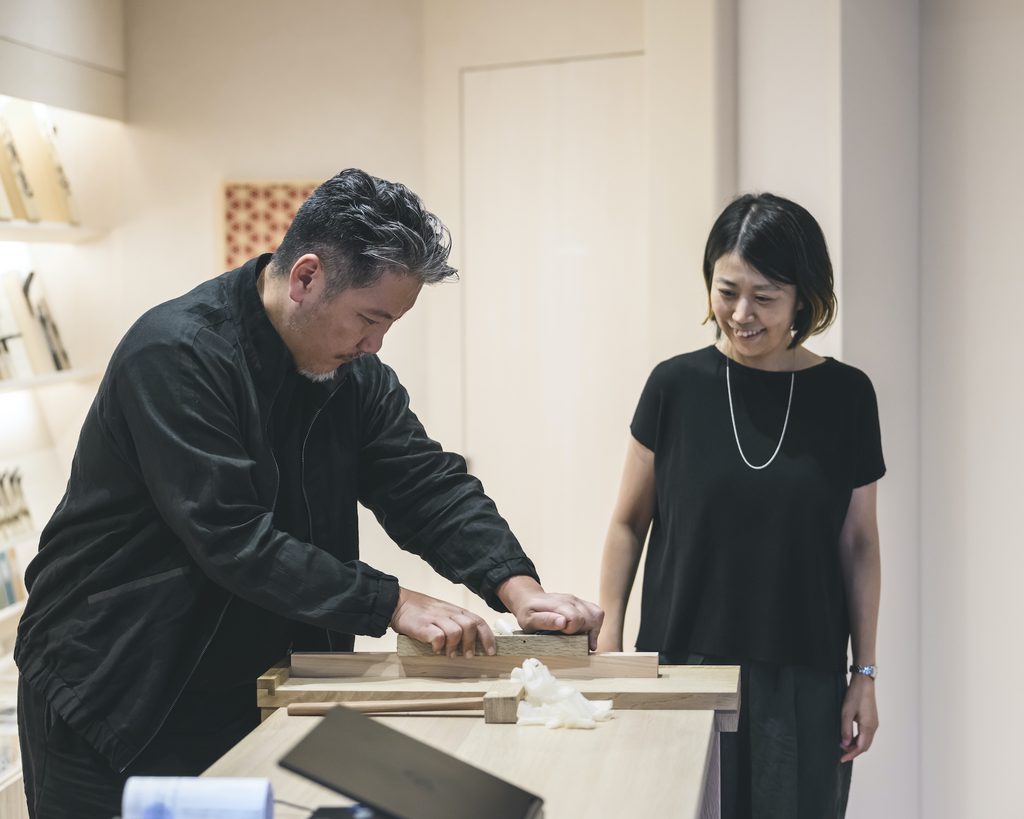
“Traditionally, Japan was a country that placed great importance on non-financial values.” (Shigeta)
Shigeta: How do you see the link between corporate value and non-financial KPIs, such as initiatives rooted in the philosophy of “Walking with the Forest”?
Okada: That’s a really fundamental question.
Shigeta: I’ve been wrestling with this a lot myself.
Okada: Initiatives such as making full use of previously unused forest resources and training craftspeople who can truly master their tools never show up in financial statements. However, I believe that in Japan, too, there will be an increasing demand for companies that pursue both business viability and these non-financial values, and that only companies with this approach will survive in the long run.
Beyond that, at the very foundation of people living together in communities lies a basic premise — that they be healthy and happy. We want to be a company that can contribute to that as well. This is the mindset I inherited from my father as a business leader.
Shigeta: Traditionally, Japan was a country that placed great importance on non-financial values. In the book A Textbook of Social Design, the Shikinen Sengu of Ise Jingu (Ise Grand Shrine) — the rebuilding of the shrine buildings every two decades — is cited as an ultimate example of social design. Through this process, traditional skills such as those of shrine carpenters and architectural knowledge have been passed down to the next generation without interruption. It is precisely because of this system that the work and livelihoods of local people have been sustained.
From the perspective of forest ecosystems, trees’ ability to absorb and store carbon dioxide declines after two decades. That is why forests need to be thinned at appropriate intervals, new trees planted, and the cycle maintained. Sustainable businesses, fundamentally, can only exist within a system where the cycles of nature and the well-being of the people involved reinforce each other.
We place great importance on our supply chain, and we tell our raw-material suppliers, “We will buy domestic materials even if they cost a little more, so please produce more of them.” In the short term, this increases costs and may be viewed negatively from a financial perspective, but I believe the value of these efforts goes beyond their short-term financial impact. I think these values will be reevaluated over the next 10 years, and I see Hida Sangyo’s initiatives as a powerful example of pioneering work in this area.
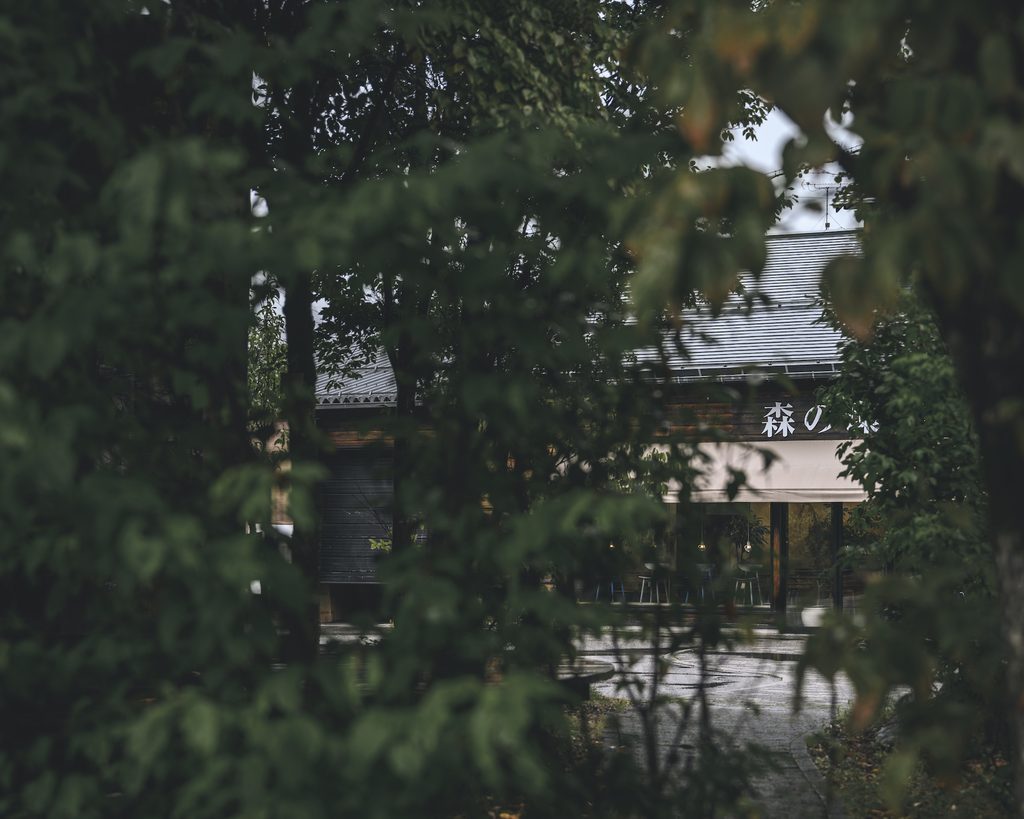
——Ms. Okada, is it your hope for the next 100 years that drives you to so earnestly pursue non-financial initiatives, such as training and developing people?
Okada: That is certainly part of it, but I think it also has to do with how the company was founded. A hundred years ago, in an area with few established industries, a group of like-minded locals pooled their money to establish Hida Sangyo, drawing on the abundance of beech trees and Hida’s long tradition of craftsmanship to build an industry for the future. That’s why, from the very beginning, the company was not founded on the mindset that it was enough for the business itself to keep generating profits. Instead, what mattered far more was the expectation that the company would help local people live more prosperous lives.
When I became president, many people in the city who I had never talked to told me things like, “My grandfather used to work there,” “I used to supply them with wood,” and “My family has always used the furniture of Hida Sangyo.” Hearing these stories made me feel even more strongly that we must remain a company this community can be proud of. That’s my biggest driving force, and it’s also why the idea that it’s enough for our company alone to generate a profit never crosses my mind.
——So, the company’s origins have shaped the mindset that skills should be passed down not by individuals, but collectively, from one generation to the next.
Okada: Exactly. Hida no Takumi(*4), or the craftspeople of Hida, refers to a collective of unnamed people. No individual names stand out — only the term “Hida no Takumi” remains. Passing down skills collectively is part of Hida’s identity, and it’s also what we want to keep protecting.
(To be continued in Part Two)
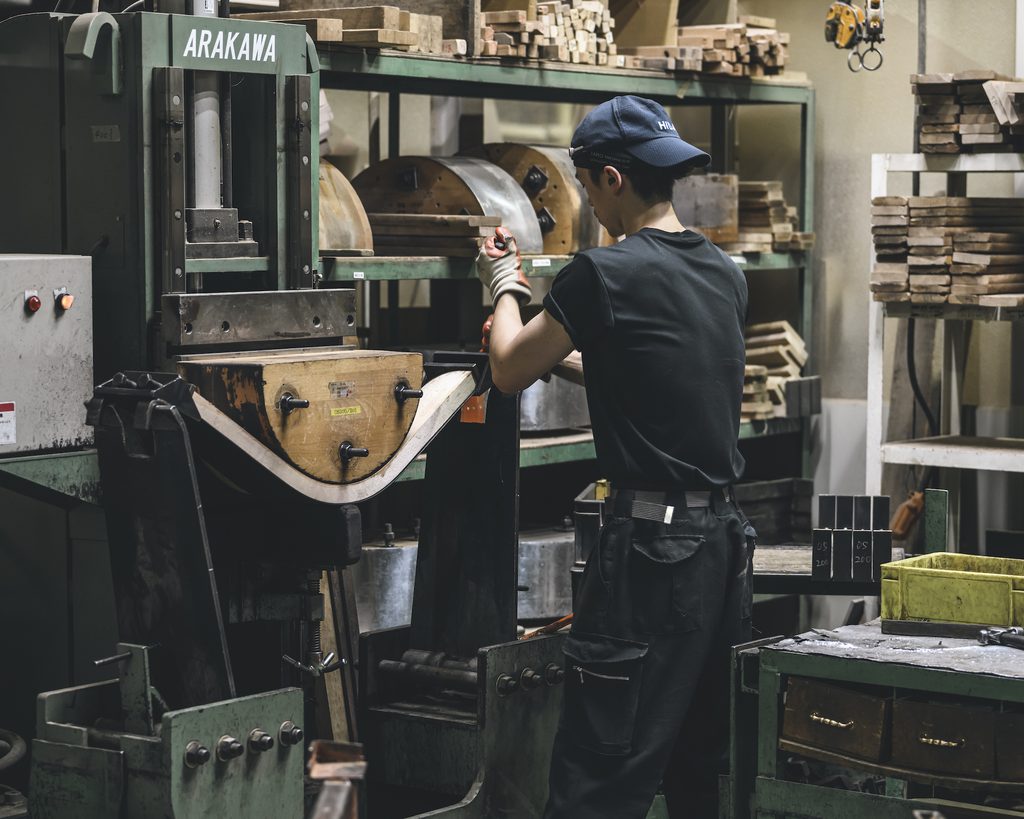
Notes:
*1_Toka
Toka is an aroma water designed specifically for whetstones, created through a collaboration between OSAJI and Kamaasa Shoten, a long-established cookware shop in Kappabashi, Asakusa. When a few drops are applied to a whetstone while sharpening a knife, it helps users concentrate and settle their nerves. The base fragrance features essential oils of Lindera umbellata and hinoki cypress, which first led Shigeta to discover Hida Sangyo’s advanced distillation techniques. More than just a fragrance, the product reflects a Japanese tool culture that values “facing your tools and settling your mind.”
*2_Walking with the Forest
A value that embodies the fundamental philosophy of Hida Sangyo. It reflects their approach that goes beyond simply harvesting trees for furniture, considering instead how to make the most of forest resources and how to engage with the local ecosystem.
This mindset, handed down since the previous president’s era, has borne fruit in a range of initiatives that promote circular use of resources from forest to finished product, including making furniture from previously unused wood, such as Japanese cedar, distilling aromatic compounds from branches and leaves, turning by-products into agricultural materials, and passing down the culture of hand tools.
When Okada became president in 2021, the philosophy behind this value was formally articulated and redefined as one of the “four values” of Hida Sangyo. It now serves as a guiding principle each staff member returns to in their day-to-day decision-making and pursuit of non-financial goals.
*3_Yuhokan HIDA GALLERY
A mixed-use facility combining a shop, gallery, and restaurant, opened by Hida Sangyo in the central tourist area of Takayama City. The place embodies the company’s commitment to “passing down woodworking culture to future generations.” In an age of increasing mechanization, the facility sources and sells hand tools such as hand planes and chisels that embody more than 1,000 years of woodworking wisdom. Beyond simply selling tools, it also serves as a “living cultural hub” that trains craftspeople who can master them and connects with the regions where the tools are made.
*4_Hida no Takumi
A collective term for craftspeople of the Hida region known for their outstanding woodworking skills. With a history of 1,300 years — having worked on temples and shrines in the ancient capital — Hida no Takumi were not known by individual names, but passed down their skills and spirit as a collective of unnamed craftspeople. In this conversation, Okada explains that passing down skills and values to future generations collectively, rather than relying on individual charisma, is part of Hida’s identity and the core that Hida Sangyo wants to keep protecting.
Profile
-
Akiko Okada
Born in Takayama City, Gifu Prefecture, Okada graduated from Nanzan University and joined a major apparel company, where she gained experience in store operations. Deeply inspired by the philosophy of “Walking with the Forest,” which had been passed down within the company, she joined Hida Sangyo, where her father was president, in 2011. After becoming president in 2021, she spent two years articulating and bringing the company’s philosophy into focus, guided by her belief in “leadership rooted in being who you are.” Moving away from reliance on charismatic individuals, she transformed the company into a bottom-up organization built on dialogue with the staff. Building on more than 100 years of traditional woodworking skills and the philosophy of “Walking with the Forest,” she is driving change for the next 100 years.
https://hidasangyo.com/ -
Masakazu Shigeta
Shigeta began his career in a technical role in the music industry before becoming a cosmetics developer in 2001. Beginning in 2004, he led the development of various cosmetics brands within the healthcare division of Nitto Denka Kogyo Co., Ltd., a metal surface treatment company founded by his great-grandfather. In 2017, he founded OSAJI, a skincare lifestyle brand, and became its brand director. In 2021, as a new store under the OSAJI brand, he launched kako, a specialty shop dedicated to home fragrance blending, and in 2022, he opened OSAJI’s first restaurant, enso. In 2023, leveraging Nitto Denka Kogyo’s technical expertise, he launched HEGE, a tableware brand, and became CEO of OSAJI Inc. in October of the same year. In 2026, as a personal project, he opened Shirakabaso, a private rental lodging facility in Sarugakyo Onsen, Gunma Prefecture, and launched OSAJI Kyoto, the brand’s global concept store in Kyoto’s Gosho Minami district. In the same year, he launched soca, a fragrance brand rooted in Japan’s unique aesthetic sensibilities. He has published books on beauty and regularly holds cooking classes and events focusing on food as the foundation of beauty.
Publications
Taberu Biyou (Eating for Beauty) (SHUFU TO SEIKATSU SHA, 2024)
42-Sai ni Nattara Yameru Biyou, Hajimeru Biyou (Beauty Routines to Quit and Start at 42) (Takarajimasha, 2022)
Information
Exhibitions
Special Exhibition: Mori to, Kurashi (The Forests, Hida and Daily Life), supervised by woodworker Ryuji Mitani
Dates: Saturday, October 3 – Sunday, November 15, 2026
Venue: Yuhokan HIDA GALLERY
https://hidasangyo.com/exhibition/the-forests-hida-and-daily-life/
DESIGN LIVE 2026
Dates: Friday, October 16 – Wednesday, November 4, 2026
Venue: HIDA Tokyo Midtown Store
https://www.tokyo-midtown.com/jp/event/designlive/
DESIGNART TOKYO 2026
Dates: Friday, October 30 – Tuesday, November 3, 2026 (national holiday)
Venue: AUTOBAHN (former Tokyo Expressway, also known as “KK Route,” now Tokyo Sky Corridor)
Note: Admission ticket required
https://www.designart.jp/designarttokyo2026/
JAPAN FURNITURE SHOW by IFFT 2026
Dates: Saturday, October 31 – Tuesday, November 3, 2026 (national holiday)
Venue: Midtown Garden, Tokyo Midtown
https://japanfurniture.jp/jfs2026/
-
Photographs:Eisuke Komatsubara
-
Text:Masahiro Kamijo
NEWS LETTER
理想論 最新記事の
更新情報をお届けします
ご登録はこちら
ご登録はこちら
メールアドレス
ご登録ありがとうございます。
ご登録確認メールをお送りいたします。