
2026-05-28
Vol.27
Context Design Researcher and Brand Consultant
Yasunobu Tamari(part 2)
-
he Three Layers of Deliciousness
-
Why noma Turned to Miso
-
Home Cooking as the Ultimate Form of Personalized Wisdom
-
The Core of Context Design
-
Roots as a Sense of Grounding
Masakazu Shigeta, founder of the OSAJI brand, views skin troubles as warnings sent by the body. Meanwhile, Yasunobu Tamari seeks to unravel the context of food through the lens of geology and genetics. Although their paths might appear entirely different at first glance, their pursuits ultimately converge at a single crossroads.
Tamari’s recent book, Anthropology of Japanese Food, highlights the importance of understanding one’s own roots and confronting one’s instincts. In an age where people drift through an overwhelming sea of information, it can be seen as an attempt to anchor the self once more to the tangible ground of culture and place. Beauty and food — through a dialogue that transcends the boundaries between these fields, the two illuminate what it truly means to “reweave context” in today’s world.
(Click here for the first part of the interview)
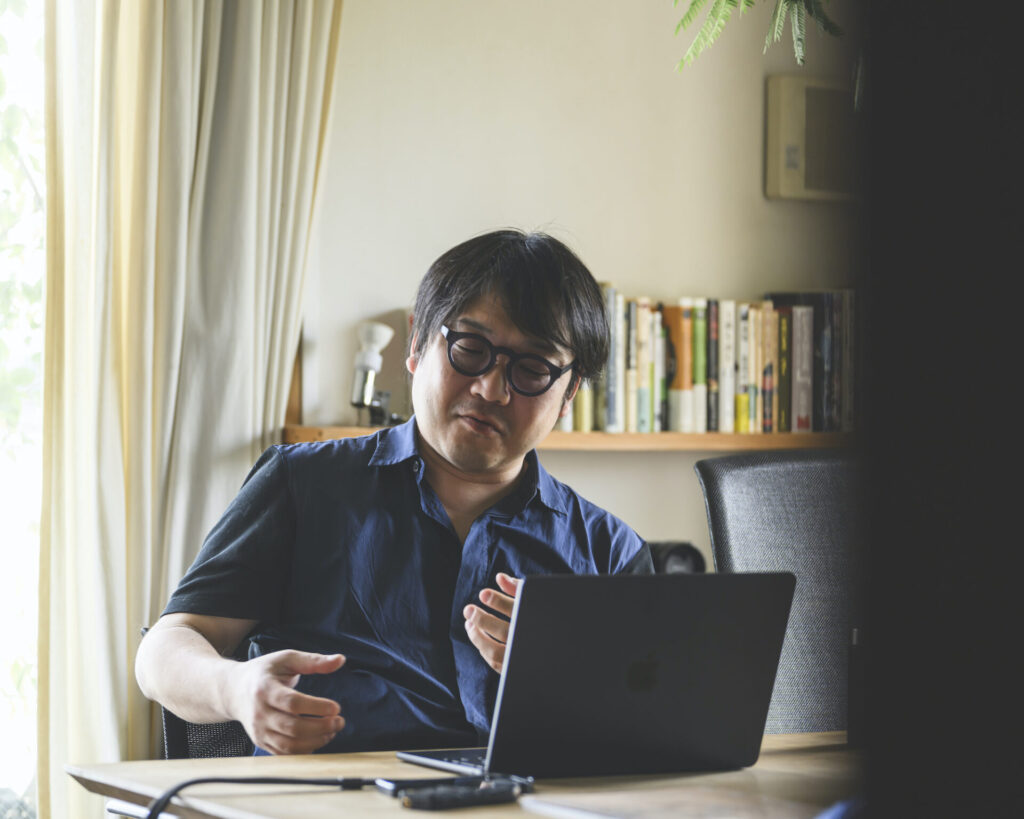
“The deliciousness of cooking itself is, ultimately, something like the ‘quantum physics of the person making it.’” (Shigeta)
——Mr. Tamari, how do you see the food culture of Japan today?
Yasunobu Tamari: I have no intention of criticizing the supermarket industry itself, but I’ve long felt that something essential — something like a “soul” — inevitably falls away from food that reaches our tables solely through systems of efficient distribution.
After spending more than a decade traveling throughout Tohoku and speaking with fishermen, farmers, and producers, I came to feel that eating food at its source was decisively different. It’s not simply about freshness — there is another kind of energy present there.
These days, I visit farmers in Ashigara once a month to gather and share seasonal food like wild plants and bamboo shoots. Of course, we can buy boiled bamboo shoots in packages at supermarkets anytime, but I believe there is meaning in eating them fresh in early spring, without stripping away too much of their natural bitterness. By doing so, it feels like the body is gradually detoxifying what I accumulate during winter. When you spend time with farmers, you begin to intuitively understand these things. And I believe that developing an awareness of such seasonal rhythm itself is part of weaving the context of food.
——So, that is the true meaning behind your phrase, “food experiences that delight the soul.”
Tamari: Exactly. Here is a question: What makes something delicious? I think deliciousness is made of three layers. The first is an “innate, genetic memory” inherited from ancestors who lived in a particular land for thousands of years. The second is “acquired experience” — memories shaped through home cooking and the foods we encounter during childhood. And the third is the “recognition of context,” which involves digesting the effort and the stories of the people who produce our food. It is the balance of these three layers that ultimately shapes an individual’s sense of what tastes truly “good.”
——Mr. Shigeta, how do you define “deliciousness?”
Masakazu Shigeta: I believe we perceive the deliciousness of ingredients themselves and the deliciousness of a finished dish through entirely different sensibilities. When it comes to ingredients, the question is whether they carry what I’d call “the right kind of complexity.” Japanese cuisine has traditionally devoted tremendous effort to refining away unwanted flavors and impurities. But the closer ingredients remain to their wild, natural states, the more they carry the terroir — the distinct character of the land and environment from which they came. And that, to me, is the ingredient’s true vitality. On the other hand, I believe the deliciousness of cooking itself is, ultimately, something like the “quantum physics of the person making it.”
——What do you mean by quantum physics?
Shigeta: The feelings of the person making the food inevitably become part of its flavor. I see the same thing in cosmetics development — when a formulation is created by someone gentle and thoughtful, that sense of gentleness somehow resides within the product itself. In the cooking classes I organize, even when everyone cooks following the same recipe, the tastes are completely different — if you are irritated while cooking, the taste becomes edgy.
Behind the recognition of Japanese food as a UNESCO Intangible Cultural Heritage lies the philosophy of yaoyorozu no kami — the belief that divinity resides in all things — as well as the spirit of Zen, both of which have been carefully preserved by figures like Mr. Yoshihiro Murata from Kikunoi. I believe Kyoto’s food culture is exceptional because its chefs approach a Zen-like state of mind, with a profound awareness of receiving the lives of other living things. Rather than making what you want to express, entering into dialogue with the ingredients themselves, always mindful of those who will use or consume them — that, ultimately, is the root of my own approach to craftsmanship and creation.
“Whenever I encounter regional or traditional cuisines, I can’t help but want to recreate them myself, and what I found fascinating is that, paradoxically, it’s precisely through this attempt to recreate a dish that the elements which defy reproduction reveal themselves.” (Tamari)
Shigeta: Whenever I think about how we should engage with food, a particular TV drama comes to mind: Tengu no Daidokoro (The Tengu’s Kitchen) — a story about descendants of Tengu, a legendary creature of Japan, who live a self-sufficient life. What makes it fascinating is that, in addition to traditional Japanese cuisine, they also cook pizza and curry — they even buy butter online. While fully enjoying modern life, they maintain a profound respect for natural ingredients at the core of their lifestyle. I think that balance truly resonates with the Japanese worldview.
At one point, the Nordic restaurant, noma(*1), was celebrated as the best restaurant in the world. Yet what they practice is a focus on terroir and fermentation, which, in many ways, is deeply rooted in the fundamentals of Japanese cuisine. Japan and the Nordic countries have followed very different historical paths, but today, as symbolized by noma in food culture and the trend of “Japandi” in interior design, their philosophies are beginning to converge in striking ways.
I believe this world view — one that resonates with the idea of yaoyorozu no kami — is what gives rise to the sense of gentleness found in all forms of craftsmanship, whether in cooking or cosmetics.
——Mr. Tamari, how do you interpret this affinity between Japan and the Nordic world in food culture?
Tamari: My understanding is that noma decided to turn to Japan because its own context had been completely severed. According to their book, traditional Scandinavian food culture had once been largely lost, leaving virtually no living tradition behind. So, they sought to reintroduce knowledge from outside their own tradition. One of the first things they did was come to Japan to learn how to make miso. This is, in fact, a deeply anthropological approach.
In contrast, there is the Peruvian restaurant Central. Rather than looking outward, they tried to excavate the wisdom of the Inca civilization buried beneath the Andes Mountains — wisdom that had been lost when Spanish colonization reshaped Peruvian culture. This is an approach closer to folklore studies, seeking its roots beneath one’s own feet. The two approaches differ — noma searches outward for knowledge, while Central digs inward into its own foundations — yet both share the same desire to connect lost contexts and carry them into the future.
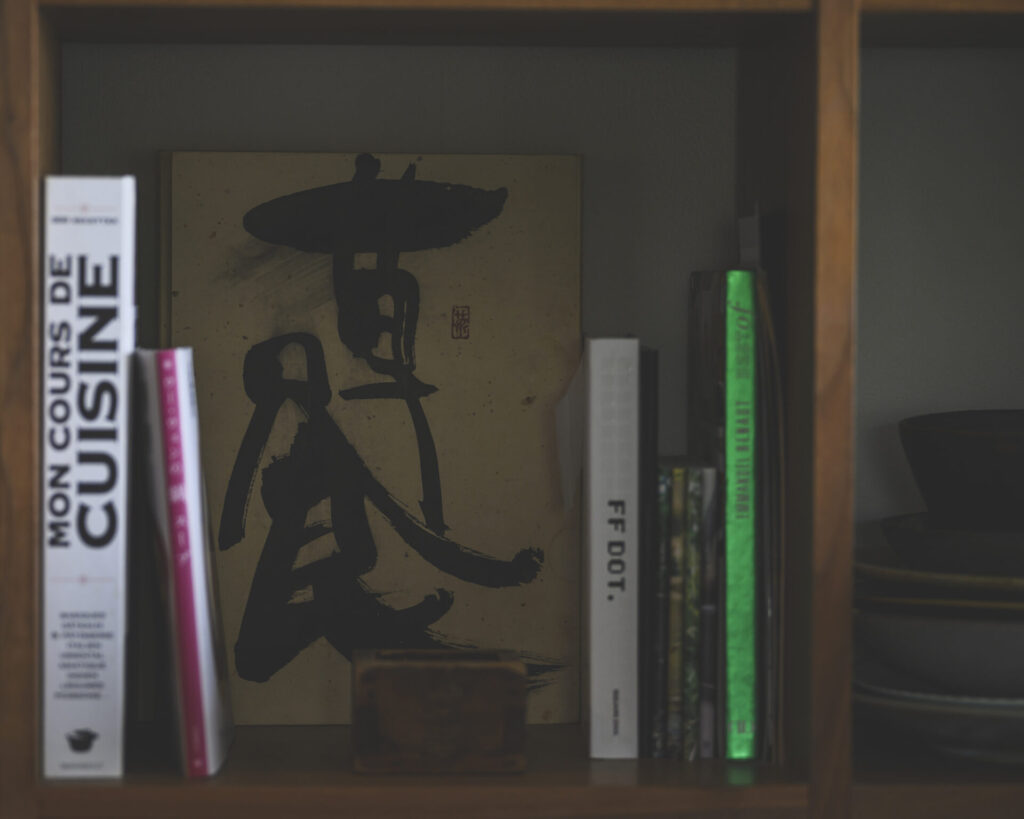
——Mr. Tamari, do you also trace these kinds of cultural contexts through cooking?
Tamari: Absolutely. Whenever I encounter regional or traditional cuisines, I can’t help but want to recreate them myself. At one point, my workplace here was practically overflowing with ingredients from Tohoku. What I found fascinating is that, paradoxically, it’s precisely through this attempt to recreate a dish that the elements which defy reproduction reveal themselves.
——What do you mean by “cannot be reproduced”?
Tamari: For example, “water.” Without the characteristic softness of the Kansai water, you simply cannot achieve the flavor of dashi in the Kansai region. I actually once filled plastic bottles with tap water in Kyoto and brought them back to Tokyo in an attempt to recreate it. Or consider “wind.” When you make dried fish, without the particular winds unique to a certain area, the fish simply shrivels up like a mummy.
What fascinates me is realizing that perfect reproduction is ultimately impossible, and through that realization, you come to viscerally understand just how profoundly a region’s climate and environment shape its culinary context.
I have something I’d like to ask Mr. Shigeta — why is someone whose profession lies in beauty and cosmetics so deeply engaged with food? Even from the dishes you share on social media, I can tell that your interests go far beyond mere curiosity.
——In the case of Mr. Shigeta, it seems less that food exists as an extension of beauty, and more that the two coexist simultaneously.
Shigeta: For me, there is no boundary between beauty and food. The separation exists only because society has imposed labels on them. Even the idea that “Shigeta is someone who makes cosmetics” feels fundamentally misaligned with how I see myself. Making cosmetics and cooking are, to me, entirely natural acts that belong to the same continuum.

“Context is merely a guide, not the answer itself. Creators who lose sight of this fact will inevitably lose their way.” (Shigeta)
Shigeta: One of the major themes occupying my mind these days is the idea of “well-aging.” The other day, I heard an interesting story from the beauty team in Stockholm. For a time, Korean cosmetics and minor cosmetic treatments became popular across Europe, but now salons that specialize in reversing those treatments are thriving. It seems more and more people are realizing that a lifestyle centered on “anti-aging” doesn’t necessarily lead to inner fulfillment, even if one’s appearance improves.
The tendency to view aging negatively has distorted beauty culture. I want to free the culinary world from the obsessive notion that “You must not eat this for the sake of beauty.” For example, does a superfood from Beverly Hills necessarily suit someone born and raised in Gunma Prefecture? I believe the time has come to push back against the arbitrary manipulation of information by media and distribution systems.
More importantly, I feel the key to contemporary well-aging lies in what has organically evolved from the blending of diverse cultures — much like Vietnamese cuisine, which has developed its own distinct format through a blend of Indochinese, French, and Chinese cultures.
——What are your thoughts on the idea that “the good old ways” represent authenticity?
Shigeta: I don’t believe origins or authenticity are always “correct”. In today’s world, where Japanese people wear Western clothing rather than kimono, and our environment continues to change by the moment, simply repeating old forms is not enough. Presenting wabi-sabi or the tea ceremony as fixed templates of “Japanese design” amounts to nothing more than a mere homage to the past. If anything, today’s manga and Vocaloid culture more authentically reflects the realities of contemporary Japanese people.
The same applies to beauty culture. We need to revise — to reconstruct — the value system that has treated looking young as the ultimate ideal. Rather than resorting to an overly symptomatic anti-aging approach, we should ask a more essential question: what kinds of dietary choices and ways of life allow a person’s true appeal to emerge naturally? I believe earnestly engaging with that question is the essence of beauty in the years to come.
——Mr. Tamari, from the perspective of the anthropology of Japanese food, how do you view the world of beauty and cosmetics? Do you believe it is possible to reach something essential by reconnecting the severed contexts?
Tamari: After listening to Mr. Shigeta, I feel we will ultimately arrive at the same place. Skin type, too, is deeply influenced by genetics and inseparable from the innate nature of our relationship with food. In my own case, I have what I call a “northern constitution,” rooted in my family background in Niigata Prefecture. Even in the height of summer, I don’t feel like I’ve truly had a meal unless I eat something hot. My body outright rejects cold dishes, like bento boxed meals. These are inescapable traits inherited from my ancestors — not choices, but my very constitution. Since each individual’s body is fundamentally different, I believe there are clear limits to defining a universal “correct answer” through modern nutritional science — especially with its reliance on metrics like calorie calculations. This is one of the most important realizations I arrived at while writing this book.


——In an industry like cosmetics, which is inherently tied to mass production, is it truly possible to engage with individual characteristics?
Tamari: That is the very question Mr. Shigeta himself must grapple with, and it’s a challenge I watch with profound interest. In the world of food, research on the gut microbiome is advancing rapidly. In Israel, research has shown that even among people with diabetes, some can eat chocolate without a spike in blood glucose levels. In other words, it seems that energy conversion efficiency varies considerably from person to person.
In the future, as personalized analysis becomes more sophisticated, people will increasingly choose what they eat based more on information. But in human history, the role that performed this kind of fine-tuned adjustment most precisely was not numerical analysis—it was the attentive gaze of a mother. It was the act of observing a child’s subtle changes in condition and preparing meals accordingly — home cooking was, in many senses, the ultimate form of customization.
——What are your thoughts on things like supplements, which prioritize efficiency?
Tamari: I am deeply troubled by the sign that we may be heading toward a future in which people will obtain nutrition purely through numerical management, while neglecting the act of cooking altogether. Likewise, creative cooking that ignores accumulated wisdom and springs solely from one’s own hollow imagination ultimately leaves people spiritually empty as well.
The same can be said of luxury tower apartments with no sense of context, or urban development devoid of soul. They are, one might say, the very pinnacle of “contextlessness.” And yet, that’s precisely why, even in a rented workplace, I choose to lay solid natural wood flooring. There’s always a way to make it work, even within restrictive constraints.
——Why do you think contextless forms of creation have become so widespread today?
Tamari: I suspect it has much to do with a kind of rupture accelerated by postwar society.
Shigeta: It can also be a kind of “Galápagosization” of expression. The 1990s were, in some sense, a fortunate era where innovation without context was still allowed. Music offers the clearest example. As one musician once put it, “Since the Beatles, no new chord progression has emerged.” Now that nearly every form of expression has already been exhausted, we find ourselves returning once again to the importance of context.
However, overemphasizing context can also obscure the essence of things. Sometimes you go to a restaurant that prides itself on being “innovative” or “fusion,” only to feel as if you’re being subjected to a lecture longer than a meal itself. Or, before going on at length about terroir and the like, perhaps the more fundamental question is simply: Does the wine actually taste good?
Context is merely a guide, not the answer itself. What matters most is whether the food is genuinely delicious. Creators who lose sight of this fact will inevitably lose their way.
Tamari: That’s right. Truly great ramen shops don’t require lengthy explanations, after all.

“The real question is how we should engage with ‘value that speaks to our instincts’ — experiences that send adrenaline coursing through us. It is only from there that truly rich contexts emerge.” (Shigeta)
Shigeta: When discussing the essence of beauty, there is one unavoidable fact: cosmetics are, ultimately, something human beings can live without. We die if we don’t eat, but we never die without applying cosmetics. And yet, in modern society, factors such as environmental changes, stress, and irregular eating habits have left many of us with little choice but to rely on them. When beauty is discussed without acknowledging this premise, the conversation inevitably devolves into superficial, symptomatic treatment.
What meaning is there in accumulating hundreds of cosmetics with the passive mindset of, “I’ll apply this once a symptom appears?” Beyond their role as tools for solving problems, they should function more like clothing — as a means for expressing oneself. If we trace skin troubles back to their roots, we inevitably reach a fundamental question about one’s living environment and even one’s way of working. Discussing beauty without reconsidering fundamental life choices — including whether to continue in one’s current job — strikes me as entirely nonsensical.
——Mr. Tamari, in the afterword of Anthropology of Japanese Food, you quoted Being Digital, written in 1995 by Nicholas Negroponte, founder of MIT Media Lab, and argued for the need to reverse the “From Atoms to Bits” paradigm.
Tamari: In the 1980s and 1990s, it was widely believed that converting the physical, material reality into digital information was the “correct” path. But beginning in the 2010s, we started to see a reversal of that tide.
What I find truly unbearable is the attempt to define humanity solely through encoded information in digital space. The world is far more complicated, diverse, and intractable than that. To truly recognize that complexity, it is not enough merely to swim through the sea of information. We need to demonstrate the tangible reality of the physical world through fieldwork and real-world experiences. That is also the very core of the context design approach I advocate.
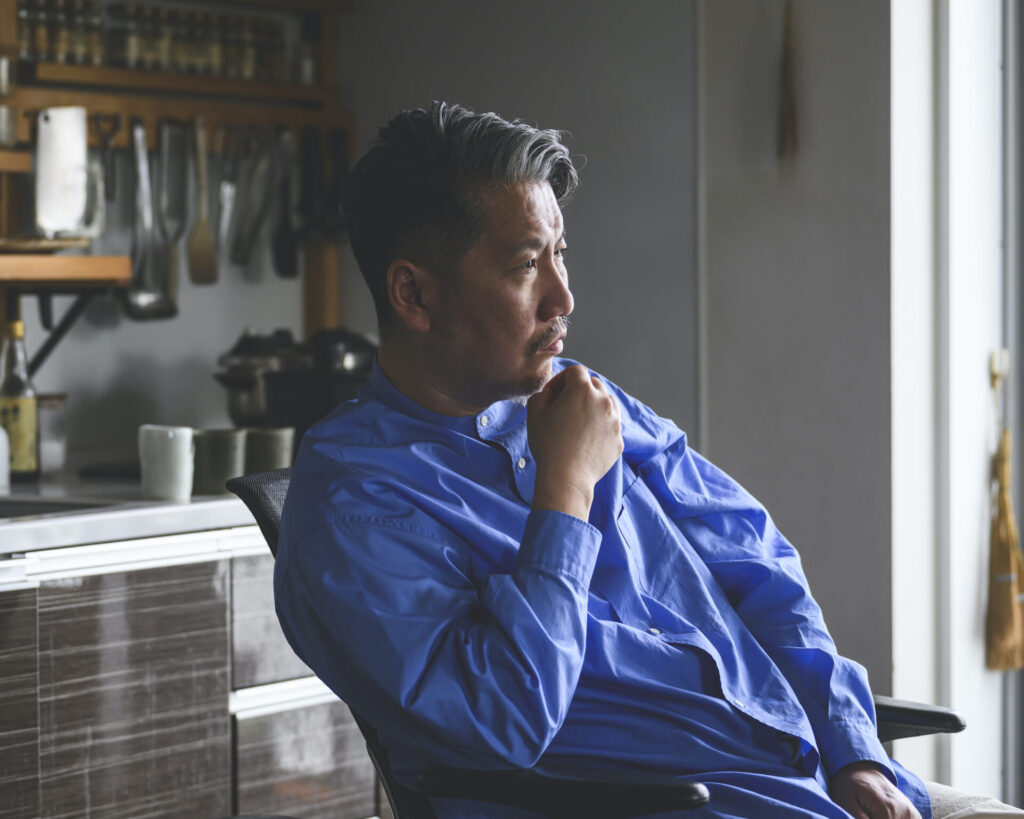
——Mr. Tamari, what kind of society do you envision through the practice of context design?
Tamari: Well, for example, I want to transform the distribution system itself. A supermarket called YAMADA STORE(*2) in Hyogo Prefecture labels its milk with figures such as “53%,” the proportion of milk sourced from grass-fed cows. As consumers consciously choose that milk, the percentage gradually increases. This, in a sense, is a form of democracy enacted through everyday purchasing decisions.
When nomads in Mongolia drink milk from cows raised in environments that remain relatively close to nature, there is a genuine, undiluted deliciousness to it. That may be difficult to achieve in highly efficiency-driven cities like Tokyo, but I hope for a society in which each individual consciously chooses what to eat and is able to nourish themselves with genuine autonomy.
The Japanese expression Itadakimasu is more than a moral gesture of gratitude. It is a ritual of ultimate self-recognition — an act of accepting into one’s body the very elements that will become one’s flesh and blood. Yet today, haven’t we delegated too much of that choice — the choice of what becomes part of ourselves — to distribution systems?
——It seems to overlap with your question, Mr. Shigeta: What do I truly want to eat?
Shigeta: Consumer behavior is an investment in the future. In order to resist what the thinker Tatsuru Uchida once described as “The Monkeyization of the World,” we must earnestly consider what kind of future our choices in this very moment are leading us toward.
Rather than choosing based solely on information or price, we need to sharpen our own instincts — because our sense of what is delicious never lies. Even when drinking a cup of convenience-store coffee, I think it is important to question ourselves as living beings: Do I really find this coffee delicious right now, or am I simply responding to a physiological impulse?
This is also connected to misguided branding. True branding is not about disguising reality, but about designing the role a product or company can play in society. The real question is how we should engage with “value that speaks to our instincts” — experiences that genuinely move us, stir our emotions, and send adrenaline coursing through us. I believe it is only from there that truly rich contexts emerge.
“Precisely because urban life tends to strip away context, having roots to return to becomes all the more important. From there, the deeper question of how to live begins.” (Tamari)
——What is the first step readers can take to reconnect their own sense of context?
Tamari: I think the first step is to trace one’s own “roots.” I once took a genetic test myself, but what I found even more important was to know how and where my grandparents lived. I know a young man whose parents are both from Choshi, Chiba prefecture. He carries strong genetic imprints of a food culture shaped by generations of life sustained by fish from the Kuroshio current. Simply becoming aware of that fact changes how we think about our daily eating habits and how we care for our own bodies. Precisely because urban life tends to strip away context, having roots to return to becomes all the more important. From there, the deeper question of how to live begins.
——Does the fieldwork held in Ashigara, Kanagawa prefecture, over the weekend also connect to that kind of effort to help people recover that awareness?
Tamari: Exactly. I take people who work in places like Shibuya — environments where context is constantly severed — and bring them to landscapes where the earth rises, and natural spring water emerges from the ground. People experience the living temperature of spring water — warm in winter and cool in summer — and come to understand that the abundance of hot springs in places like Hakone and Izu exists because these regions lie along the tectonic plate boundary. Through that experience, they begin to rediscover the awareness that “I stand upon the context of this Japanese archipelago.” Eating seasonal produce and reconnecting one’s body to the land and climate — that becomes the finest program for restoring the spirit.
Shigeta: May I ask about your next ambition?
Tamari: My ambition…well, I’d like to launch new projects together with the people I’ve met through this book. One idea I’m particularly interested in is what I call “distribution with visible context.” Like YAMADA STORE in Hyogo, I want to create a supermarket where consumers’ choices can directly influence production sites — and as a consumer, it’s somewhere I would genuinely want to shop myself.
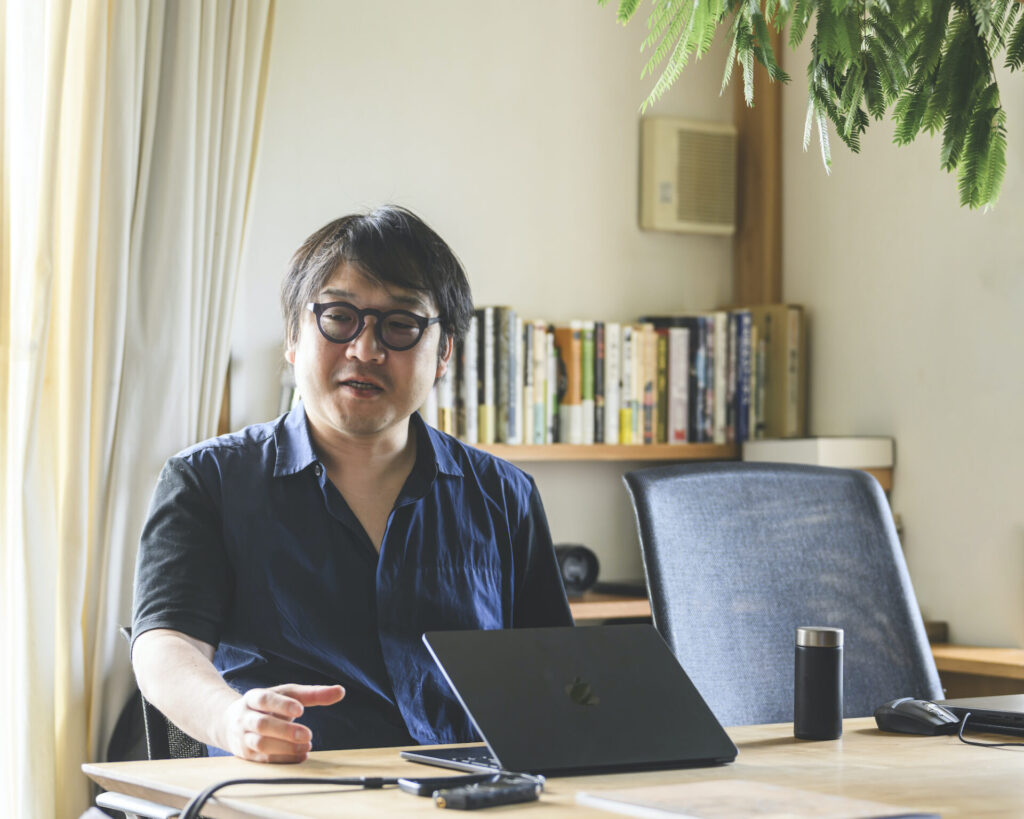
——Are there any supermarkets or retailers you admire besides YAMADA STORE?
Tamari: Yes —that’s Heisuiken in Kurashiki, Okayama Prefecture. It’s a curated food shop run by Mr. Shoichiro Morita, who also operates a sake brewery next door. He personally selects the finest sake accompaniments from across Japan, based solely on his aesthetic sensibility.
I once asked him what he considered the finest accompaniment to sake in Japan, and he said it would be makiburi, a traditional preserved yellowtail dish from Noto. What fascinated me was the contrast: a man living in the Seto Inland Sea region, where delicious food is abundant year-round, being deeply drawn to a preserved food born from the harsh environmental conditions of Noto. I felt that gap contained a clue to how different regional contexts intersect beyond geography itself. Since then, I’ve continued visiting Noto regularly.
Shigeta: Listening to you, something finally falls into place for me. The work I’ve pursued — the fusion of cosmetics and food — is also an attempt to reconnect the divisions of context that society itself created through the context of the individual body.
What concerns me most today is that we are beginning to undervalue history — a form of value that cannot be bought with money. The true value of a brand lies only within the context of its history. Yet contemporary society increasingly tries to measure value purely through the consumption of information.
If Japan fails to actively communicate the context of the food and beauty it has cultivated, this country will risk losing the initiative on the global stage. We should feel a far greater sense of urgency about a world in which noma is the one championing Japanese miso, and Korea is the one bringing seaweed to global attention.
That’s why, through my terakoya activity, I’d like to cultivate a sense of placing oneself within a longer historical timeline. How do we receive the contexts flowing from the past, and what do we choose to pass forward into the future from where we stand today?
Japan’s unique ethics of beauty and wisdom of food must be consciously reinterpreted and rebuilt for the present age. Otherwise, this country risks drowning in debt — not only financial but also cultural. Reweaving severed contexts with our own hands once again — I believe that quiet yet powerful determination is what will shape the meaning of true richness in the next era.
——It feels like there are many things the two of you could create together.
Tamari: Absolutely — I’d love that. In a city like Tokyo, where life so easily becomes detached from context, what matters is rediscovering one’s own inherited sensibilities and memories embedded in the land. That is not merely education — it is an attempt to reconsider how we want to live and to reinstall context into our very bodies.
NOTES:
*1_noma
Based in Copenhagen, Denmark, noma is a legendary culinary institution that has ranked No. 1 in The World’s 50 Best Restaurants five times. Its greatest achievement is often said to be its anthropological approach: introducing fermentation cultures, such as Japanese miso, to restore broken cultural continuity in Scandinavia, where many traditional foodways had all but disappeared through modernization. Co-founder and chef René Redzepi and his team traveled to Japan to learn miso-making techniques firsthand, later applying those methods to Nordic wild ingredients. What they pursued was not a simple imitation of Japanese cuisine, but a reconstruction of context itself — reviving the culinary identity and regional terroir through the introduction of fermentation.
*2_YAMADA STORE
Based in Hyogo Prefecture, YAMADA STORE is a supermarket that prioritizes food safety and locally rooted food systems. The company practices a participatory retail approach, encouraging consumers to actively support producers through conscious purchasing.
One symbolic example is its labeling of the “grass-fed ratio” for low-temperature pasteurized milk. As customers resonated with the philosophy behind the product and intentionally chose to support it, the grass-fed ratio was successfully increased from the original 50 percent to 53 percent.
By increasing transparency around food production, YAMADA STORE has built a system that enables conscious consumer behavior to drive tangible change at the production level. In today’s efficiency-driven world, this locally rooted initiative presents a new model for distribution — one in which individuals help sustain more responsible forms of production.
Profile
-
Yasunobu Tamari
Born in Tokyo in 1979, Yasunobu Tamari is a researcher of context design. Questioning the systems built for mass production and mass consumption, he has led various projects since the 2000s alongside cultural anthropologists and other researchers, aimed at repairing the “fragmentation” of modern society.
He has been involved in regional revitalization initiatives in Nishi Awakura Village in Okayama Prefecture, and, as a founding member of Tohoku Taberu Tsushin, the magazine that received the Good Design Gold Award, he brought the passion and energy of local producers and production sites to urban audiences. Currently, through the Context Design Institute he founded, Tamari focuses on the anthropology of Japanese food, a field that explores food culture through lenses such as geology and anthropology.
At a time when efficiency is prioritized above all else, he advocates the “reconstruction of context” — an approach that deliberately honors painstaking effort and history. His ongoing attempt — to reweave the wisdom of culture and environment embedded in the Japanese archipelago into narratives that can be passed on to future generations — continues to serve as a reliable compass for navigating today’s adrift consumer society. -
Masakazu Shigeta
Shigeta began his career in a technical role in the music industry, before becoming a cosmetics developer in 2001. From 2004, he was involved in developing various cosmetics brands within the healthcare division of Nitto Denka Kogyo Co., Ltd., a metal surface treatment company founded by his great-grandfather. In 2017, he founded OSAJI, a skincare lifestyle brand, and became its brand director. In 2021, as a new OSAJI store, he produced kako, a specialty shop for home fragrances and perfume in Kuramae, Tokyo. In the following year, he opened a combined shop in Kamakura, Kanagawa, featuring OSAJI, kako, and the restaurant enso. In 2023, leveraging Nitto Denka Kogyo’s technical expertise, he launched HEGE, a tableware brand, and in October of the same year, he became CEO of OSAJI Inc. He has also published books on beauty and regularly holds cooking classes and events focusing on food as the foundation of beauty. In November 2024, he released a collaborative album with F.I.B JOURNAL titled Gensho hyphenated, further expanding the scope of his creative activities.
Publications
Taberu Biyou (Eating for Beauty) (SHUFU TO SEIKATSU SHA, 2024)
42-Sai ni Nattara Yameru Biyou, Hajimeru Biyou (Beauty Routines to Quit and Start at 42) (Takarajimasha, 2022)
Information
Anthropology of Japanese Food
Years in the making, Anthropology of Japanese Food is an ambitious work independently woven together and written by context design researcher Yasunobu Tamari. First published in December 2025, the book explores a fundamental question: Why do we crave wild mountain vegetables in spring and root vegetables in winter?
From the journey of wheat along the Silk Road, to the temperature of spring water shaped by the tectonic plates of the Japanese archipelago, to the mystery of “northern constitution” that Tamari inherited from his ancestors, the book threads together fragmented knowledge through the unifying framework of “context” — painting a sweeping vision that also serves as a guide for navigating life in the modern age.
The book is available through the official website of the Context Design Institute.
https://ctxt.jp/
-
Photographs:Eisuke Komatsubara
-
Text:Masahiro Kamijo

NEWS LETTER
理想論 最新記事の
更新情報をお届けします
ご登録はこちら
ご登録はこちら
メールアドレス
ご登録ありがとうございます。
ご登録確認メールをお送りいたします。