

2026-05-21
Vol.27
Context Design Researcher and Brand Consultant
Yasunobu Tamari(part 1)
-
Revealing Context
-
From Isolated Dots to Interconnected Threads
-
In Search of the Missing Link
-
The Essence of Japanese Food
Masakazu Shigeta, founder of the OSAJI brand, views skin troubles as warnings sent by the body. Meanwhile, Yasunobu Tamari seeks to unravel the context of food through the lens of geology and genetics. Although their paths might appear entirely different at first glance, their pursuits ultimately converge at a single crossroads.
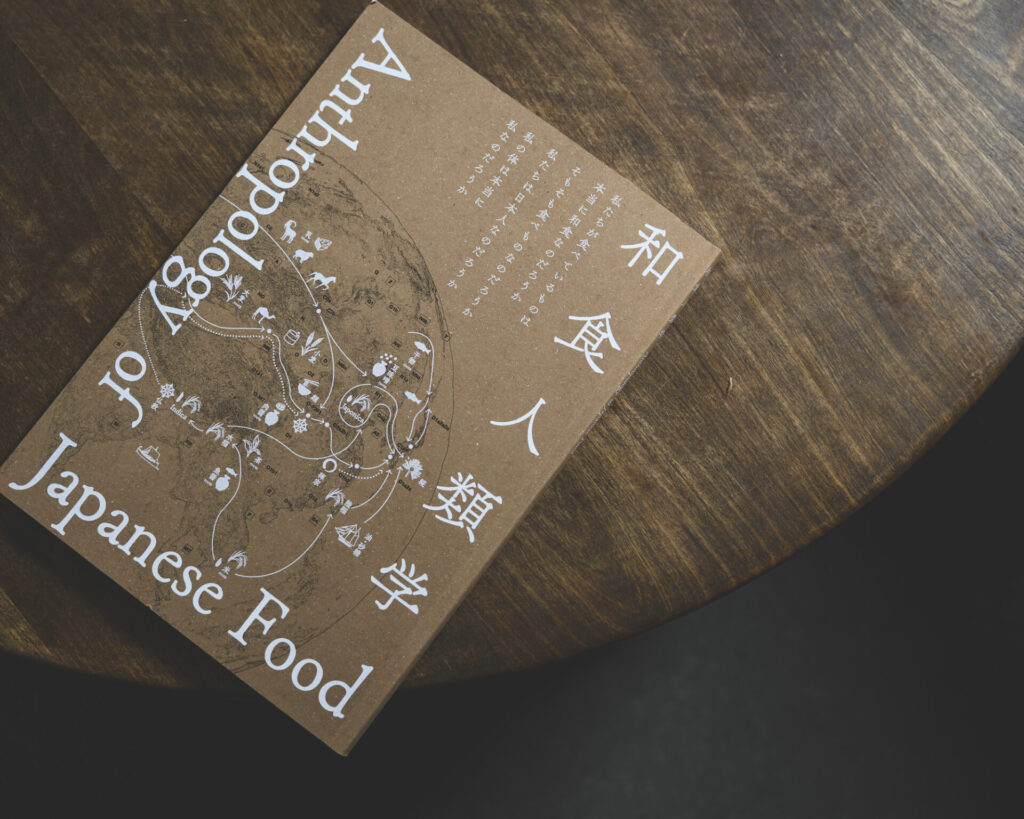
Tamari’s recent book, Anthropology of Japanese Food, highlights the importance of understanding one’s own roots and confronting one’s instincts. In an age where people drift through an overwhelming sea of information, it can be seen as an attempt to anchor the self once more to the tangible ground of culture and place. Beauty and food — through a dialogue that transcends the boundaries between these fields, the two illuminate what it truly means to “reweave context” in today’s world.
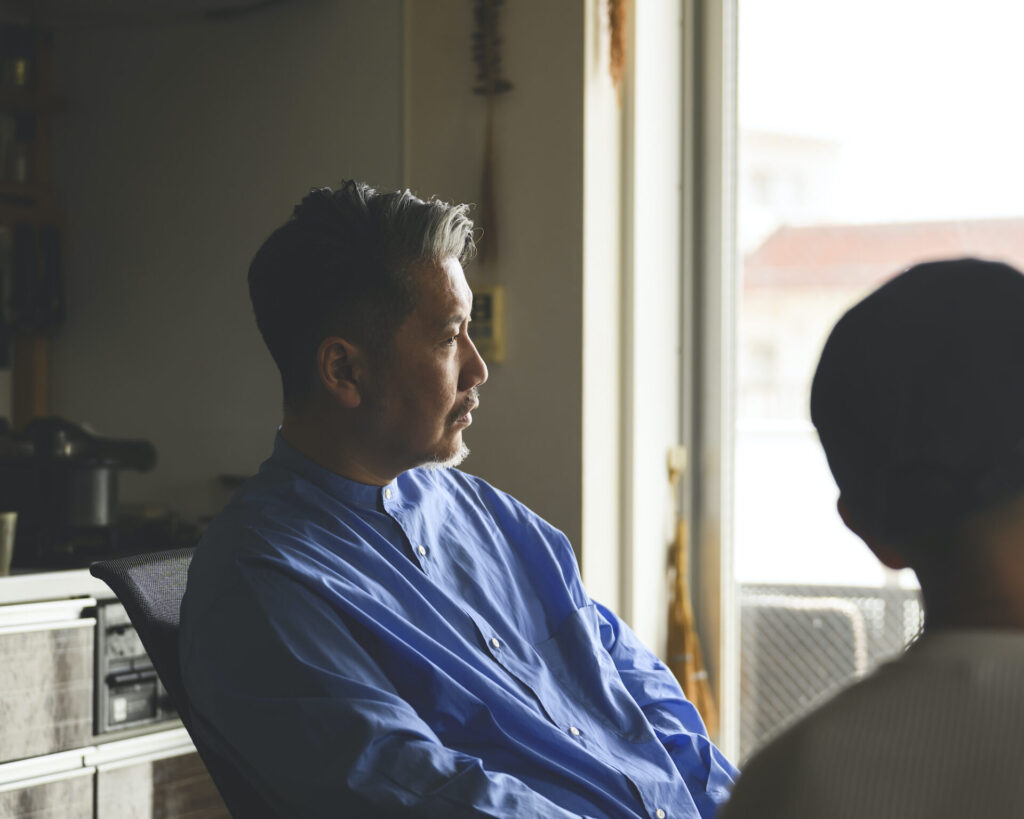
“Advances in logistics and technology today have all but erased the idea of seasonality, making it harder to perceive our own origins as a species.” (Shigeta)
Masakazu Shigeta: Mr. Tamari, you originally started your career in design, right?
——I understand that you were involved in projects like “Cuusoo” by elephant design, a company led by Mr. Kohei Nishiyama.
Yasunobu Tamari: That’s right. I was working in industrial design around 1999. While I was involved in building a system that translated users’ voices into tangible form through the Cuusoo project, I had what felt like an intuitive certainty — “Ah, Japan’s conventional industrial design industry will soon cease to exist.” I felt I couldn’t envision a future career if I stayed in that field, so I made a clean break from it.
——How did the two of you come to know each other?
Shigeta: When we were developing the concept of OSAJI’s new store that opened in Kyoto this April, one of the staff members said to me, “Mr. Shigeta, you absolutely have to read this book.” That was his book, Anthropology of Japanese Food. I immediately bought and read it, and found myself overwhelmed by its depth. When I looked into the author, I found we had a mutual acquaintance — Ms. Mayo Ichihara from the Oishii Mirai Kenkyujo (the Institute for a Delicious Future). I instantly asked her to introduce us, and we met for the first time about two months ago. Since then, a strangely serendipitous bond has grown between us.
I’ve never thought of beauty as something isolated — a single dot standing alone. I’ve always believed it should be understood in connection with food, lifestyle, and all aspects of life. In the fields of traditional Chinese medicine and medicinal cuisine, there is a long-standing wisdom of using seasonal ingredients to help the body adapt to its environment. Today, however, advances in logistics and technology have all but erased the idea of seasonality, making it harder to perceive our own origins as a species.
In that context, I had an intuitive sense that Mr. Tamari’s approach — digging into the roots of food — would be an essential step in my pursuit of the connection between beauty and food. Above all, his relentless tenacity in creating such a substantial work single-handedly resonates deeply with me.
——Mr. Shigeta views beauty through its relationships with food, art, and music. This perspective seems to resonate with Mr. Tamari’s concept of “context design.” Mr. Tamari, could you tell us again what the core of your work is?
Tamari: As a fundamental premise, I believe that in contemporary society, various “contexts” have been severed from one another. For example, when we look at history, what we are often told is political history — almost like an epic drama — while the lived reality of ordinary people, such as what they actually ate, has largely been cast aside. In my book, Anthropology of Japanese Food, I attempted to bring disparate fields — genetics, history, and folklore — together by threading them like beads on a string to illuminate the rich context of everyday life. Even when a certain field is studied in great depth, it often remains isolated, without so much as laying a finger on adjacent fields. Reweaving such fragmented knowledge and offering a guide for the future — that is what I call “context design.”
——Why did you choose to delve so deeply into the past?
Tamari: I believe we can find the clues for navigating the future in the vast database of the past. The most significant realization I had while writing was that the journey of tracing back to one’s roots matters more than the roots themselves.
Take wheat, for example. If you trace its roots, you arrive at the Middle East via the Yellow River civilization in China. But if you focus only on the point of origin, you risk overlooking the transformations that occurred along the way — such as the emergence of “noodle culture.”
The same can be said of Japanese culture. Instead of simply concluding that “Kyoto is great,” what matters is to comprehensively gather the diverse contexts that lie along the path leading there. I feel that it is within that process that the true depth of culture resides.
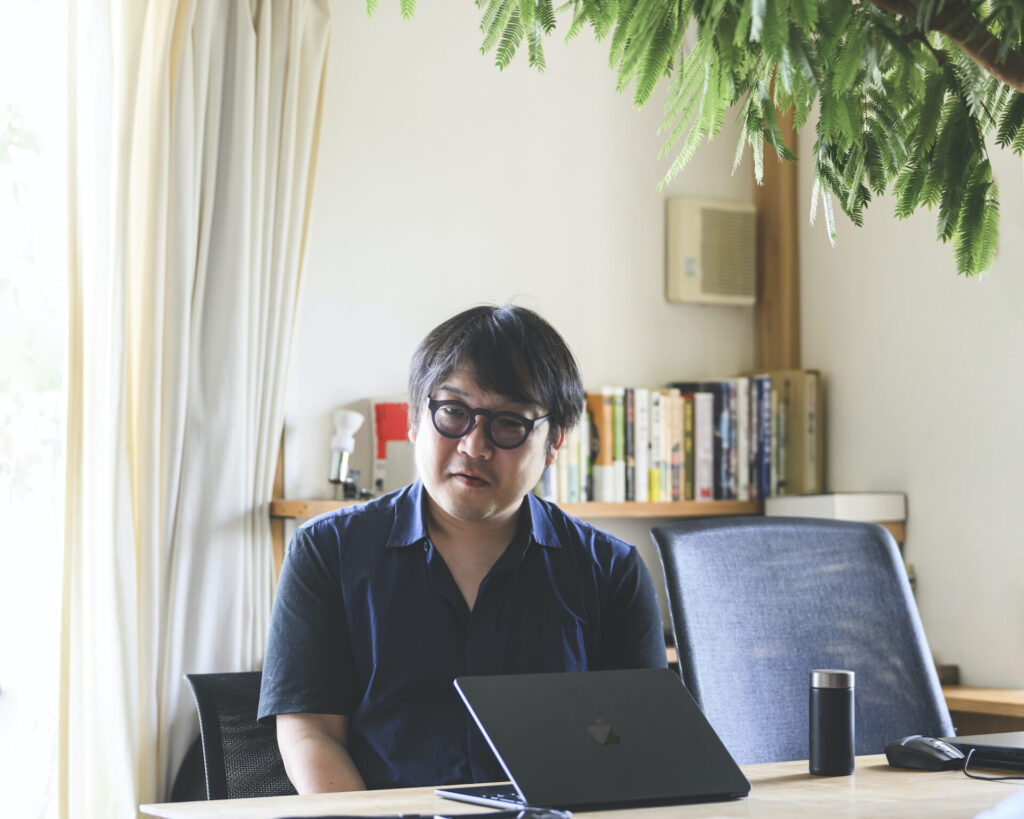
“The more deeply someone is engaged in exploring the tangible reality of the human body through their profession, the more strongly they seem to resonate with the perspective of ‘context’ that I’ve proposed.” (Tamari)
——Mr. Shigeta, what impressed you most about Anthropology of Japanese Food?
Shigeta: What resonated with me most was his perspective on “threading knowledge across disciplines.” Take medicine, for example. In modern healthcare, dermatologists focus only on the skin, while internists focus only on internal organs. But the human body is inherently interconnected. I’ve long questioned whether extreme specialization is really the only valid way to engage with human life and health.
Even something like dermatitis is not merely a problem on the skin’s surface. Diet, genetics, and environment are all intricately intertwined. Treating symptoms as isolated “dots” might reflect a Western medical approach, whereas Eastern medicine and traditional Japanese medicine have historically sought to understand illness more holistically by tracing its root causes.
Modern society, however, has prioritized efficiency to such an extent that these essential connections have been severed. Resisting that trend and finding ways to return to a more fundamental, primitive state is deeply important to me.
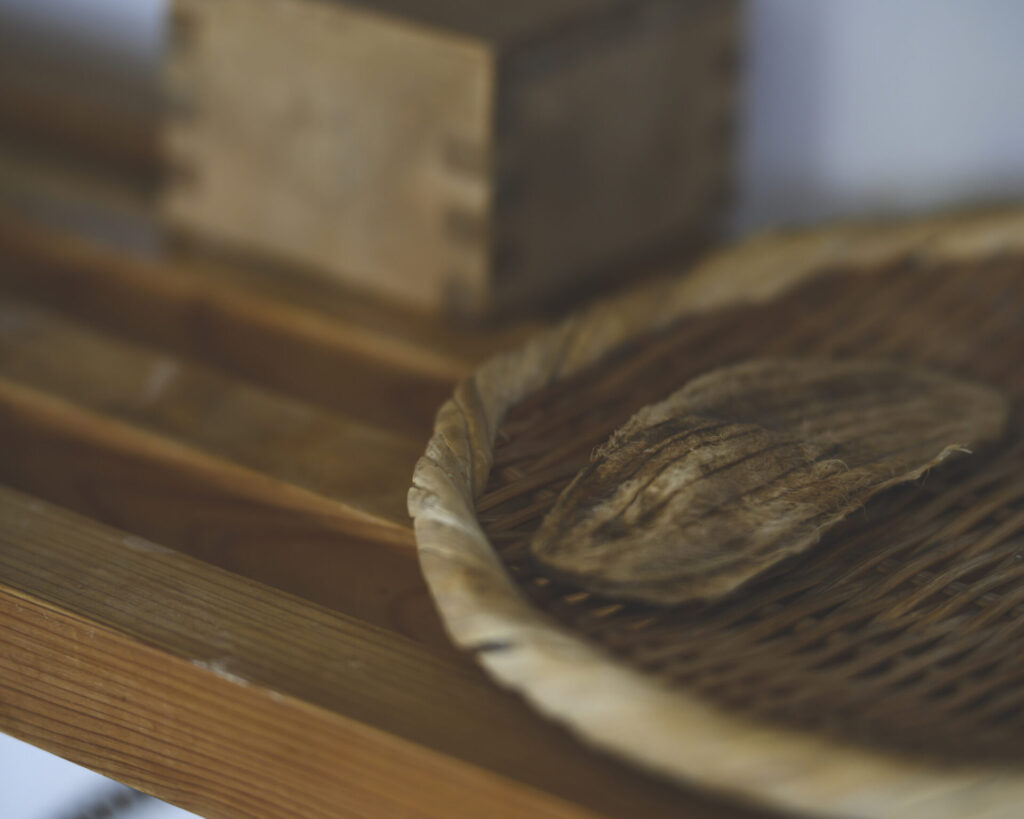
I often sense this disconnection even in the cooking classes I organize. A symbolic example is dashi no moto — instant soup stock powder. I’m not saying that the powder itself is bad, but the issue is that, for many people, the act of making dashi and the existence of the powder are no longer connected. Even when I proposed, “Let’s make dashi from katsuobushi, instead of relying on the powder,” the message doesn’t resonate with someone who doesn’t see those two things as related. For them, the act of making stock from bonito flakes may already feel like something that no longer exists in the real world.
And yet, taking that one small step — making dashi with one’s own hands — feels to me like a deeply primitive yet creative act of restoring lost context in modern life.
——In other words, you’re trying to reconnect with your own hands what has been fragmented through excessive specialization.
Shigeta: Exactly. In the age of information overload, people have lost sight of what is truly right for them. They’re constantly swayed by fragments of information, such as “this nutrient of this vegetable is good for your skin,” and in the end, they no longer know what they should actually eat.
That’s why I think we need to return to the starting point — What do I want to eat now? What do I find comfortable? It’s about listening to one’s own intuitive sense that exists outside the noise of information. In today’s world, where the flow of information constantly pulls our attention outward, what we truly need is to reverse course and recover our innate senses. I feel that your book is filled with the wisdom of doing that.
That’s why it feels so meaningful to me that professional chefs and creators read this book, digesting and absorbing its contexts, and reinterpreting them in ways that can be communicated to a broader audience.
Tamari: Listening to Mr. Shigeta, I realized once again that what we have in common is ultimately the human body. Interestingly, the people who have responded most passionately to the idea of an anthropology of Japanese food are those who work most directly with the body itself.
Not only beauty professionals like Mr. Shigeta, but also medical doctors and chefs. The more deeply someone is engaged in exploring the tangible reality of the body through their profession, the more strongly they seem to resonate with the perspective of “context” that I’ve proposed.
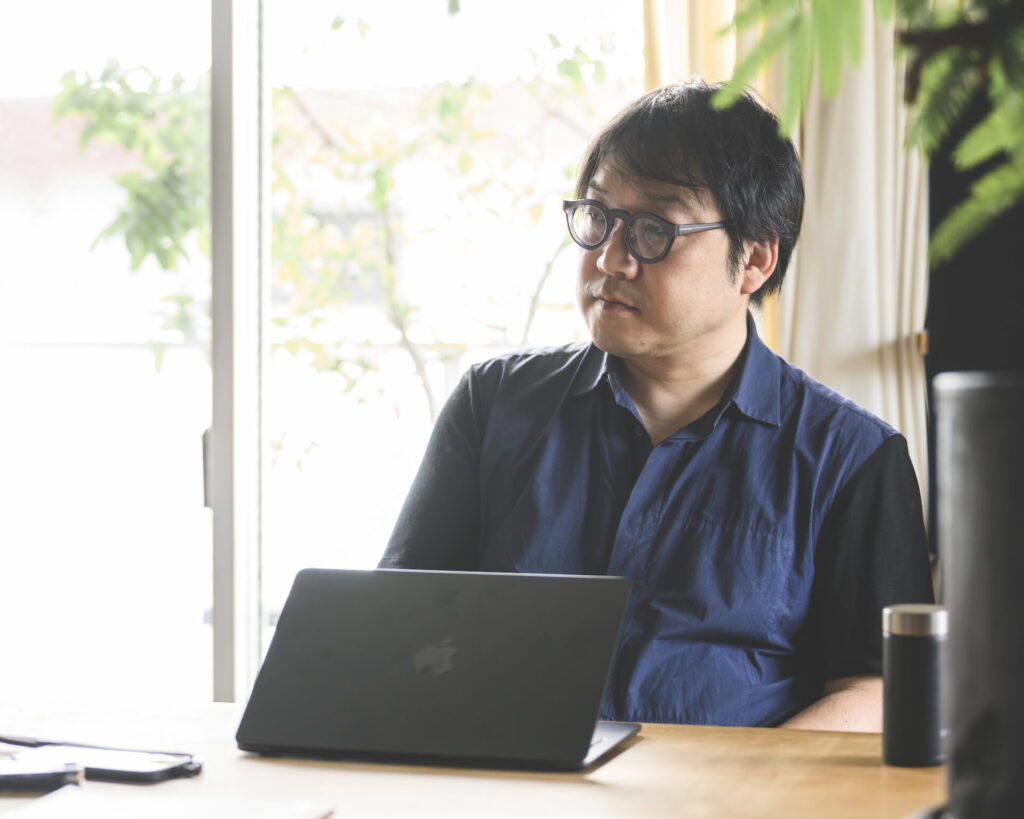
“When we unravel the history of food, some of these threads remain unresolved mysteries of independent emergence — but those ‘mysteries’ are part of what makes the anthropological exploration of food so rewarding.” (Tamari)
——Mr. Tamari, you started your career in industrial design. Could you tell us what led you to become so deeply engaged with the “context of food”?
Tamari: In the early 2000s, when I was working in the field of industrial design, I felt a growing sense of crisis. Within a system built on mass production and mass consumption, it was nearly impossible to create things that were truly optimized and customized for each individual. I came to realize that the bottleneck lay in the structure of “logistics” itself — whose overriding priority is to distribute and sell in mass quantities.
Around that time, I met the cultural anthropologist Dr. Shinichi Takemura. Through him, I was introduced to the concept of “food traceability,” which became a major turning point for me. I went on to launch a project with Mr. Kazuyoshi Fujita, the former head of Daichi Wo Mamoru Kai, an organization known for its organic vegetable delivery service. We visited production sites one after another, closely observing how food is grown, how it moves through distribution, and how it is ultimately incorporated into our bodies. Tracing that entire process in such detail is what anchored me in the world of food.
Later, in my 30s, I poured about eight years of my heart and soul into the magazine Tohoku Taberu Tsushin. Over the course of publishing 70 issues, I visited farmers, fishers, and dairy producers across the Tohoku region every single month, listening to their stories on the ground. That experience sharpened my understanding of the region’s diverse climates, environments, and landscapes.
For example, traditions like shottsuru in the Oga Peninsula of Akita and ishiru in Noto led me to examine the culture of fish sauce along the Sea of Japan. As I did so, I began to sense an underlying continuity — an intuition that these traditions might be connected with fish sauces from Southeast Asia, such as nam pla. The work of connecting the dots ultimately resulted in my book on Japanese food anthropology.

Shigeta: Your discussion of the origin of seasoning is fascinating. When you look into the world of fermented seasonings, you find remarkably similar traditions even in geographically distant areas — for example, things like Maldive fish and katsuobushi, bonito flakes of Japan. Do they share a common origin, or did they emerge independently in different places?
Tamari: The bonito culture of the Maldives and the katsuobushi tradition found throughout the Kuroshio Current region of Japan are certainly very similar. Personally, I suspect the two are connected somewhere in history, but academically speaking, it remains what we would call a “missing link.”
The study of food culture often begins by confronting these missing links. In some cases, answers can be found by poring over the vast amount of academic books produced in the 1980s, when research funding was still plentiful. However, in the case of bonito culture, no definitive proof has yet been established.
On the other hand, there is a similar discussion around anchovies and Asian fish sauces. In the Mediterranean world, a fish sauce called garum dates back to the Roman Empire. Meanwhile, the prevailing theory is that Asian fish sauce originated in the Mekong River basin. At present, the dominant view is that these traditions developed independently rather than from a single common origin.
When we unravel the history of food, many threads ultimately converge on identifiable roots, while others remain unresolved mysteries of independent emergence — but those “mysteries” are part of what makes the anthropological exploration of food so rewarding.

“Spiritual resonance might be happening also in the world of food — whenever two things profoundly connect, there is always some deeper current running beneath them.” (Shigeta)
Shigeta: In the world of design today, there is a growing trend known as “Japandi,” which blends the interior aesthetics of Japanese and Nordic design. At first, I wondered whether two cultures might share common racial or civilizational origins, but historically speaking, there appears to be no direct connection. And yet, the reason both resonate so deeply with one another might lie in a shared animistic worldview surrounding life and death.
In Japan, there has long been the idea of the yaoyorozu no kami — the belief that divinity resides in all things. Similarly, in Nordic mythology and philosophy, there is a deeply rooted belief that stones, trees, and other natural objects possess spirits.
Take ikebana, the art of flower arrangement, for example. Rather than imposing form arbitrarily through human intention, practitioners seek the form in which flowers themselves can best come alive through dialogue with natural materials. I believe this attitude strongly resonates with Nordic design philosophy as well.
Where the two diverge, however, is in how this sensibility finds its expression. Japanese aesthetics often favor stillness and the cool austerity of wabi-sabi, while the colder climates of Northern Europe tend to produce a preference for warmth and tactile materials. Yet both traditions share a common language — drawing out the intrinsic qualities of materials and living in accordance with nature. That, perhaps, is why the two continue to feel such a profound affinity toward one another.
I suspect the same kind of spiritual resonance might be happening in the world of food. Whenever two things profoundly connect, there is always some deeper current running beneath them. Thinking about it that way feels incredibly romantic — and endlessly fascinating to me.
Tamari: To unravel those shared qualities, we cannot overlook the fact that the Japanese archipelago is geographically located at the very edge of the world. The human species spread outward from Africa, and for those who traveled east across Eurasia, the vast Pacific Ocean lay beyond Japan. There was nowhere further to go. In that sense, Japan became the final repository of culture.
For example, whenever wars broke out in China, people crossed the sea and sought refuge in Japan. Cultural traditions that disappeared on the continent due to warfare or dynastic shifts — such as the early forms of matcha and sushi that once existed in China — were accumulated and preserved in Japan, this geographical dead end.
Both matcha and sushi disappeared in China at one point, yet in Japan, they continued to evolve independently from the Muromachi through the Edo period, eventually taking the forms we know today. Japan absorbed the full spectrum of continental culture, then reinterpreted and refined it in accordance with its own climate and environment — and that process itself is the essence of Japanese food.
——Do you think the Japanese have historically been adept at absorbing outside influences and transforming them into something deeply their own?
Tamari: I think Japan’s climate and natural environment may have compelled people to develop that ability. The four seasons here are especially pronounced, and the contrast between summer and winter is so extreme that people historically had to strictly adapt their lifestyles.
Some also point to what might be called the Jomon temperament — since ancient times, people in these islands seem to have possessed an almost obsessive attention to craftsmanship and detail in what they make. Perhaps it was this disposition that enabled imported culture to be refined into a distinctly Japanese aesthetic sensibility.
I think the same can be said of you, Mr. Shigeta. When we first met, and I learned that you are from Takasaki, I immediately thought, “Ah, so he grew up in the karakkaze winds.” Those harsh, dry winds unique to the northern Kanto region might well have shaped your sensibility toward skin and cosmetics. I don’t think that connection is accidental — it is deeply tied to the region’s climate and environment.
That sort of relationship between climate and the human body is itself another important layer of context.
——The more one traces human roots, the more endlessly fascinating the journey becomes.
Tamari: Absolutely. For example, my father is from Niigata. While Mr. Shigeta’s hometown of Takasaki is only a few Shinkansen stops away, the climates are completely different. Niigata is a world of lush moisture and humidity, whereas Gunma is defined by the dry winds that parch everything.
Once you begin to understand these differences in climate and environment, broader contexts start to emerge — such as what drew this person to a particular profession, or what kinds of food might naturally suit them.
(to be continued in the second part)
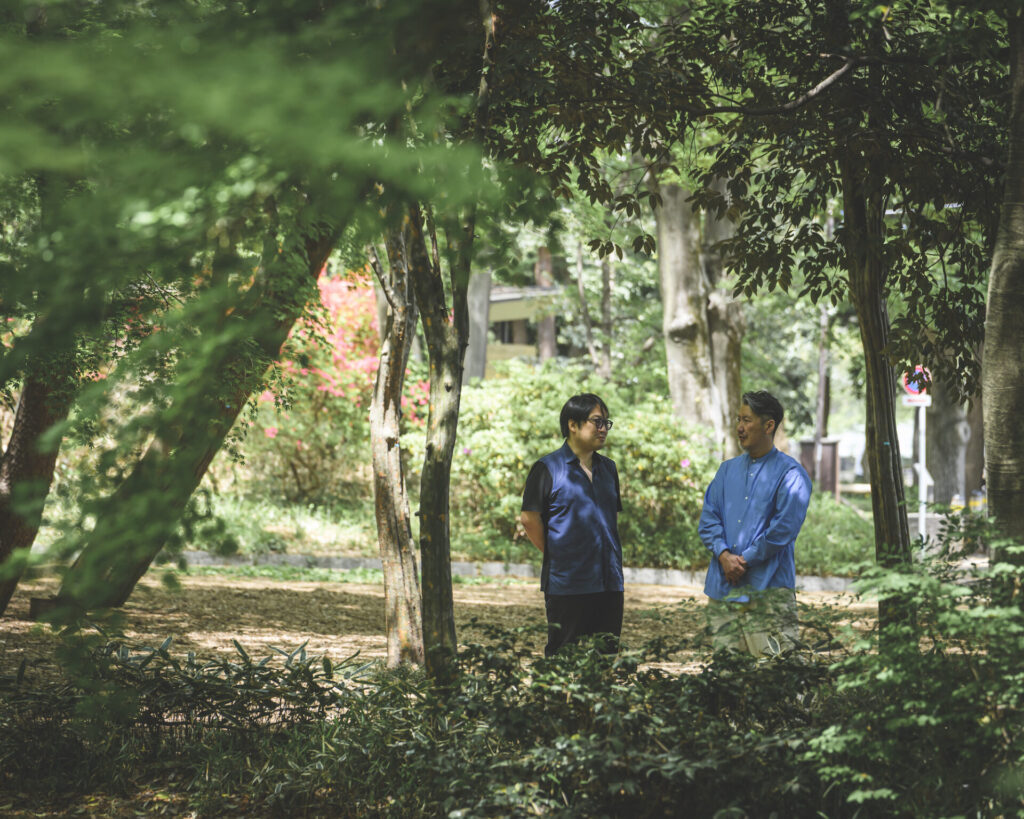
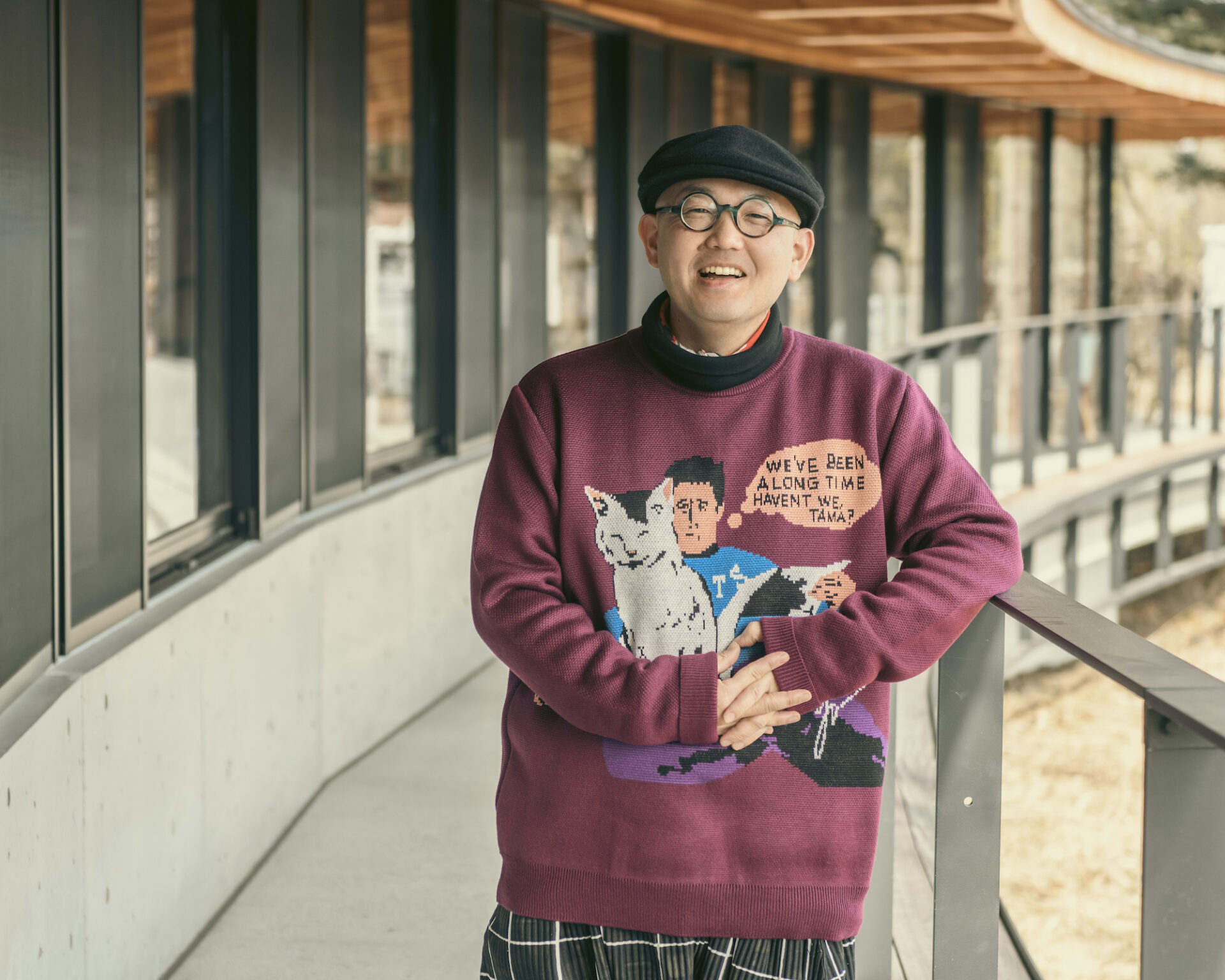
Profile
-
Yasunobu Tamari
Born in Tokyo in 1979, Yasunobu Tamari is a researcher of context design. Questioning the systems built for mass production and mass consumption, he has led various projects since the 2000s alongside cultural anthropologists and other researchers, aimed at repairing the “fragmentation” of modern society.
He has been involved in regional revitalization initiatives in Nishi Awakura Village in Okayama Prefecture, and, as a founding member of Tohoku Taberu Tsushin, the magazine that received the Good Design Gold Award, he brought the passion and energy of local producers and production sites to urban audiences. Currently, through the Context Design Institute he founded, Tamari focuses on the anthropology of Japanese food, a field that explores food culture through lenses such as geology and anthropology.
At a time when efficiency is prioritized above all else, he advocates the “reconstruction of context” — an approach that deliberately honors painstaking effort and history. His ongoing attempt — to reweave the wisdom of culture and environment embedded in the Japanese archipelago into narratives that can be passed on to future generations — continues to serve as a reliable compass for navigating today’s adrift consumer society. -
Masakazu Shigeta
Shigeta began his career in a technical role in the music industry, before becoming a cosmetics developer in 2001. From 2004, he was involved in developing various cosmetics brands within the healthcare division of Nitto Denka Kogyo Co., Ltd., a metal surface treatment company founded by his great-grandfather. In 2017, he founded OSAJI, a skincare lifestyle brand, and became its brand director. In 2021, as a new OSAJI store, he produced kako, a specialty shop for home fragrances and perfume in Kuramae, Tokyo. In the following year, he opened a combined shop in Kamakura, Kanagawa, featuring OSAJI, kako, and the restaurant enso. In 2023, leveraging Nitto Denka Kogyo’s technical expertise, he launched HEGE, a tableware brand, and in October of the same year, he became CEO of OSAJI Inc. He has also published books on beauty and regularly holds cooking classes and events focusing on food as the foundation of beauty. In November 2024, he released a collaborative album with F.I.B JOURNAL titled Gensho hyphenated, further expanding the scope of his creative activities.
Publications
Taberu Biyou (Eating for Beauty) (SHUFU TO SEIKATSU SHA, 2024)
42-Sai ni Nattara Yameru Biyou, Hajimeru Biyou (Beauty Routines to Quit and Start at 42) (Takarajimasha, 2022)
Information
Anthropology of Japanese Food
Years in the making, Anthropology of Japanese Food is an ambitious work independently woven together and written by context design researcher Yasunobu Tamari. First published in December 2025, the book explores a fundamental question: Why do we crave wild mountain vegetables in spring and root vegetables in winter?
From the journey of wheat along the Silk Road, to the temperature of spring water shaped by the tectonic plates of the Japanese archipelago, to the mystery of “northern constitution” that Tamari inherited from his ancestors, the book threads together fragmented knowledge through the unifying framework of “context” — painting a sweeping vision that also serves as a guide for navigating life in the modern age.
The book is available through the official website of the Context Design Institute.
https://ctxt.jp/
-
Photographs:Eisuke Komatsubara
-
Text:Masahiro Kamijo
NEWS LETTER
理想論 最新記事の
更新情報をお届けします
ご登録はこちら
ご登録はこちら
メールアドレス
ご登録ありがとうございます。
ご登録確認メールをお送りいたします。