
2026-04-23
Vol.26
Stylist
Masako Ito(part 2)
-
Stepping Back from Social Media
-
Resetting Yourself
-
Experience Sharpens the Senses
-
Facing the End
-
“Falling in Love” Sets You Free
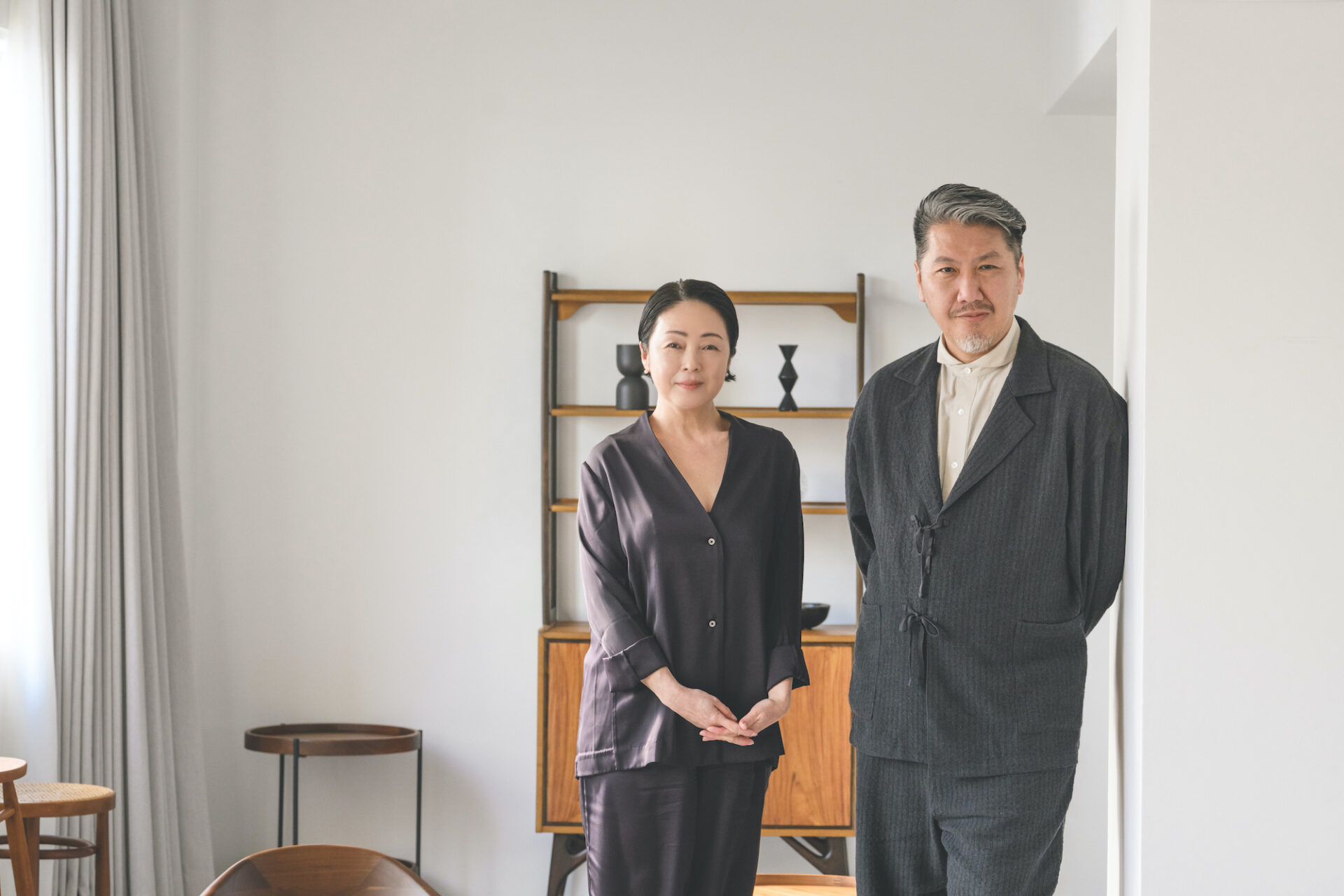
Four years ago, they reaffirmed the importance of a discipline: staying true to oneself. Since then, stylist Masako Ito has been gracefully reimagining her way of life. Every seven years, she deliberately lets go of the career she has built, only to weave it into a new form — a personal, healthy ritual that keeps her sensibility constantly fresh.
She calmly clears away unnecessary information, puts her surroundings in order, and resets her body and mind with a cup of sayu — plain hot water. The discerning eye she has cultivated through this process is now drawn to antique hunting at flea markets.
A pure sense of “falling in love” with things and experiences — haven’t we, in today’s world so focused on finding the right answers, been discarding that inexplicable excitement and wonder? In this conversation, they explore that rich inner heat — the kind that moves the heart beyond reason.
(Click here for the first half of the interview.)
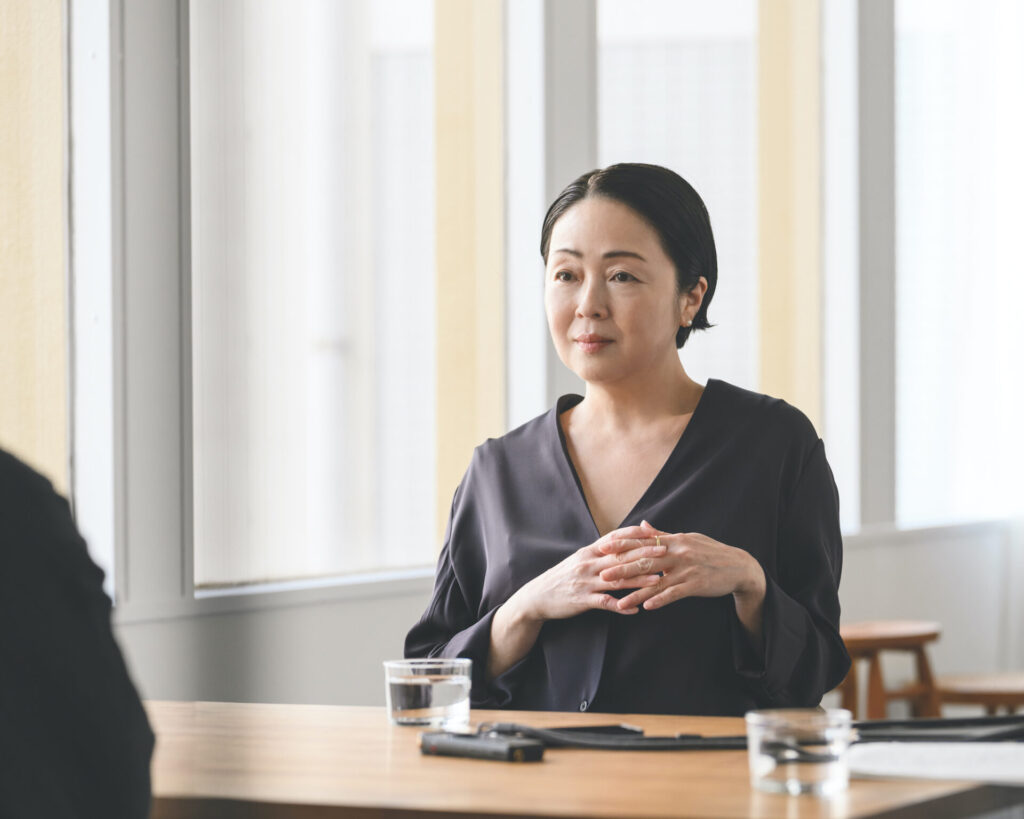
“It’s important to develop your own discerning eye.” (Ito)
——Mr. Shigeta, as OSAJI approaches its 10th anniversary, you recently announced the corporate message, Make Life More Dramatic, Make the World More Romantic. Does today’s theme of “falling in love” relate to that idea?
Masakazu Shigeta: In a way, yes. It’s been my unwavering belief that I want to color people’s lives and make them more dramatic through beauty. The more people live their lives in a dramatic way, the more romantic the world itself will become — that’s what I believe. By expressing this idea as the corporate message and making it visible, I hope it resonates with people, even if just a little. But in reality, it’s often received more like, “There he goes again.” I feel like I’m still far from getting that message across.
That’s why I wanted to have this conversation today — by learning from your approach to life, I hope to gain insights that will help me move forward from where I am now.
Masako Ito: Well, the other day, an editor said to me, “It’s like you’ve lived multiple lives.” I do what I like, and I’ve lived in many different places — I’ve even bought a house. That might be because I get bored so easily, but whenever I stay in the same situation for too long, I crave change, which is probably why I like moving — it lets me reset my daily life. We can’t easily change our jobs, but moving is something I can decide to do on my own. Looking back, I think I’ve often suddenly flipped everything upside down.
When I started “weeksdays,” a shop focused on clothing, food, and lifestyle on the Hobonichi platform, I quit all the magazine columns I had been writing — it was about seven a month. I thought I couldn’t do everything at once. Whenever I start something new, I often let go of what I had been doing before. There was a period when I focused on styling, then a phase where I turned my work into books, and now the weeksdays phase. I shift the core of my work around every seven years.
Right now, I feel drawn to working around the theme of “home-related work.” My interest in collecting antiques is an extension of that. I think I’ve shifted the focus of my work in search of something that excites me even more, but looking back, it’s interesting to see that everything is actually connected.
——In today’s world, where information moves at such speed and conflict feels constant, is there anything you consciously practice, or choose to avoid, in order to hold on to a sense of excitement and curiosity?
Ito: While I do post on social media, I try not to spend too much time looking at what other people are posting. I’m not comfortable with rumors because you never really know if they’re true. In the end, it’s important to develop your own discerning eye.
Shigeta: I’m someone who tends to question so-called “common sense,” and I really don’t like having it imposed on me, either. The whole point for me is to overturn what people take for granted as common sense or “the right answer.” That’s also why I see it as an important role to reinterpret some of the beauty industry’s misleading ideas through a scientific lens.
Ito: There’s a real strength in hearing that from someone like you, because it makes me feel that I can trust OSAJI.

“By keeping my mind and body fresh, good information naturally comes to me.” (Ito)
Shigeta: It’s been over 20 years since I became involved in cosmetics development, but my approach hasn’t really changed. If it’s starting to carry more weight now, I think it comes from the accumulation of these 20-plus years. As the world slowly begins to shift, I feel like more and more people are beginning to resonate with what I’ve been doing.
Ito: The amount of time you continue something really matters. People often say that in Tokyo, you can trust a restaurant if it’s been in business for more than ten years. And quantity is also important — the number of things you’ve seen and the work you’ve done. The more experience you build, the more credibility you gain. I’ve only ever introduced things I genuinely believed were good, and looking back, I think that honesty is what gave my words their value.
Shigeta: In your case, whether it’s your styling or the products you’ve launched based on your convictions, I feel like it’s only possible because you’re doing something different from everyone else.
Ito: But my “strike zone” is probably wider than people might expect. I don’t do anything unusual — I have simply valued speaking up and saying things clearly. When I created a towel blanket for a Hobonichi project, I declared to Mr. Shigesato Itoi, “I want a plain one with no print on it. It will definitely sell well, and there are definitely people who want it.” (laughs)
It did cost a fair amount, but just as I expected, it sold really well. When you say something like, “Maybe we could make this,” it often turns out you can.
——Do you feel that you have a different kind of instinct or sensitivity from others?
Ito: Not at all. I just like simple, cute things.
Shigeta: Whether it’s clothing or restaurants, how do you discover your new favorite?
Ito: Most of it comes from people I trust. People tend to think I know a lot about new places, but that’s not really the case — it’s all thanks to friends with great taste and sensibility.
Every now and then, I have these serendipitous connections: one day, I happened to be sitting next to a pastry chef on the subway, and was told, “You used to come to my shop, didn’t you? We’re opening a new place, so please come by.” Moments like that do happen, but in general, I rely on information from friends and chefs.
Shigeta: When you’re surrounded by friends with that kind of sensibility, do you ever feel like you need to be the same way?
Ito: Not at all. (laughs)
But as a stylist, I do think it’s better to have a refined sensibility. To maintain that, I believe it’s important to try to keep yourself as “fresh” as possible. Rather than actively seeking out information, I try to stay in a more pure, open state of mind. It’s like, after overeating, you might just have a cup of sayu (plain hot water) the next morning. By resetting both my mind and body like that, I feel that good information comes to me naturally.
——Is that a mindset you developed from a young age?
Ito: I think so. I’ve had the habit of keeping my space in order since I was young. I try not to let too much clutter build up inside me. I’m also not very attached to relationships. Because of that, some people say I can seem “cold,” but I’m okay with that. If it allows new encounters with wonderful people, things, and good food to come into my life, then that’s enough for me.

“People these days try too hard to avoid failure by researching everything in advance — it’s important to spend your own money and make those mistakes yourself.” (Ito)
——At the end of your previous conversation with Mr. Shigeta, you said you wanted to take up the tea ceremony. How has that been going?
Ito: After I said that, I realized that I’m actually quite sensitive to caffeine. (laughs)
I thought, “Well, that’s not ideal.” But when I mentioned it to a friend who has a tea ceremony teaching license, she said, “Since you like utensils and settings, you can just enjoy it in your own way.” So these days, I enjoy it in my own way — using things like sayu (plain hot water).
——Is that connected to your interest in antiques?
Ito: Yes, hearing that made me more interested in the ceremony and the tools. I figured it’s never a bad thing to know about them. That said, my approach is very personal. I simply collect things that feel good to me or make me happy. I don’t really care much about the details that serious antique collectors might focus on.
Shigeta: I’m the same way.
Ito: But men do love showing off their knowledge, don’t they? Like, “This chair originally had three legs,” and so on.
Shigeta: That’s true, but I don’t really like that. With wine, for example, the moment it feels like people are “drinking” the information or the backstory rather than the taste itself, I suddenly lose interest. I think being in that “fresh” state you mentioned earlier allows you to experience things more neutrally.
Ito: Good things are good, and delicious things are delicious — that’s really all there is to it. Of course, as a stylist, it’s important to have a certain level of knowledge, but I don’t choose things based on that knowledge alone.
Shigeta: Have you always worked that way?
Ito: When I was younger, if a magazine featured a place I hadn’t known, I might go and visit, but that’s about it. The other day, when I went to the villa in Karuizawa, I brought a kettle from home, only to find that it didn’t work on the induction stove. So, I bought a new one at a nearby shop. When guests saw me using it, they asked, “Hey, where did you get that kettle?” They were all surprised when I told them the shop’s name.
I’ve never really had the mindset of “It has to be this specific thing from that particular place.” If something is good, then it’s good — that’s enough for me.
——Do you think your sense of aesthetics and your sensibility toward lifestyle come from your parents? And do you feel that those sensibilities have been passed on to your daughter as well?
Ito: I never really taught my daughter anything, but these days she seems to be cooking properly — making broth and everything. The other day, I opened the fridge at her home, and it was beautifully organized. And she said to me, “Mom, you always kept the fridge so tidy, and you used to make soup with leftover bits of carrots and vegetables, saying, ’This feels so good’ — now I think I finally understand what you meant.” Hearing that made me really happy.
My own mother was always wiping or cleaning something — she was the type of person who couldn’t stand things being out of order. Thinking that way, I do feel that the environment you grow up in has a big influence on us.
Shigeta: Speaking of the idea that quantity shapes your sensibility, in my case, I think it’s more about the number of failures. I’ve made plenty of purchases over the years. But compared to when I was younger, I feel like I make fewer mistakes now. Back then, I failed endlessly, though.
Ito: People often ask me, “What’s the secret to not making mistakes when shopping?” I always reply, “You have to make mistakes.” Failure is frustrating, after all. But that’s exactly why it becomes something you learn about. These days, people try too hard to avoid failure by researching everything in advance. But I think it’s important to spend your own money and make those mistakes yourself.

Shigeta: For a long time, I couldn’t bring myself to get rid of clothes I rarely wear — I just didn’t want to admit defeat. But recently, I decided to make a fresh start and took all the clothes I no longer wear to a secondhand shop. Since then, I feel like better things have been coming into my life.
Ito: I love things, but I’m not very attached to them. Once I reach a certain point, I start to feel the urge to let things go.
Some time ago, a master basket weaver passed away, and the family said they were considering burning everything he left behind. So I offered to buy it all. But when I thought it over more carefully, I realized I didn’t actually need that many baskets, and in the end, I donated most of them to museums. I think I bought them driven by a sense of mission, but I didn’t really have a strong desire to collect them. Things tend to come and go in my life, probably because I don’t get too attached.
——Is there anything you find yourself attached to?
Ito: Hmm, is there anything? I don’t think so.
Shigeta: For me, it’s making sure I have “free time.”
Ito: Oh, I’m the same!
Shigeta: Work has its own kind of biorhythm — there are good phases and bad ones, just like with our bodies. Sometimes everything feels clear and in balance, and other times you’re dealing with problems.
Traditionally, it’s been said that as a business leader, you’re responsible not only for your own body but also for another “body,” the company, and that the two always need to be in sync. But I wonder if that’s really true. If the company is “injured,” and you become injured along with it, you won’t be able to make sound decisions. Thinking of the company as one with your own body feels, to me, like nothing more than a form of attachment. When the company is in trouble, what really matters is whether you can clearly say, “I’m sorry, but I can’t afford to get injured right now,” or “I’m going to give myself some free time because I can’t afford to get injured.”
Ito: If you don’t have those limits, would you just keep working endlessly?
Shigeta: I used to be like that. I had dinner meetings scheduled almost every night. The pandemic made me rethink that lifestyle. Dining out was very limited, and only a few people were willing to go out despite the risks. I also don’t like how drinking too much affects my performance the next day, so these days I try to avoid evening engagements as much as possible.
Ito: I’ve always made it a rule to work until 5 p.m. and go to bed at 9 pm. Maybe that’s just another form of attachment, though.
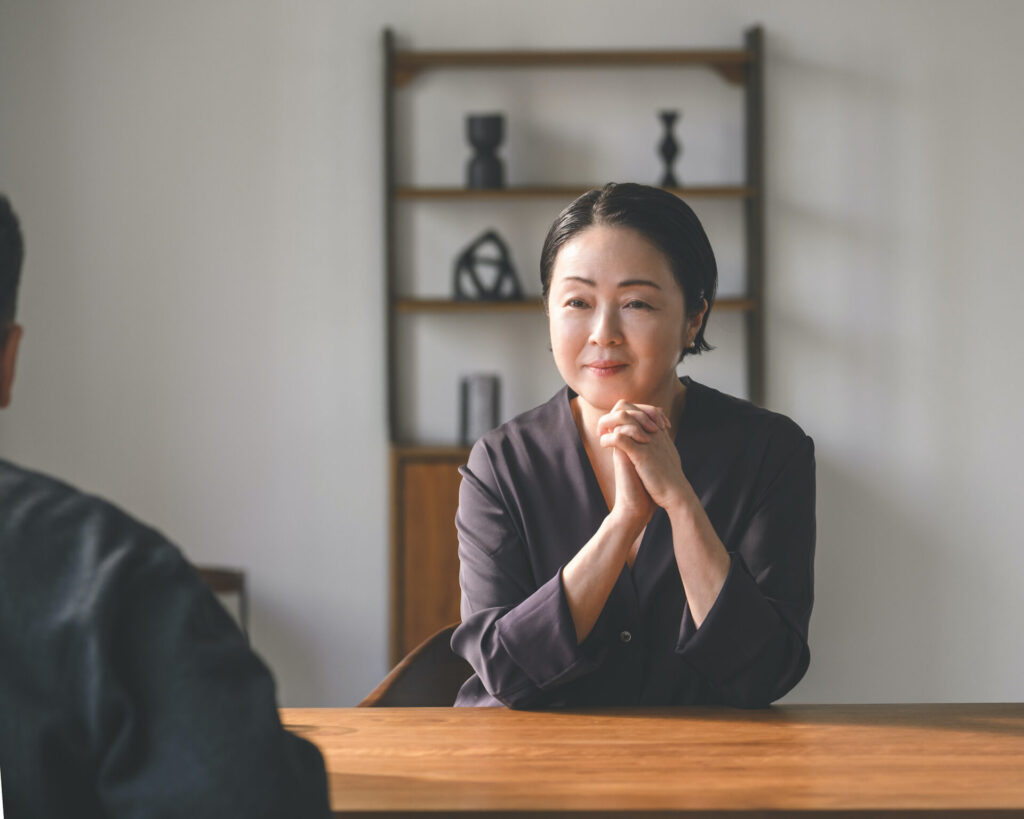
“If we were to collaborate again, it would be interesting to do something like a lodging project — perhaps renovating an old house and turning it into a place to stay.” (Ito)
Ito: At this age, being healthy isn’t something you can take for granted.
Shigeta: Exactly. We start to feel things like, “Oh, maybe I could die at any time.”
Ito: I don’t think about death very often since I’m still healthy, but I’m curious about how I’ll die. I wonder if I’ll end up struggling a little in the end. My father faced his end with such grace and dignity, so I’d like to follow his example.
Shigeta: If you were to die suddenly now, is there anything you would regret? Or, is there anything you feel was truly meaningful, looking back on your life?
Ito: A little while ago, I had a moment where I felt something like, “Wait…what is this lump?” So I went in for a full medical checkup. When I told my daughter, “Even if it turns out to be something serious, I don’t think I’d have any regrets,” she replied, “Come on, why don’t you try to live a little longer?” Hearing that made me realize, “Right, I can’t leave her on her own just yet.” If I were to face death, I think that’s what would come to mind.
Shigeta: It’s been three years since my father became bedridden in the hospital. When he collapsed, we had to decide in minutes whether to proceed with life-prolonging treatment. In the end, we decided to go ahead with it, respecting my older brother’s opinion. But I’m still not sure what my father himself would have wanted to do. I wish I could honor his wishes, but since we couldn’t ask him at that time, it was left to us brothers to decide. That experience made me realize how important it is to clearly communicate your own will to someone in advance.
Ito: It seems my mother has already written down her wishes — I probably should do the same.
——You two have collaborated on several projects before. If the opportunity arose again, what kind of projects would you like to work on?
Ito: Speaking of cosmetics, OSAJI’s current lineup already includes so many things, so I’m completely satisfied. We’ve talked about this a bit before, but if we were to collaborate again, it would be interesting to do something like a lodging project — perhaps renovating an old house and turning it into a place to stay.
Shigeta: Running a lodging is, as I see it, a total art of hospitality. Actually, we will be opening a lodging facility called Shirakabaso in Minakami, Gunma Prefecture, this April. I’d love for you to come and stay there with your daughter.
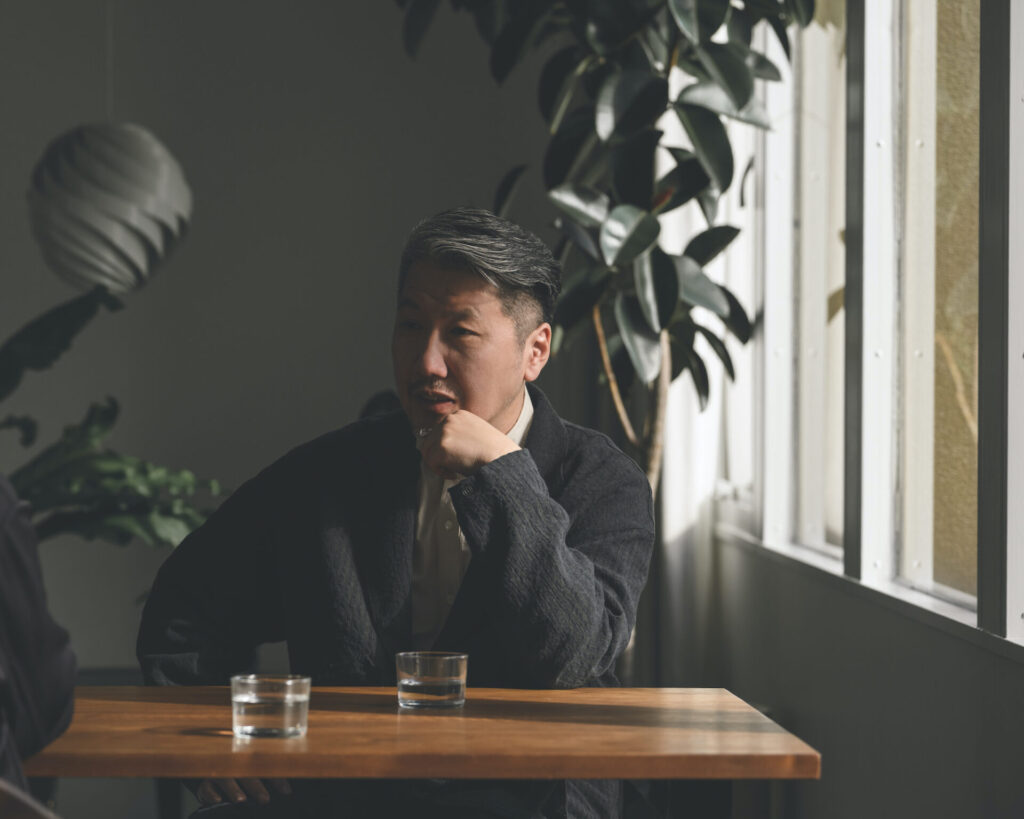
“The feeling of ‘falling in love’ with something you’re passionate about is what sets you free.” (Shigeta)
——This is not about romantic feelings, but could you share what you like or admire about each other? For example, what do you appreciate about Ms. Ito, or what do you think is great about Mr. Shigeta?
Ito: What I really admire about him is how he works while hiring many people. I’ve mostly worked independently, and although I’ve been doing team-based work these days, I’m not actually employing anyone. So, the mindset is completely different. That’s why he really makes me think, “Being a company president is really amazing.” After all, you can never say something like, “I’m sorry, I cannot pay salaries this month,” right? (laughs)
Shigeta: What I truly admire about her is how true she is to her own sensibilities. I tend to prioritize other people’s feelings over my own sensibilities when making decisions. I really admire how she stays so honest to her own sense of things, and how that approach naturally resonates with so many people.
Ito: I became a stylist almost entirely by ruling things out one by one — I can’t handle crowded trains, and I’m not great at working with others. You could call that being “honest,” but from another perspective, it might just be “selfish.” These days, that kind of selfishness is more accepted, but it wasn’t easy at the beginning. A lot of people reacted like, “What is with this girl?” Nevertheless, I think I was able to stick to my own way without changing myself, probably because I was working on my own. If you were to leave your company and do something on your own, what would you do?
Shigeta: I’m not sure what I would do. Maybe I would serve meals to a limited number of people. That might be connected to my interest in running a lodging or hospitality business. But above all, I’d want to produce a full album of songs I write. I feel I would regret it for the rest of my life if I didn’t do that. If I didn’t need to go to the office and someone told me, “You’re free from tomorrow,” I would shut myself away in a studio starting the next day, inviting musicians who are willing to go along with my selfish vision.
Ito: That sounds fascinating. I would want to be with someone because I really don’t enjoy being alone…As for “falling in love” in a romantic sense, that feeling has really settled down for me now. Things are very calm these days… — Oh, by the way, is this kind of casual conversation actually going to come together as an article?
Shigeta: Casual conversation is perfectly fine. The key point of today’s conversation is how to shape your own stance and free yourself from the compulsion to always go along with others. I feel like young people these days are so conscious of those around them that they lose sight of themselves. The ideal is to find something — anything — that you can throw yourself into so completely that the world around you disappears. That feeling of “falling in love” with something you’re passionate about is what sets you free.
Ito: That makes sense.
Shigeta: Thank you so much for your time today.

Profile
-
Masako Ito
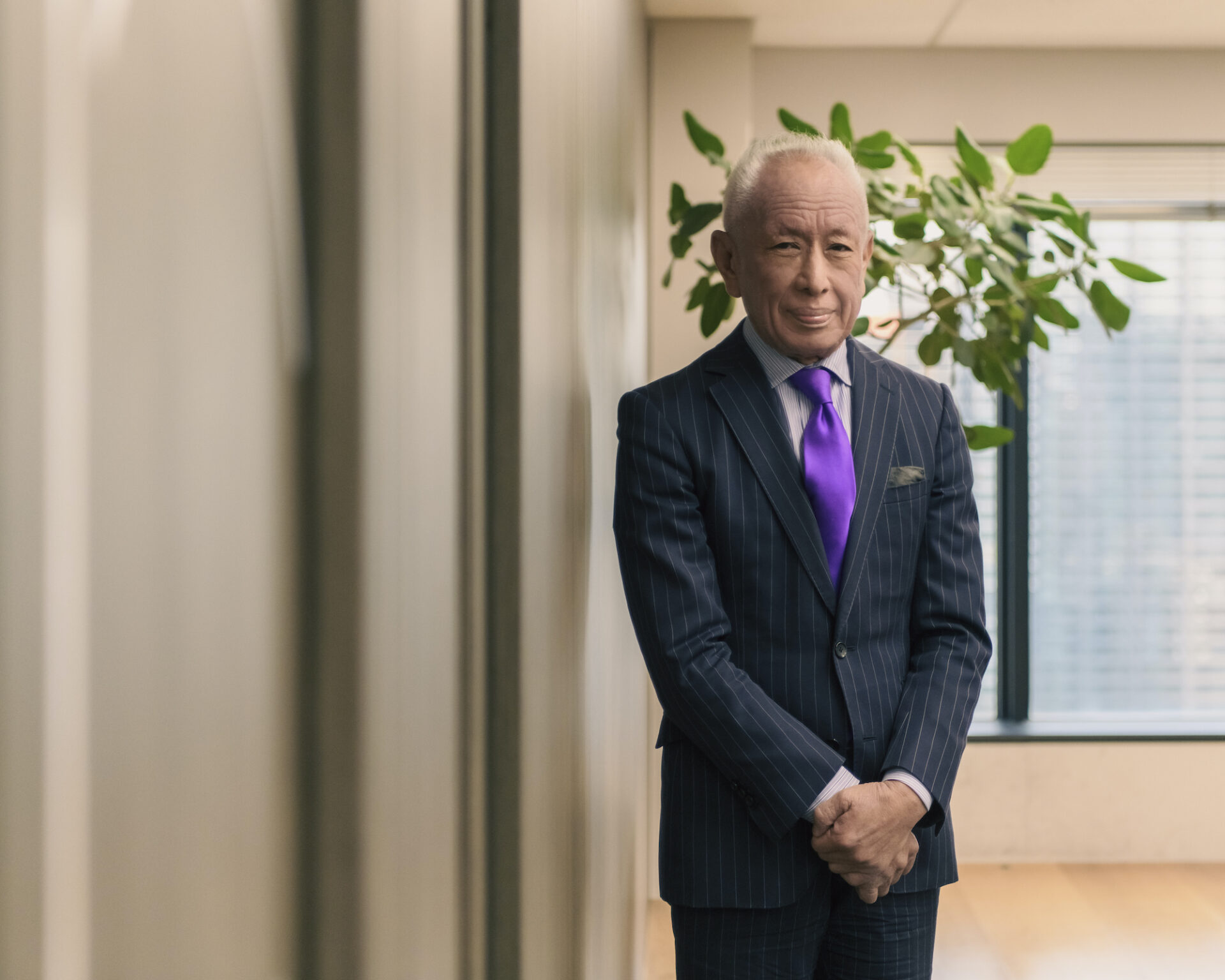
Born in 1970 in Yokohama, Kanagawa Prefecture, Masako Ito is a stylist who proposes ways of living encompassing cooking, lifestyle goods, and fashion. Her refined aesthetics and graceful, attentive approach to daily life have earned her a wide following across generations. She is also the author of numerous books, including Haha no Recipe Note kara (From Mother’s Recipe Notebook) and Suru, Shinai. (Do, Don’t.). Since 2018, she has hosted weeksdays on the Hobonichi platform, giving form to what she “truly wants.” In 2020, she collaborated with OSAJI to develop two original fragrances, Mezame and Nemuri, inspired by her morning and evening routines. She renews the core of her career every seven years. Currently, she focuses on collecting antiques and rethinking living spaces — continuing to weave new forms of life with a constantly fresh sensibility.
-
Masakazu Shigeta
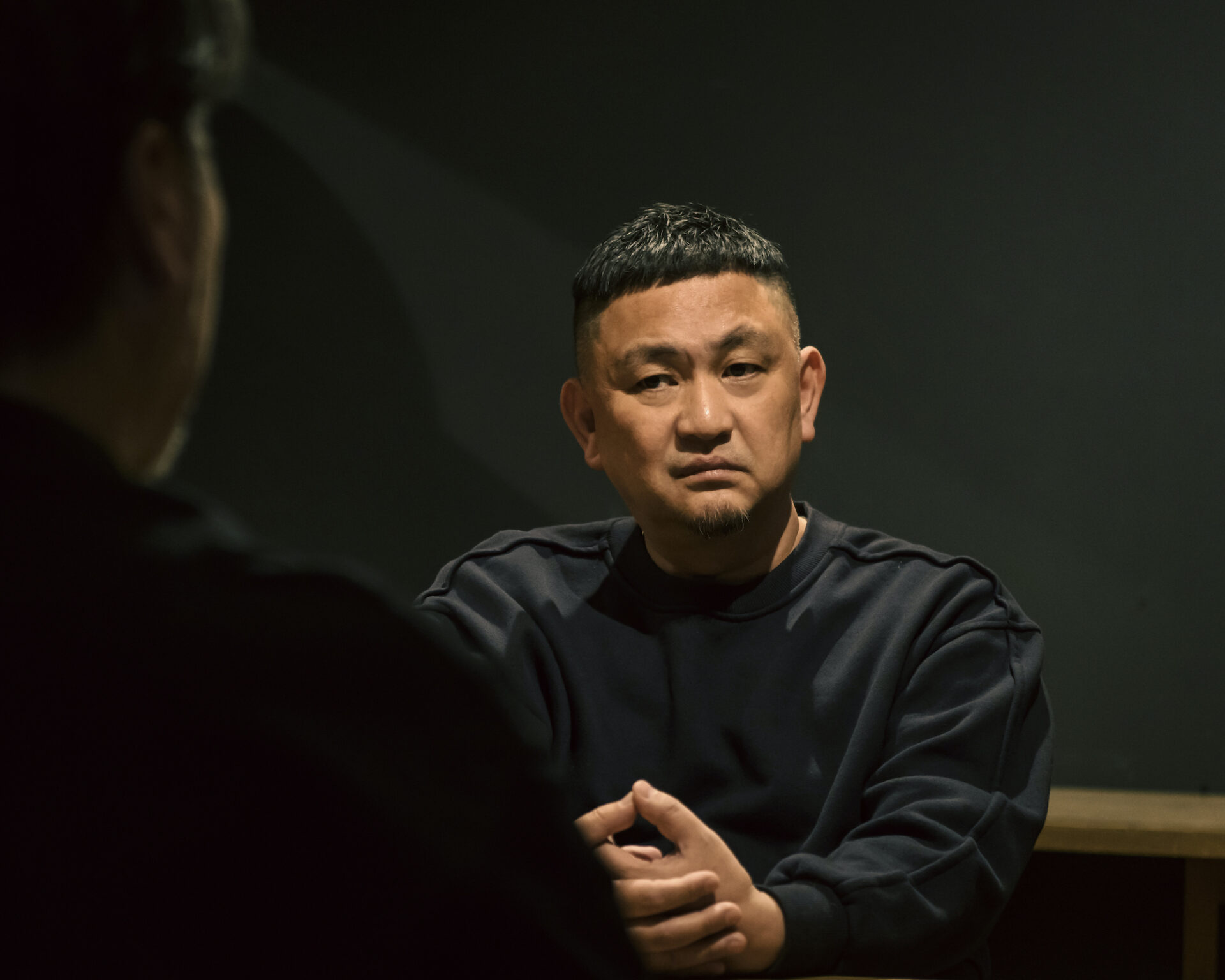
Shigeta began his career in a technical role in the music industry, before becoming a cosmetics developer in 2001. From 2004, he was involved in developing various cosmetics brands within the healthcare division of Nitto Denka Kogyo Co., Ltd., a metal surface treatment company founded by his great-grandfather. In 2017, he founded OSAJI, a skincare lifestyle brand, and became its brand director. In 2021, as a new OSAJI store, he produced kako, a specialty shop for home fragrances and perfume in Kuramae, Tokyo. In the following year, he opened a combined shop in Kamakura, Kanagawa, featuring OSAJI, kako, and the restaurant enso. In 2023, leveraging Nitto Denka Kogyo’s technical expertise, he launched HEGE, a tableware brand, and in October of the same year, he became CEO of OSAJI Inc. He has also published books on beauty and regularly holds cooking classes and events focusing on food as the foundation of beauty. In November 2024, he released a collaborative album with F.I.B JOURNAL titled Gensho hyphenated, further expanding the scope of his creative activities.
Publications
Taberu Biyou (Eating for Beauty) (SHUFU TO SEIKATSU SHA, 2024)
42-Sai ni Nattara Yameru Biyou, Hajimeru Biyou (Beauty Routines to Quit and Start at 42) (Takarajimasha, 2022)
Information
weeksdays
Launched in 2018 in collaboration with Hobonichi, weeksdays is a project spanning clothing, food, and lifestyle. Rooted in Ito’s pure pursuit of “what I truly want,” the project covers a wide range of categories from kitchen tools to clothing. Backed by her refined aesthetics and years of expertise, the project has earned the trust of many readers for its approach to creating products unbound by conventional frameworks. It has collaborated with trusted creators and makers, including joint fragrance development with OSAJI.
https://www.1101.com/n/weeksdays/
-
Photographs:Eisuke Komatsubara
-
Text:Masahiro Kamijo
-
Make-up:Yuya Goto (OSAJI)
NEWS LETTER
理想論 最新記事の
更新情報をお届けします
ご登録はこちら
ご登録はこちら
メールアドレス
ご登録ありがとうございます。
ご登録確認メールをお送りいたします。