

2026-03-26
Vol.25
Neuroaesthetist and Professor at Kansai University
Tomohiro Ishizu(part 2)
-
Multilayered Aesthetics
-
The Brain Awaiting Emotional Completion
-
The Lazy Brain
-
Scent and DNA Communication
-
Moments When Brain Networks Activate
What happens in the brain when we encounter beauty? And why can sorrow itself sometimes appear beautiful?
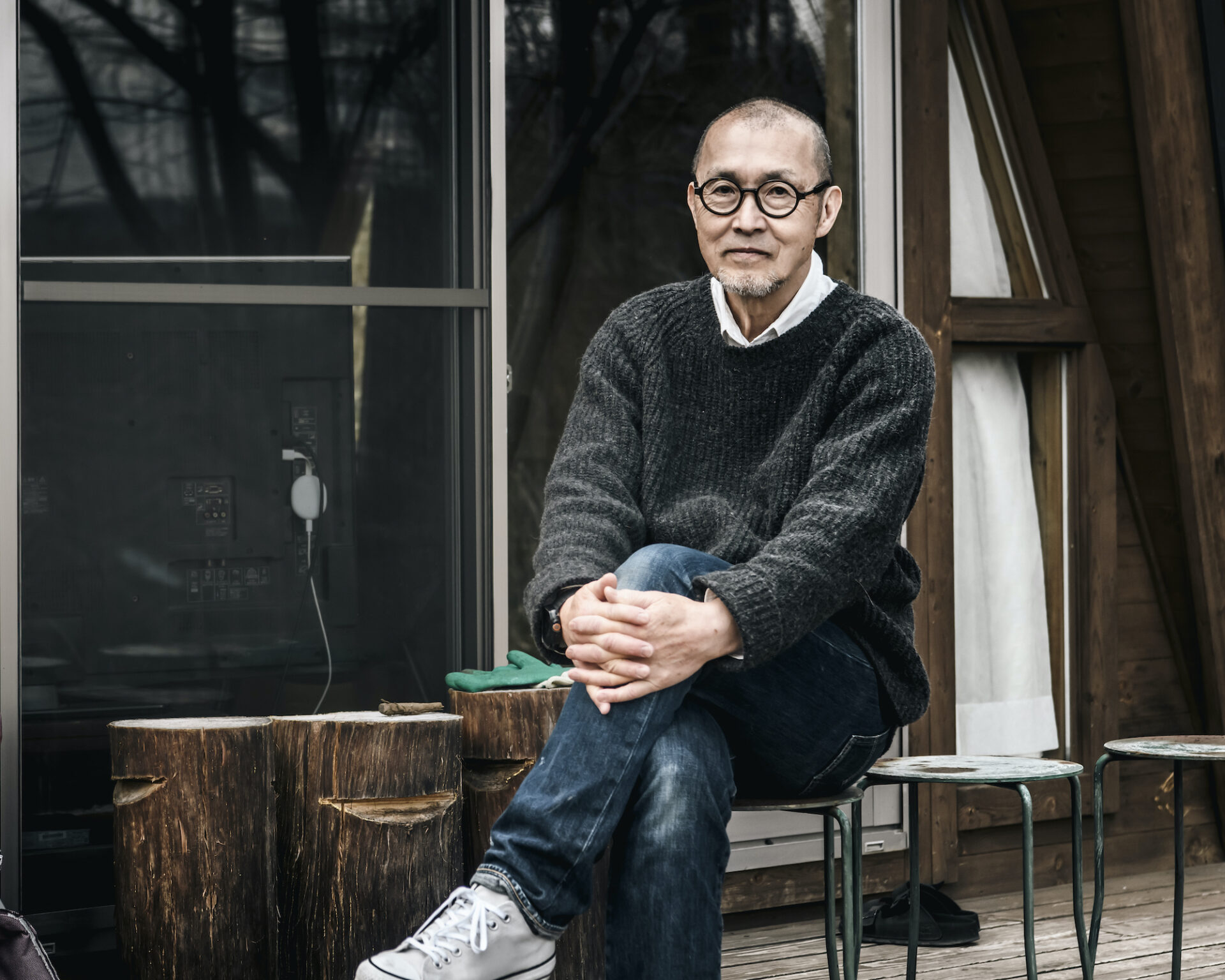
Professor Tomohiro Ishizu, a leading figure in the field of neuroaesthetics* — the study of beauty from a neuroscientific perspective — has pursued these questions through research conducted at institutions including University College London. Using advanced technologies such as MRI, he has illuminated the neural reward systems activated when we experience beauty, as well as the intricate brain mechanisms through which beauty emerges even amid sorrow.
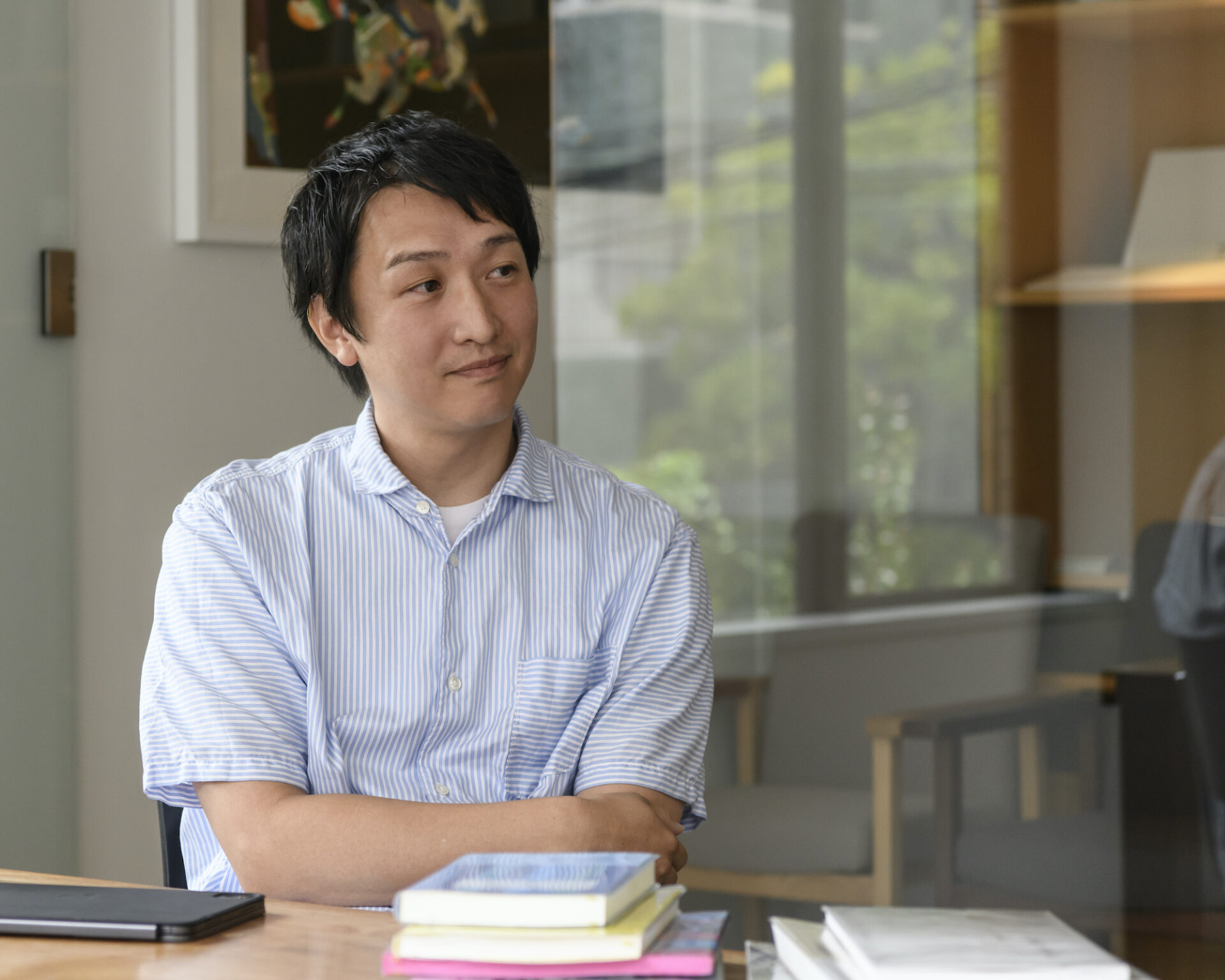
Across the table sits Masakazu Shigeta, founder of the OSAJI brand, who has long approached beauty from a different angle. Throughout his career in the beauty industry, he has maintained a distinctive philosophy: pairing philosophical hypotheses with scientific verification.
At first glance, “subjective beauty” and “objective evidence” might appear to stand at opposite poles — yet their dialogue effortlessly transcended that divide. From the instinctive pull of scent encoded in our DNA to the brain networks that give rise to creativity, and even the scientific basis for the idea that “love is blind,” what unfolded between the two was a richly layered, intellectually vibrant exchange.
(Click here for the first half of the interview.)

“When different cultures fuse and merge, they generate new forms of comfort and ease. It is precisely this layered multiplicity that will be essential to ‘Japanese-ness’ in the coming eras” (Shigeta)
Masakazu Shigeta: In the creative field, the topic of “Japanese-ness,” or authenticity of Japanese culture, often comes up. But I do not believe we need to look back to the past in search of something “pure” or original. If anything, I feel the answer might be found by walking through the streets of Vietnam. There, indigenous Indochinese culture overlaps with European architecture from the French colonial period, alongside Chinese influences introduced by the overseas Chinese community. These layers coexist, forming the distinctive character of contemporary Vietnam.
Japan is no different. The arrival of figures such as Francis Xavier and Matthew Perry dramatically unsettled what it meant to be “Japanese.” Yet through encounters and the fusion with foreign cultures, the Japanese we know today took shape. When cultures fuse, they generate new forms of comfort and ease. It is precisely this layered multiplicity that will be essential to “Japanese-ness” in the coming eras.
Tomohiro Ishizu: In countries such as China and the nations of revolutionary-era Europe, mainstream aesthetic values often seem to be largely refreshed when a political dynasty or governing regime changes. And yet, I have the impression that they ultimately remain connected along a single thread.
Japanese aesthetics, on the other hand, is fundamentally different. One of the defining characteristics is that, even when a new mainstream emerges, the earlier sensitivities do not disappear. The standards for beauty born in different eras are not discarded or replaced, and instead, they continue to coexist. Aesthetic standards from different eras accumulate in layers, running in parallel without being eliminated.
For example, the emotional concepts such as Okashi and Utsukushi, which bloomed in the Heian period, have persisted for over a thousand years and reside vividly in a globally recognised word: Kawaii. Also, introspective aesthetics that find value in what decays or in serene emptiness, represented in concepts such as Yugen, which deepened within the medieval sense of impermanence, and Wabi-Sabi, which emerged from Yugen and was shaped by Zen and the tea ceremony, have also been incorporated into modern architecture and design. Furthermore, the spirit of Iki, fostered in city culture in the Edo period, Western-style rational proportions imported after the modern period, and the Yo no Bi — the beauty in everyday things — advocated by folk craft movements were added to the mix in succession.
These are not left inside specimen boxes as legacy, but exist in parallel, influencing each other sometimes as traditional performance and other times as one of the latest products. Japanese culture is, in short, the massive accumulation of this “multilayered aesthetics.” The sensitivity of the Heian period, the aesthetics of the Edo period, and the rationality of the modern period resonate with each other in the same timeline. This multilayeredness is the most distinctive force shaping the authenticity of Japanese culture.
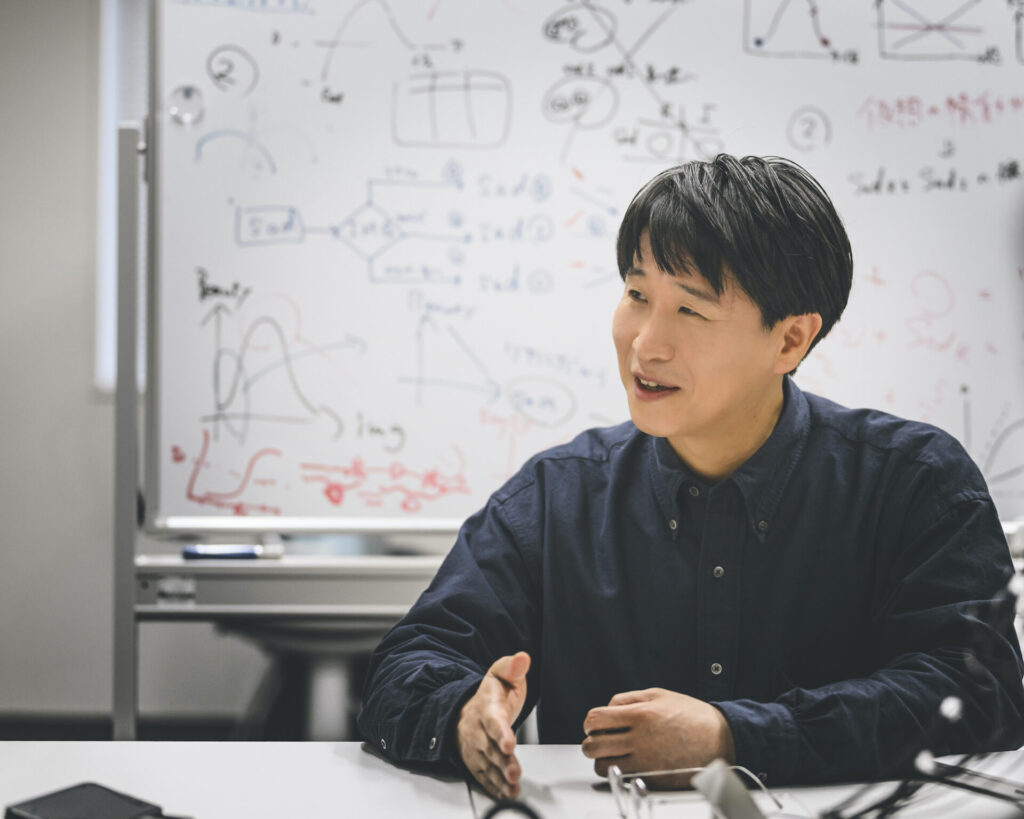

——In your book, Shinkei Bigaku: Bi to Geijutsu no Nou Kagaku (Neuroaesthetics: The Neuroscience of Beauty and Art), you wrote about “invisible beauty” and “unlistenable beauty.” At that part, you mentioned Robert Rauschenberg’s white painting series. I believe the reason Japanese people accept his works, that have nothing on their canvas, must have something to do with Japanese sensibilities, and this might be also part of the authenticity of Japanese culture.
Ishizu: In his treatise on theatre, Zeami wrote about the importance of “not performing everything.” Even when a performer possesses perfect techniques, they deliberately refrain from expressing everything they have. It is in what remains unperformed that the audience allows their own imaginations to blossom. I believe that this kind of expression — finding truth within silence and empty space — is one of the great cultural insights that Eastern tradition has cultivated over centuries.
Of course, this sort of sensibility toward “emptiness” is by no means limited to the East. We can see similar ideas in the work of artists such as Robert Rauschenberg and in John Cage’s experiments with the sounds of silence. What they attempted, perhaps, was to strip away the ego of the creator and allow fragments of the world — captured through the consciousness of the audience — to become the work itself.
I often feel that this ability to find meaning in what appears to be “nothing” is actually a biological capacity shared by all human beings. What makes Japanese culture fascinating is that it has woven into its cultural fabric a mechanism for drawing out the rich imaginative space that the human brain naturally possesses.
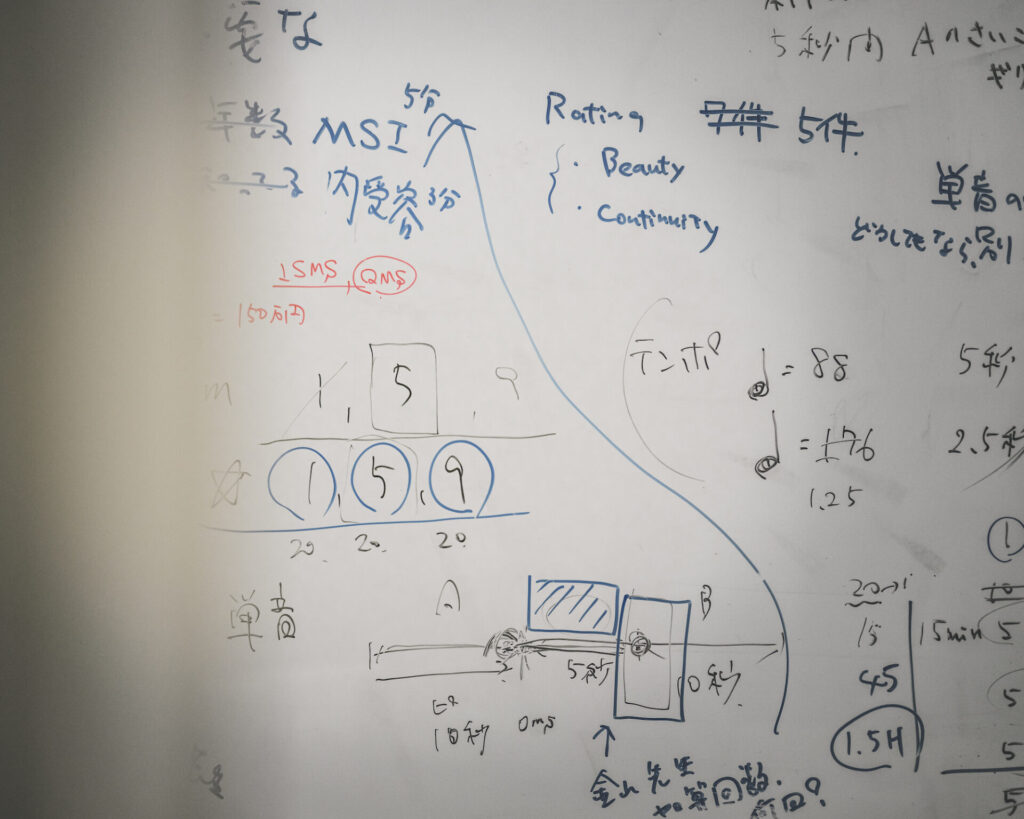
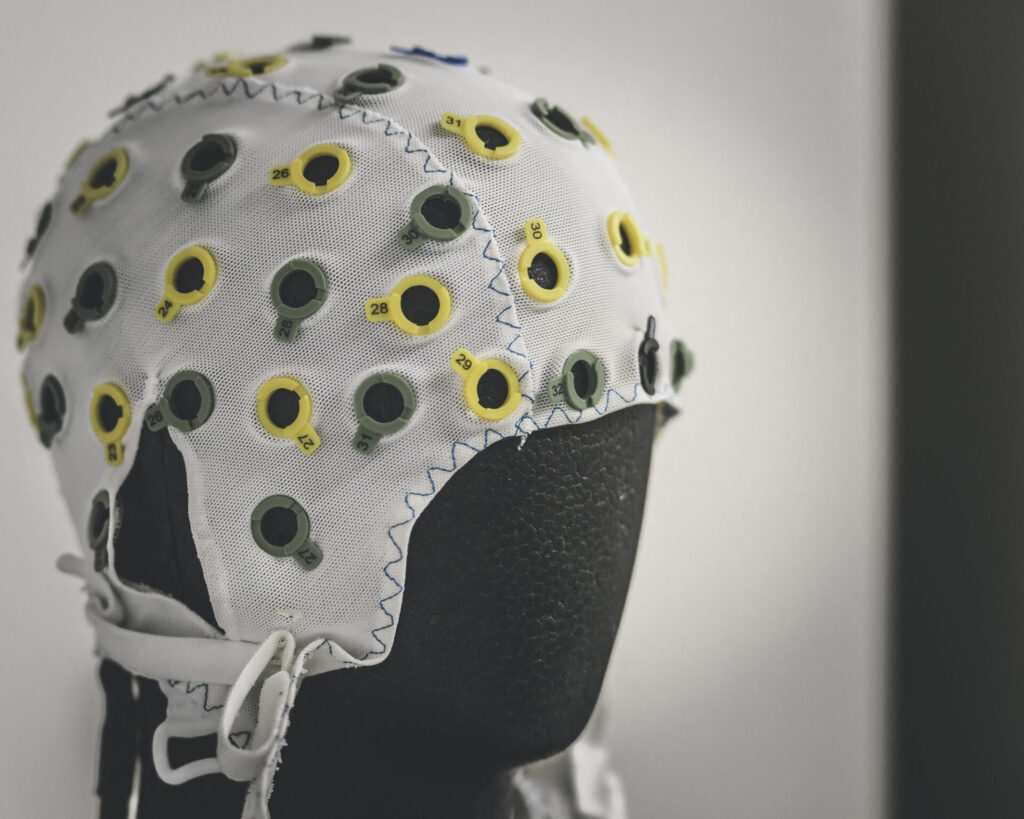
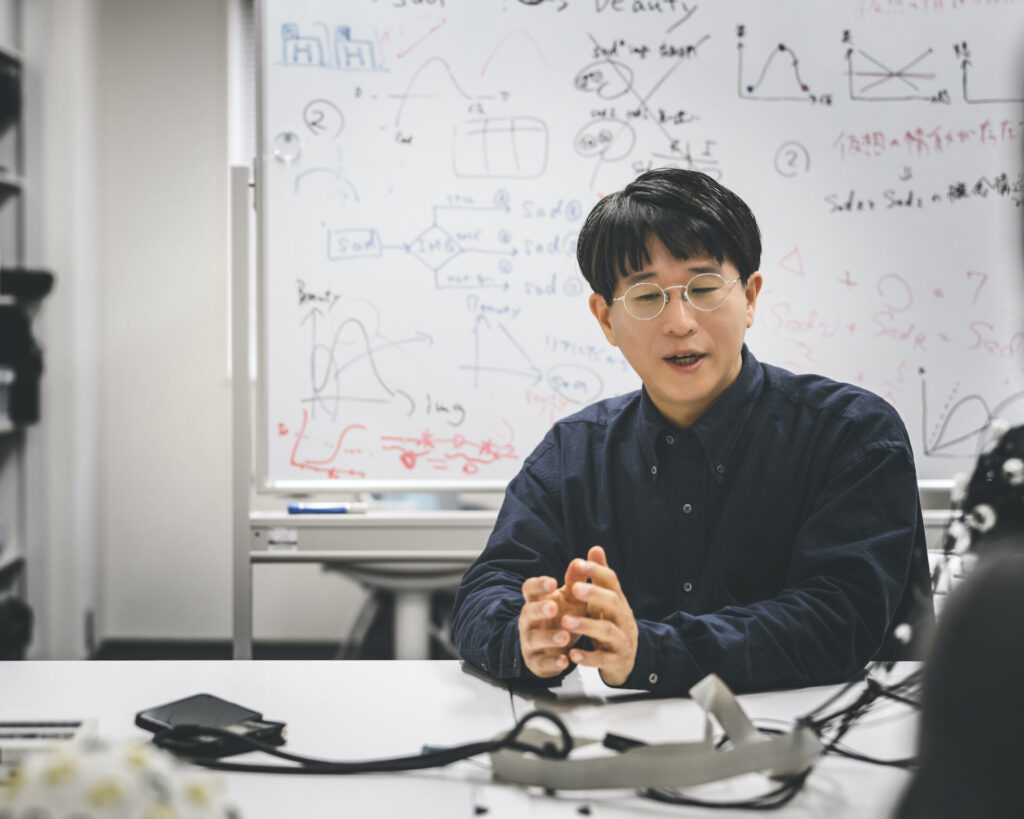
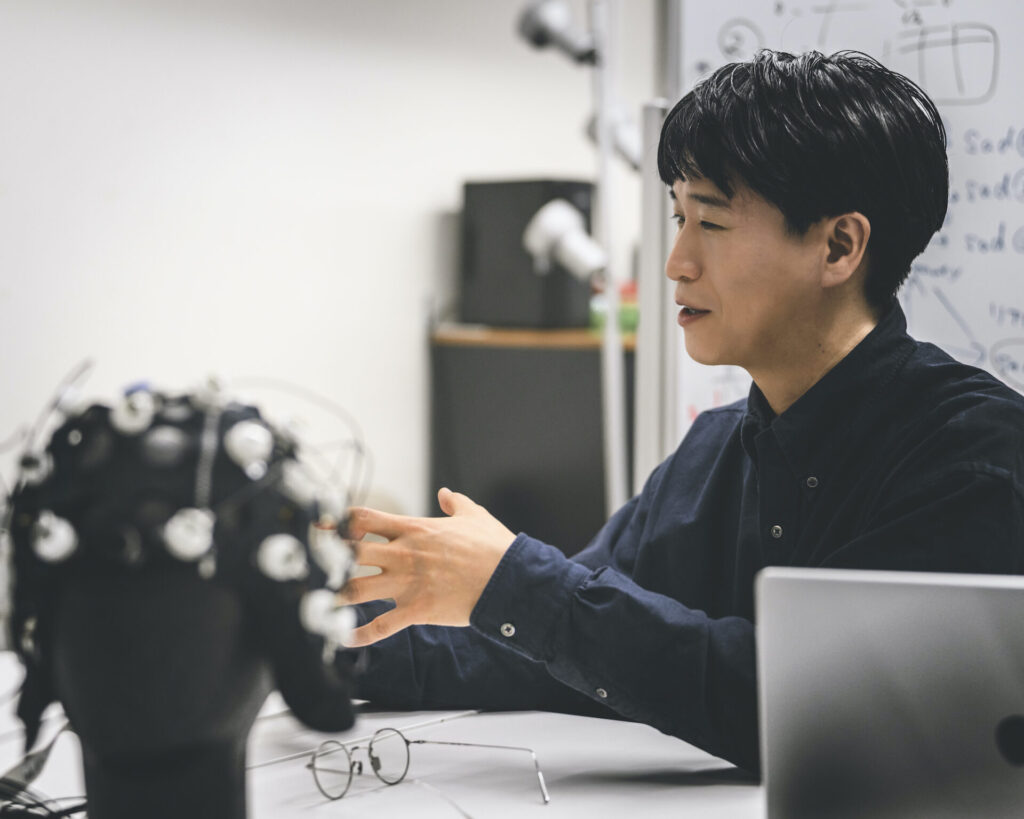
At the moment, we are testing this hypothesis scientifically. In our experiments, participants wore EEG caps to measure their brain activity while listening to sounds. We are particularly interested in the moment when the sound disappears. In other words, we are exploring how the brain perceives beauty in the emptiness of time, when sound input suddenly stops — and how the brain responds to that moment of silence. By visualising the neural activity during that instance, we hope to better understand how the brain experiences beauty in its absence. In fact, this is what I have wanted to study ever since I moved my research base back to Japan.

“Science might indeed lead aesthetics and cultures towards a single evidence-based answer, producing a certain level of uniformity” (Shigeta)
Shigeta: When I become absorbed in a concert or a film — deeply moved and enthusiastic about the performance, there are moments when, somewhere in the back of my mind, a thought arises: I wish it would end soon.
Ishizu: That’s intriguing.
——Generally speaking, most people would think, “I wish for such a joyful moment to last as long as possible.”
Shigeta: Of course, it doesn’t mean the work or performance itself is boring. It’s quite the opposite — I’m so absorbed that, somewhere within me, there is also a self quietly waiting for its conclusion. It’s been puzzling to me, but during our conversation today, I realised something. Perhaps I simply have very high expectations for the blank space that follows the ending.
Ishizu: So, you might be unconsciously looking forward to the silence — or the time in which everything settles — afterwards.
Shigeta: That’s right. During a concert or a film, we are exposed to a massive torrent of information, and our emotions are constantly stirred. There are moments when that intensity becomes almost exhausting. Then, the flood of information stops, and a blank space opens up. Within that quiet space, one’s emotions gradually settle and reorganise themselves. Perhaps, for me, that silent process is where the emotional experience truly reaches completion.
Ishizu: Earlier, we spoke about the beauty of the moment when the sound fades away. Interestingly, our research group has a related experimental finding. In one study, we compared the brain waves of ordinary people and musical experts during the silent moment after an orchestral piece ended.
Shigeta: What kind of difference did you observe?
Ishizu: Among ordinary people, brain activity becomes stronger after the music stops, as they actively experience the lingering resonance. Experts, in contrast, show a different pattern. Their brain begins activating the neural bands associated with the lingering resonance while the music is still playing.
In other words, while listening to the sound itself, they are already anticipating its ending — and the afterglow that follows. The feeling you described — waiting for the end even while deeply moved — might be evidence that this expert-like anticipation of resonance is occurring in your brain.
Shigeta: I see. So the brain is already moving ahead to welcome the blank space.
Speaking of that “space,” I feel that the fusion of Eastern and Western thought is now progressing faster than ever before. In the past, Western medicine and Western philosophy dominated overwhelmingly. But today, we are seeing renewed interest in Eastern ideas such as fundamental healing and prevention of illness.
Just as Steve Jobs incorporated the Japanese concept of yohaku — the beauty of blank space — into the iPhone’s design philosophy, it seems to me that Eastern wisdom is not disappearing but rather beginning to manifest more clearly within Western systems.
Ishizu: Science might be functioning as the common language to mediate the fusion.
Shigeta: I agree. But while science accelerates this fusion, it also has a somewhat cruel side.
Take the field of beauty care, which I work in. In the past, when people talked about “what beauty care really means”, it was essentially a clash of hypotheses grounded in different cultures and philosophies. At the level of philosophy, we could respect one another’s perspectives and casually say, “That is another point of view.” But once science begins analysing these ideas — and evidence emerges showing that one certain approach is more scientifically rational — the world quickly shifts towards that rational option.
Ishizu: So, when science presents a “correct answer,” the diversity of hypotheses begins to disappear.
Shigeta: Exactly. The same can be seen in the world of food.
As scientific evidence showing that Japanese cuisine and fermented foods contribute to longevity has accumulated, the number of Japanese restaurants worldwide has increased dramatically. While rational choices supported by evidence accelerate the fusion of cultures, at the same time, they also lead to a kind of global homogenisation. As something becomes established as the universal “right answer,” the unique characteristics of individual cultures gradually fade.
If science continues to prove the value of what we call “Eastern beauty,” it will eventually become a universal standard — and the world might grow increasingly uniform. That raises an important question: what, then, will remain as true individuality? I feel we must reconsider this now.
Ishizu: So, the “correct answer” in the name of rationality can eliminate the diverse hypotheses that once abounded — that is a kind of disadvantage of science.
——One might even call it the darker side of scientific faith.
Shigeta: Science might indeed lead aesthetics and cultures towards a single evidence-based answer, producing a certain level of uniformity. But at the same time, it may also serve as a positive force that reduces the kinds of fruitless conflicts humanity has experienced — religious wars, ideological conflicts, and so on.
Ishizu: The world might be moving toward something like a shared “nation of the Earth,” grounded in common understanding.
Shigeta: That’s right, and in that sense, I feel a great deal of hope. And yet, if we ask whether it is truly right for individual cultures to gradually dissolve into that unity, I cannot help but feel a certain emotional sadness as well.
“No matter how much we learn about brain activity and neurotransmitters, beauty will always remain mysterious and keep moving our hearts” (Ishizu)
Ishizu: My mentor at University College London, who is still active well past the age of 85, often says, “Biology is my god.” He doesn’t believe in God, but in biology. Those of us who studied under him were trained to think from a biological perspective. When you do that, you inevitably arrive at the idea that the brain — as a physical object — operates according to mechanisms that are shared across races and cultures.
Shigeta: I see. But when you try to explain beauty scientifically, I assume some people might resist it. I imagine there are people who think they don’t want their precious sensibilities to be explained.
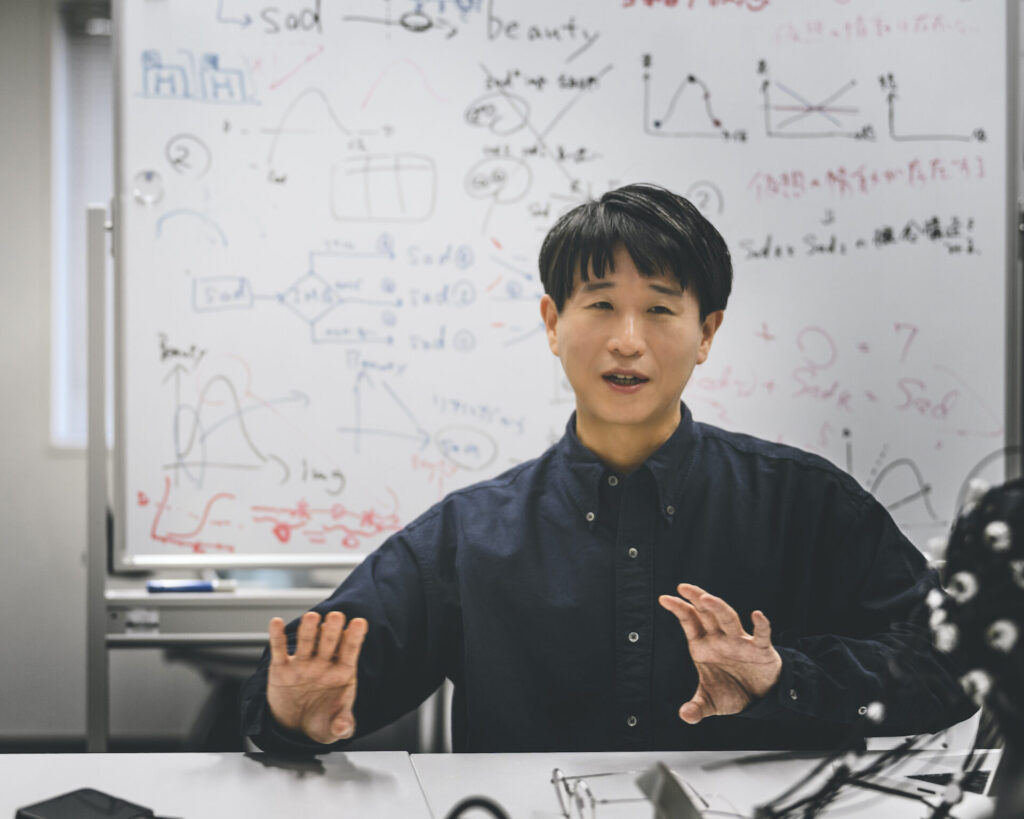
Ishizu: Yes, that happens quite often. I completely understand their thought that “my own aesthetics belong only to me.” When people express their concerns, I often use DNA as an example. DNA is the blueprint for human beings, but even after scientists discovered the structure of the double helix, we still don’t fully understand what it means to be human. We still struggle with how to relate to one another — beauty is the same. No matter how much we learn about brain activity and neurotransmitters, beauty will always remain mysterious and keep moving our hearts. Even if we understand the shared mechanisms, your own sense of aesthetics will never change. So, I always tell them, “Don’t worry.”
Shigeta: So, even if the mechanisms are revealed, the mystery does not disappear. If that’s the case, where does the value of science lie when it comes to discussing beauty?
Ishizu: I believe science has the power to free us from the divisions created by languages and return us to a more fundamental state. We tend to carve the world into categories such as “truth,” “goodness,” and “beauty.” But once we look at brain activity, we find that these expressions are actually generated by similar underlying brain mechanisms. In other words, science allows us to reconnect with the deeper values shared by humanity before they were divided and categorised by language. I believe that science can, paradoxically, reveal the essential world that exists before words split it into separate concepts.

Shigeta: Listening to you, I’ve just realised one thing. Those who resist having their aesthetic sense explained by science, which you just mentioned, are actually those who have very rich sensibilities. Because they trust their own aesthetic judgements, they feel uneasy about having the mechanism revealed. But in reality, there are few people with such confidence in their aesthetic sense.
Ishizu: You mean that people cannot fully trust their own senses?
Shigeta: That’s right. Far more people feel a sense of insecurity about art — “I know nothing about art” or “I think this is good, because everyone says it’s great and really popular now, but I’m not sure if this is really a good one.” Because they lack confidence in their own choices, they end up surrendering themselves to the overwhelming flow of information. But unless those insecurities are resolved, they will never experience genuine emotional responses of their own.
Ishizu: So, they can feel something, but they cannot affirm it as their own value.
Shigeta: Precisely. In this Idealism interview series, this phrase often comes up: “Romantic moments exist only in coincidence.” In this world, there are people who find value in coincidental encounters, and those who cannot. Those who can do so have trained themselves to gather small moments of emotional experience in everyday life.
Ishizu: So, it is something like an emotional muscle that allows us to recognise coincidence.
Shigeta: That’s right. I am not saying that choosing something based on information or comparing oneself with others is always a bad thing — that too is a form of sociality. However, if we rely too much on it, our ability to respond to coincidental encounters gradually weakens. While science is revealing the common mechanism of beauty, the real question for us is how we can protect and nurture our own moments of coincidental emotional experience. That is one of the most important questions of our time — that’s how I see it.
Ishizu: What you just said is really intriguing. It also sounds like a kind of warning about how we should engage with AI.
Shigeta: The key to resolving the “insecurities about beauty” that many people experience today might lie in neuroscience. Those who lack confidence in their own sensibilities often unconsciously deny the value of something, even when a coincidental encounter genuinely moves their heart. But imagine if neuroscience could visualise that moment and tell them, “Your brain is clearly signalling that you find this beautiful.” Perhaps, for the first time, that person would realise, “Oh, so this is what I truly like.”
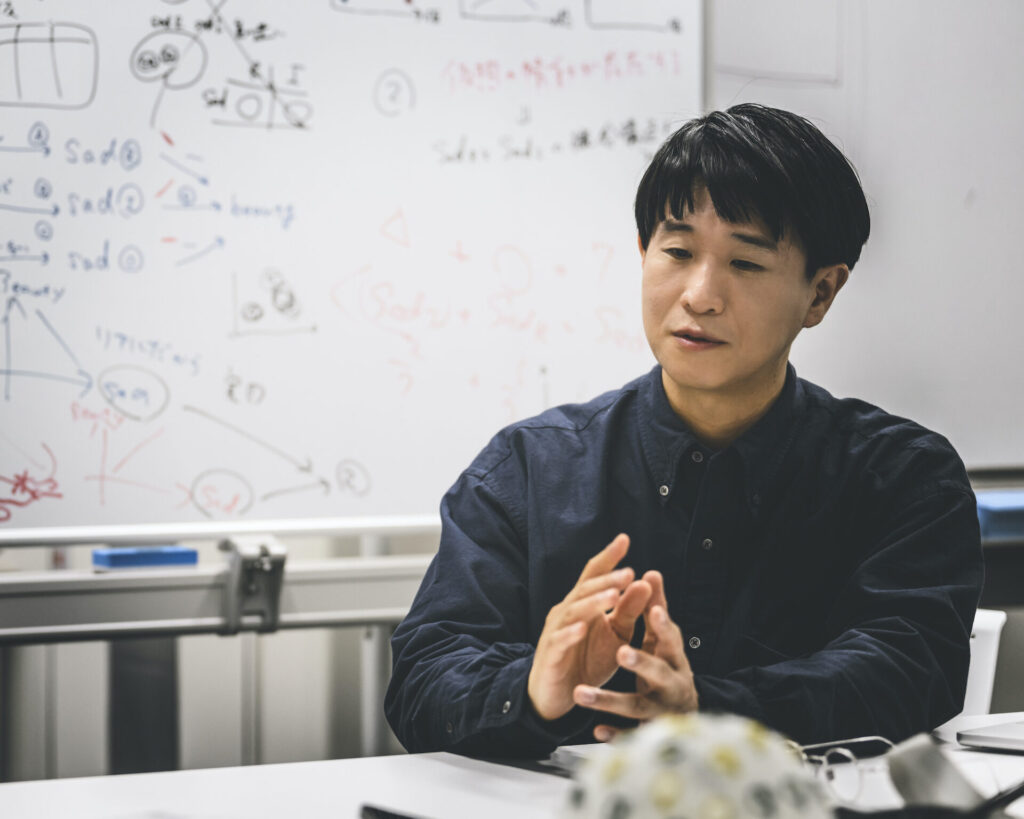
Ishizu: In other words, science can correct assumptions that lie outside our awareness.
Speaking of assumptions, there is a theory in neuroscience called predictive coding, which is considered one of the most fundamental principles of how the brain works.
The brain is actually a very energy-hungry organ. Although it accounts for only a small portion of body weight, it consumes around 20% of the body’s total energy. Because of this, the brain operates according to a basic principle: it constantly tries to minimise effort.
Shigeta: So, the brain essentially wants to be lazy. What kind of state is it trying to achieve?
Ishizu: For example, imagine a middle manager who always works hard. If that person wanted to minimise effort, what situation would be the easiest? It would be a situation where their subordinates respond exactly as expected. If the subordinates behave perfectly in line with the manager’s expectations, there is nothing more for them to do. From the manager’s perspective, that would be the most efficient and effortless situation.
——In other words, the world remains entirely within their expectations.
Ishizu: Exactly. It appears that the brain works in a very similar way. Before we act or move, the brain constantly generates internal “predictive models.” For example, if you intend to pick up your glasses, your brain instantly predicts how your hand will move. If reality matches the prediction, everything proceeds smoothly. But once there is a mismatch between predictions and sensory feedback from the world, the brain must update its model, which consumes substantial energy. That’s why the brain constantly tries to minimise its prediction errors. In other words, it prefers a world in which events unfold exactly as expected.
But the question is, can humans really live that way? When we encounter a landscape of extraordinary beauty that we have never seen before, our predictive models must fail completely. But that is precisely the moment when we are overwhelmingly attracted or moved. Beauty seems to emerge from this experience of surprise — from moments when our expectations are overturned, and we feel a sense of wonder. The principle of predictive coding alone cannot fully explain this phenomenon. In neuroaesthetics, we are trying to understand the nature of this “beauty that breaks our predictions.”

“Using scent without understanding its effects can even work against genuine well-being — in other words, against true beauty” (Shigeta)
Shigeta: Let me digress for a moment. When I was young, I attended a technical school to become a recording engineer. The school attracted people with very critical musical tastes — people with extremely discerning ears.
One day, a female student who had just graduated from high school said that her favourite band was B’z — a famous Japanese rock band. The moment she said that, the older students around her immediately began criticising her. They said things like, “They’re just copying Aerosmith,” or “Are you really planning to enter the music industry with that level of musical literacy?”
At the time, I would simply say, quite casually, “I like B’z. I often listen to them.” If they are the ones who brought first-class rock music to Japan, then that in itself is a great achievement.
This kind of snobbish peer pressure — the idea that “I want to be the kind of person who listens to this kind of music” — can ultimately dull the very antenna we have for genuine emotional response.
Ishizu: In that sense, an interesting way to dismantle such “snobbish frameworks” is to compare Shakespeare with otaku culture. Today, Shakespeare is regarded as a great classic, and in his lifetime, he was an extraordinary linguistic innovator, creating more than 1,500 new words and expressions. In fact, we can see a similar kind of creativity in Japanese otaku culture today.
I am currently writing a book called Oshikatsu no Shinrigaku (The Psychology of Supporting Favourites). While researching it, I discovered something fascinating. When a fan’s Oshi, or favourite, retires and the fan stops supporting that person, do you know how they describe their feelings and the situation? The expression they use is takai (他界) — literally, “to pass away to another world.”
I was genuinely shocked by that expression. Isn’t it remarkable? It’s not simply “quitting” or “leaving.” It’s “passing away.” The phrase seems to capture the feeling that the person they admired was almost like a deity to them.
When I returned to Japan after being away for eleven years, there were many expressions I couldn’t understand — words like emoi (emotional) or toutoi (sacred). These words, created during my time abroad, carry intense energy to describe emotions that existing vocabulary cannot fully capture. And I realised that otaku culture has the creative power to generate such language. Loving B’z, fans saying they are “passing away” when their favourite retires, and Shakespeare’s impulse to create new words — they are not so different at the level of fundamental emotional experience.
Perhaps our attempt, through the power of science, to return to values that exist before they are divided and fixed into language, is also an attempt to reclaim a raw form of emotion free from rigid critical frameworks.
——In your book, you mentioned the “beauty of seeing” and the “beauty of listening.” How about the “beauty of eating” in your field of research? Beyond the simple physical reward of deliciousness, is there any way to approach taste and smell as a higher form of beauty — the kind associated with higher brain function?
Ishizu: That’s a very perceptive question. In the history of brain science, research has focused overwhelmingly on vision and, to a lesser extent, on hearing. However, senses such as taste, smell, and touch have a defining characteristic that vision and hearing do not — the degree of “contact” involved.
——Vision and hearing are non-contact senses, since they perceive light and sound from a distance.
Ishizu: Exactly. In contrast, taste, smell, and touch involve direct physical contact. These senses are far more immediate and visceral than vision or hearing. If vision and hearing relate to a more abstract beauty, then the beauty associated with taste and smell is rooted in a more primitive, biological form of pleasure.
In fact, the Japanese word oishii (美味しい), meaning delicious, contains the character bi (美), which means beauty. When you explore the origin of this character, you find something interesting. It is composed of the character for “big” (大) and “sheep” (羊).
When I once spoke with a researcher of pictographs, he told me that the character doesn’t simply mean “a big sheep is delicious,” but rather may reflect the beauty of sharing a large sheep together. That explanation made a lot of sense to me — the elements of beauty reside not only in the taste itself, but in the situation of people eating together.
Seen this way, taste and smell are direct, physical senses, but they also remind us of being in the presence of others. In that sense, they may represent a kind of “aesthetics of empathy.” Experiences such as sharing a meal or sensing a familiar fragrance go beyond solitary appreciation. They evoke a sense of beauty that belongs to a community.
For that reason, I’m interested in developing what might be called a “neuroscience of scent,” expanding neuroaesthetics beyond its traditional focus on vision and hearing.
Shigeta: I’m very interested in the neuroscience of scent.

Ishizu: Would you tell me more about it? I’m actually studying scent at the moment.
Shigeta: First of all, if we trace the origins of scent, we find that it originally functioned as a communication tool among animals and plants. For example, when a tree is attacked by insects, the surrounding trees begin releasing the defensive chemicals. They don’t use language, of course, but they transmit information by releasing and receiving aromatic compounds.
Ishizu: So, plants are essentially communicating with one another.
Shigeta: The relaxing effect people experience in forests — often called phytoncide — is actually the result of humans perceiving the chemical communication taking place between plants.
Scent has a profound effect on the human nervous system. That’s why it can be risky to treat it casually as mere entertainment. In reality, it is something quite sensitive that can influence the human body.
Ishizu: So, even if we consciously experience a scent as pleasant, its physiological effects might be something quite different.
Shigeta: Absolutely. For example, expectant mothers are often advised to avoid certain essential oils because those scents can directly affect female hormones. Some fragrances, such as rose-based scents, may stimulate hormonal activity. Using scent without understanding its effects can even work against genuine well-being — in other words, against true beauty.

Ishizu: Scent is not merely a source of pleasure; it also serves an important biological function.
Speaking of scent, Marcel Proust famously described in In Search of Lost Time how the aroma of a madeleine dipped in tea suddenly brings back forgotten memories. This phenomenon is often cited as an example of how powerfully scent and memory are linked.
Neurologically, the olfactory bulb is directly connected to the hippocampus, the region of the brain responsible for memory. Unlike other sensory systems, scent can therefore access our memory system very directly — almost as if it were knocking on the door of a reservoir of memory. That’s why a particular smell instantly brings back a vivid scene from the past.
Shigeta: So, the brain itself is structured in a way that closely connects scent and memory.
Ishizu: Another fascinating area of research concerns the relationship between scent and romantic attraction. In an experiment, researchers collected samples of human body odour and asked participants to choose which scent they found most appealing. Interestingly, the results often show that the person whose scent a participant finds most attractive tends to have DNA that is most different from their own.
Shigeta: In other words, unconsciously, humans appear to prefer genetically diverse partners.
Ishizu: Exactly. Of course, people are not consciously thinking, “Oh, this DNA is very different from mine.” But the brain seems able to read genetic information through scent and interpret it as a signal related to survival. In that sense, scent carries an enormous amount of information beyond our conscious awareness.
“When we are deeply moved by art, we are, of course, responding to the artwork itself, but at the same time, we are reflecting on ourselves through the work” (Ishizu)
——Professor Ishizu, you have been working together with a major cosmetics company to develop beauty care products for seniors. How do you distinguish senescence, which is often referred to in the context of natural ageing and anti-ageing?
Ishizu: About three years ago, I worked on a project that explored a different kind of “the beauty of skin” — something distinct from the usual idea of “fresh,” “youthful,” or “wrinkle-free.”
What interested me was the kind of gentle facial expressions that only older people have. As people age, their faces begin to carry a softness that includes acceptance, patience, and attentiveness toward life. These are expressions that younger people simply cannot produce.
In that project, we measured the psychological effects that such expressions have on others, as well as how the brain responds when people see faces marked by age and wrinkles. To begin with, ageing is a completely natural process. Of course, there may be some value in resisting it to a certain extent. However, I sometimes wonder whether the pursuit of eternal youth — like something out of science fiction — truly has meaning.
The beauty industry has not conducted serious research on the appeal of a kind of beauty that naturally settles into a person. That’s why I wanted to explore it together with a cosmetics company.
Shigeta: One area of brain science that particularly interests me is the phenomenon of transposons in DNA. During a lifetime, parts of DNA can actually rearrange themselves. In other words, something like a mutation can occur even within a single human life.
When people confront their own insecurities and learn to coexist with them, what really matters is a shift in awareness, sensibilities, and ways of thinking. After all, the ability to change is essential to human beings.
On the other hand, there are many people who believe, “I see your point, but people cannot change so easily.” If science could demonstrate that people are indeed capable of change, it would give enormous courage to those who feel trapped by that belief. I have great hope that science can help generate the courage to change.
I believe that your research may help encourage such positive transformations. As for transposons, there is still much that science does not understand — including what exactly triggers them. Still, recent research has shown that these kinds of change do occur in the human body.
Sometimes I imagine something rather speculative: what if transposons were triggered when someone experiences an overwhelming emotional moment — when the brain encounters an extraordinary impact of beauty? I think that would be fascinating.

Ishizu: When we experience profound emotion or encounter overwhelming beauty, the medial orbitofrontal cortex (mOFC) becomes highly active. Moreover, as the intensity of emotional experiences and beauty increases, the activity in this region tends to increase as well.
However, when something is truly loved and experienced as deeply beautiful, the brain does not simply respond in a linear way. Instead, a brain network called the Default Mode Network (DMN) — which is often considered a source of creativity — suddenly becomes active.
What makes the DMN interesting is that it can suddenly become highly active during creative or introspective states. Yet the moment the brain shifts from an inward, reflective mode to an outward focus — for example, when someone calls your name — the network quickly quiets down.
But when a person once again encounters a powerful emotional experience that exceeds the limits of ordinary beauty, the network can suddenly reactivate. When we are deeply moved by art, we are, of course, responding to the artwork itself, but at the same time, we are reflecting on ourselves through the work.
Profound emotional experiences are often connected to an inner journey of self-discovery. If a phenomenon like transposons were somehow linked to such moments, that would indeed be extremely interesting.
——From a neuroscience perspective, the DMN might function like an incubator for ideas. When considering the relationship between creativity and neuroaesthetics, I am curious about how designers and creators manage their brains when they develop new forms of value or beauty.
Ishizu: Speaking of creators, I once studied the brain activity of jazz musicians. When they are performing in a session, they are exercising intense musical creativity. What is fascinating is that during improvisation, two opposite processes occur simultaneously: release and inhibition.
On the one hand, the medial prefrontal cortex (mPFC), a central hub of the DMN, becomes highly active. This produces a kind of flow state in which impulses are not heavily suppressed — a state in which one simply feels compelled to perform.
On the other hand, another brain region, the dorsolateral prefrontal cortex (dlPFC), considered one of the most highly evolved areas of the human brain, becomes suppressed. This region normally handles highly complex tasks such as integrating information and monitoring errors. During improvisation, however, this area is temporarily inhibited. In other words, the musician can express musical impulses freely without excessive self-monitoring or concern about evaluation.
This dynamic alternation between activation and inhibition — between the states of “on” and “off” in the brain — may correspond to the creative trance that jazz musicians experience during improvisation.
Interestingly, a similar pattern can be found in another human experience: romantic love.
At a lab at UCL, we once studied the brain activity of people in the early stages of romantic love. We observed signs of partial deactivation of the dlPFC during this phase.
In that sense, the expression “Love is blind” is supported by brain activity.
Shigeta: Does age make any difference?
Ishizu: Not significantly — at least in the data we collected. However, our participants were all under their fifties, so we cannot yet say much about older age groups.
Shigeta: That’s really fascinating. I really enjoyed today’s conversation.
Profile
-
Tomohiro Ishizu
Tomohiro Ishizu is a professor of neuroaesthetics and experimental psychology at the Faculty of Letters, Kansai University. At the Faculty of Life Sciences, University College London (UCL), he conducted research under Professor Semir Zeki, who founded the field of neuroaesthetics — the study of brain mechanisms underlying aesthetic experience. He learned the spirit and intellectual discipline of being a scientist from his mentor, who remains active well past the age of 85 and is fond of saying, “Biology is my God.” Beginning in 2009, he conducted research at UCL using neuroimaging techniques such as MRI to explore how the brain perceives beauty and love. He later held several positions, including a research fellow at the University of Vienna and a senior research fellow at UCL, before taking his current position as a professor at Kansai University.
Publications
Shinkei Bigaku: Bi to Geijutsu no Nou Kagaku
(Neuroaesthetics: The Neuroscience of Beauty and Art)
Kyoritsu Shuppan, 2019Nakeru Shohi
(Tear-Jerking Consumption: Emotion and Consumer Behaviour)
Sunmark Publishing, 2025 -
Masakazu Shigeta
After working as an engineer in the music industry, Shigeta began his career as a cosmetics developer in 2001. From 2004, he worked on various cosmetics brands in the healthcare business of Nitto Denka Kogyo Co., Ltd., a metal surface treatment company founded by his great-grandfather. In 2017, he founded “OSAJI,” a skincare lifestyle brand, and became its brand director. In 2021, as a new store of “OSAJI,” he produced “kako,” a specialized shop for home fragrances and perfume in Kuramae, Tokyo. In the following year, he opened a combined shop of “OSAJI,” “kako,” and a restaurant, “enso,” in Kamakura, Kanagawa. In 2023, utilizing the technical skill of Nitto Denka Kogyo, he launched a pottery brand, “HEGE,” and in October of the same year, he became CEO of OSAJI Inc. He also has published books on beauty and held cooking classes and events focusing on food, which is the origin of beauty. He released a collaborative album with F.I.B JOURNAL called “Gensho hyphenated” in November 2024 and has been expanding the range of activities.
Publications
Taberu Biyou (Eating for Beauty) (SHUFU TO SEIKATSU SHA, 2024)
42-Sai ni Nattara Yameru Biyou, Hajimeru Biyou (Beauty cares to quit and start when you turn 42) (Takarajimasha, 2022)
Information
Shinkei Bigaku: Bi to Geijutsu no Nou Kagaku (Neuroaesthetics: The Neuroscience of Beauty and Art)
Published in 2019, this book by Tomohiro Ishizu offers a comprehensive exploration of the essence of art from the perspective of neuroaesthetics. It has been widely praised for vividly illuminating the mechanisms of beauty as they unfold on “the canvas of the brain.”
-
Photographs:Eisuke Komatsubara
-
Text:Masahiro Kamijo
-
Make-up:Yuya Goto (OSAJI)
NEWS LETTER
理想論 最新記事の
更新情報をお届けします
ご登録はこちら
ご登録はこちら
メールアドレス
ご登録ありがとうございます。
ご登録確認メールをお送りいたします。