

2026-03-19
Vol.25
Neuroaesthetist and Professor at Kansai University
Tomohiro Ishizu(part 1)
-
Emotional Resonance through Scientific Verification
-
The Mechanism of Being Moved
-
Crisis of Identity
-
Distanced Empathy
What happens in the brain when we encounter beauty? And why can sorrow itself sometimes appear beautiful?
Professor Tomohiro Ishizu, a leading figure in the field of neuroaesthetics* — the study of beauty from a neuroscientific perspective — has pursued these questions through research conducted at institutions including University College London. Using advanced technologies such as MRI, he has illuminated the neural reward systems activated when we experience beauty, as well as the intricate brain mechanisms through which beauty emerges even amid sorrow.
Across the table sits Masakazu Shigeta, founder of the OSAJI brand, who has long approached beauty from a different angle. Throughout his career in the beauty industry, he has maintained a distinctive philosophy: pairing philosophical hypotheses with scientific verification.
At first glance, “subjective beauty” and “objective evidence” might appear to stand at opposite poles — yet their dialogue effortlessly transcended that divide. From the instinctive pull of scent encoded in our DNA to the brain networks that give rise to creativity, and even the scientific basis for the idea that “love is blind,” what unfolded between the two was a richly layered, intellectually vibrant exchange.
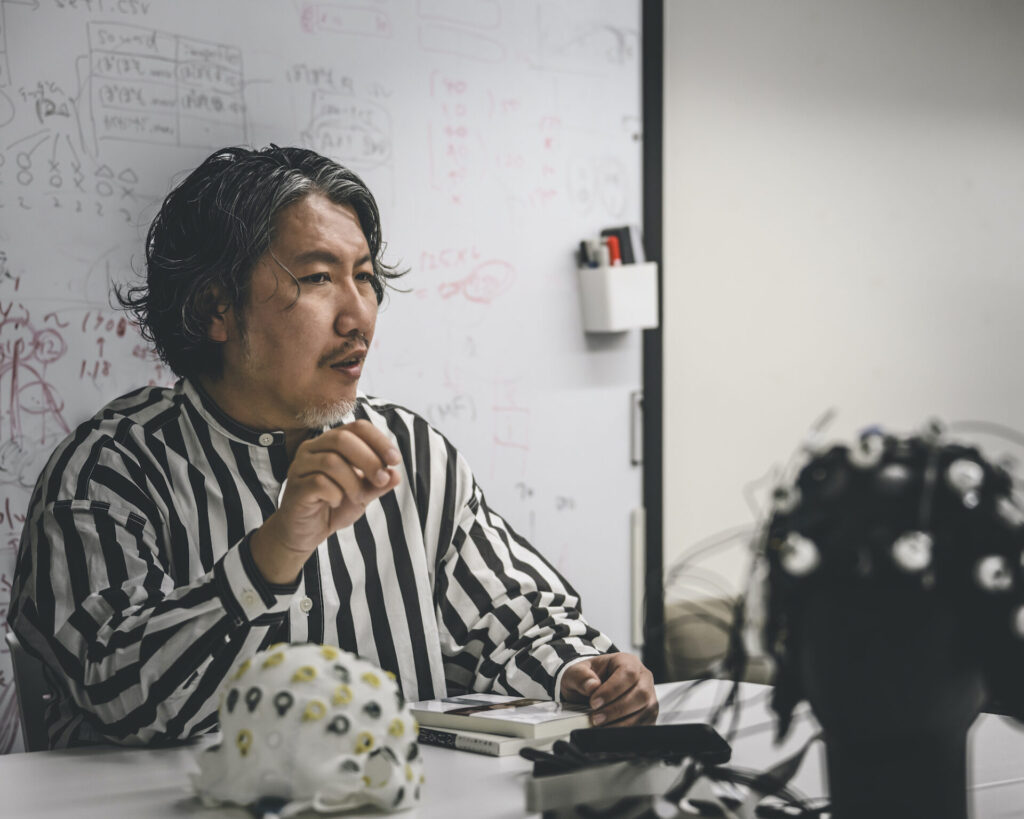
“Whenever I arrive at scientific verification, I feel a profound emotional resonance — and that’s my driving force” (Shigeta)
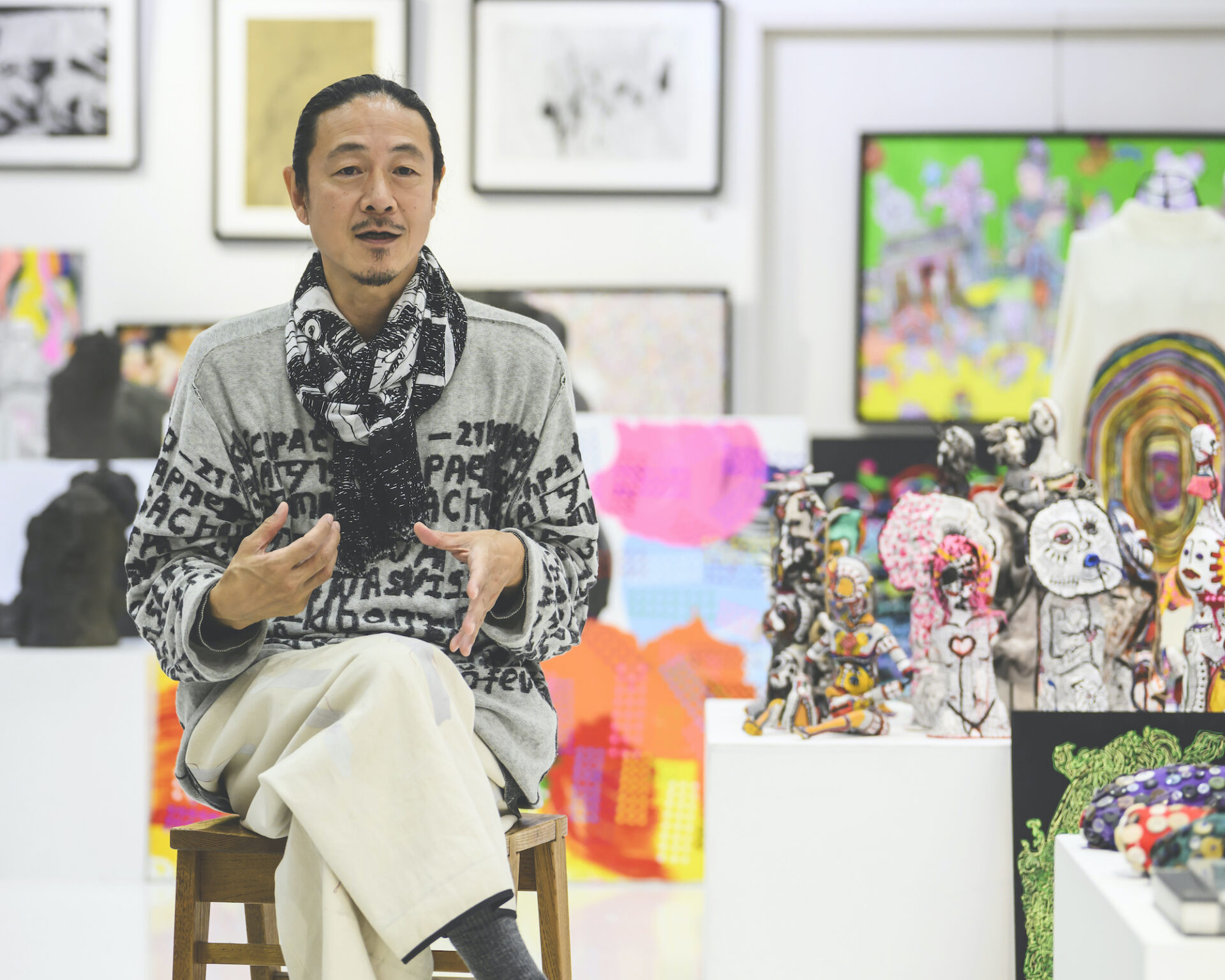
Masakazu Shigeta: Throughout my career, I have always worked by first forming philosophical hypotheses about beauty and then seeking to verify them scientifically. While philosophy offers profound insight, without reproducibility, it can never become the kind of “evidence” that convinces a wide range of people. Deep down, I feel a strong determination not to leave beauty solely in the realm of philosophy.
Tomohiro Ishizu: Your stance — refusing to let beauty remain merely philosophical — is quite impressive.
Shigeta: Take dermatology, for example. There is a particular enzyme on the skin’s surface, and I wondered why it exists. I formulated a philosophical hypothesis that it might serve as a mechanism to break down proteins and return the body to the soil at the moment a person collapses and dies on the ground. Whenever I test such a hypothesis and arrive at scientific verification, I feel a moment of profound emotional resonance — and that’s my driving force.
Ishizu: That subjective emotional resonance is, I believe, the very engine driving the field of neuroaesthetics.
Shigeta: To begin with, what is beauty? I believe it is about how we confront our complexes.
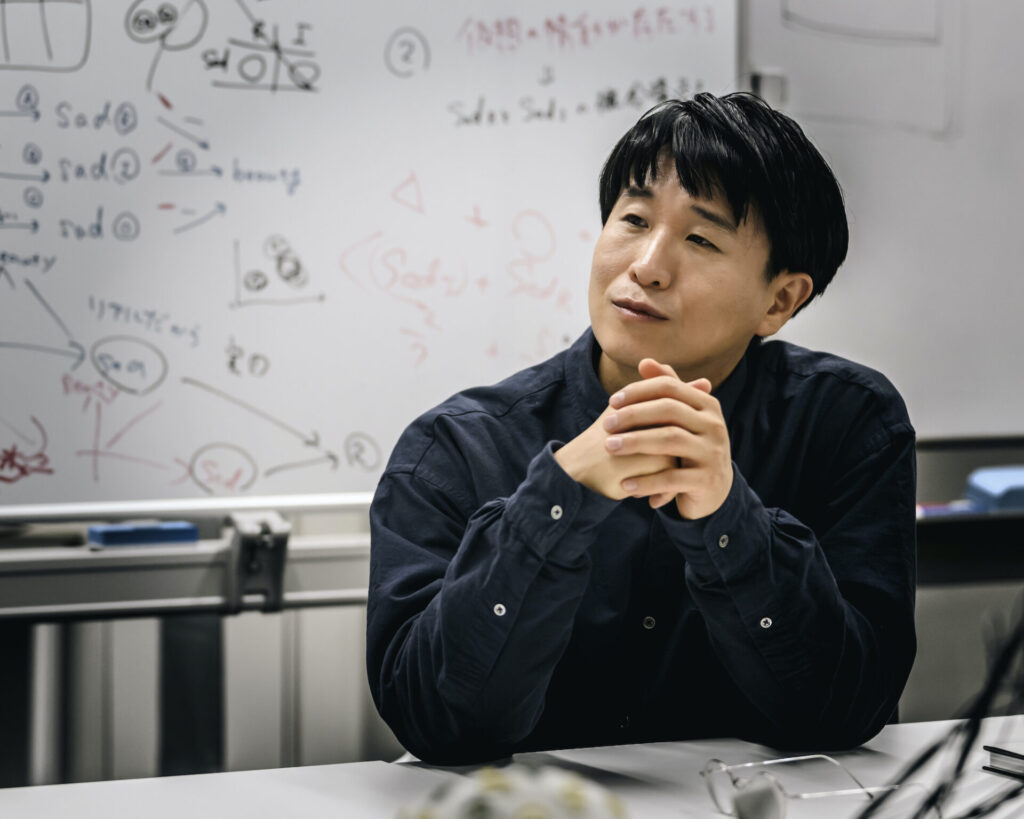
Ishizu: Not “overcome,” but “confront”?
Shigeta: Exactly. It would be irresponsible for me to claim that complexes about physical features can simply be “overcome” through beauty. Take a mole on the face, for example. Removing it falls within the realm of medicine, not the non-medical beauty industry I work in. The real question is how we coexist with what cannot be erased or changed. That, I believe, is where beauty plays its role.
Ishizu: Coexisting with what cannot be erased — that resonates strongly with psychotherapy as well. In that field, rather than speaking of “cure,” people often use the term “overcome” — not in the sense of erasure, but in the sense of moving forward while accepting difficulties. Your perspective deeply echoes that idea.
Shigeta: The question is how to confront or coexist with our complexes. Sometimes, an experience is so powerful that it overwhelms the negative elements lurking within us. When that happens, our focus naturally shifts elsewhere — and what was once a source of negativity simply stops mattering. That might mean gaining confidence or discovering a new sense of purpose. I believe it is moments like these that transform people into something more beautiful.
Along the same lines, consider the idea that women become more beautiful after heartbreak. There are moments when the melancholy born of romantic loss appears profoundly beautiful. Many friends of mine have grown more radiant with each setback.
——Setbacks and heartbreak are often perceived negatively. But, Professor Ishizu, your research suggests that such negative elements can actually heighten aesthetic appeal.
Ishizu: Yes, this relates to what we call “mixed emotions,” which is one of the central pillars of our research. For example, when watching Romeo and Juliet or Hamlet, audiences often experience deep emotion and perceive beauty precisely when negative elements — death, separation, sorrow — unfold on stage, even though these are experiences we would normally avoid in daily life. Beauty associated with tragedy and heartbreak tends to linger more deeply and last longer in memory than beauty derived solely from joy. Negative elements act like spices that accentuate beauty. This reflects a sophisticated cognitive process in which the brain transforms negative information into something meaningful and valuable.

“If science can illuminate this ‘mechanism of being moved,’ beauty will go beyond mere outward appearance and become a far more essential practice” (Shigeta)
Shigeta: One of the themes I hope we can arrive at during today’s dialogue is the idea of being moved. When we encounter beauty, and our hearts are profoundly stirred, how do neurochemicals such as dopamine and oxytocin influence the release of sex hormones?
If we could scientifically demonstrate that the state of being moved promotes the release of sex hormones and physically enhances a person’s attractiveness, it would provide solid scientific grounding for the concept I have advocated — “Beauty by Listening,” the idea that music can draw out inner beauty from within.
Ishizu: That’s a fascinating perspective. Inside the brain, there are two reward systems that become active when you encounter something truly beautiful. One is the nucleus accumbens, located deep in the brain. This region responds to direct, positive pleasures, such as the satisfaction of hunger.
The other is the orbitofrontal cortex, located behind the area between the eyebrows, which becomes active when we perceive beauty in sadness or in sublime acts such as self-sacrifice. It is a reward system that responds to invisible forms of beauty — things like “truth” or “goodness.” The “genuinely human form of beauty” you described is closely linked to the activity of the latter.
Shigeta: So, our brain clearly distinguishes between beauty experienced as pleasure and beauty that touches us at a deeper, spiritual or psychological level.
Ishizu: Exactly. When I was at a research institute in the UK, I also studied “love.” I found that the type of dopamine released differs between romantic love and maternal love. Although we use umbrella terms like “love” or “beauty” in everyday language, recent research on neuroaesthetics is gradually revealing that, within the brain’s system, these experiences are fundamentally distinct in nature.
Shigeta: Changes in these neurotransmitters also influence how we confront our complexes. That’s why I believe that being deeply moved can serve as a powerful remedy for the human spirit.
Ishizu: This brings us back to the earlier discussion of “overcoming.” In psychiatry, this term does not necessarily mean being completely cured, but rather moving forward while continuing to live alongside one’s condition. In that sense, it resonates strongly with your philosophy of beauty.
Shigeta: Even when a complex does not disappear, one can transform it into a positive force and channel it into constructive action. If science can illuminate this “mechanism of being moved,” beauty will go beyond mere outward appearances and become a far more essential practice — a means of guiding people toward overcoming.
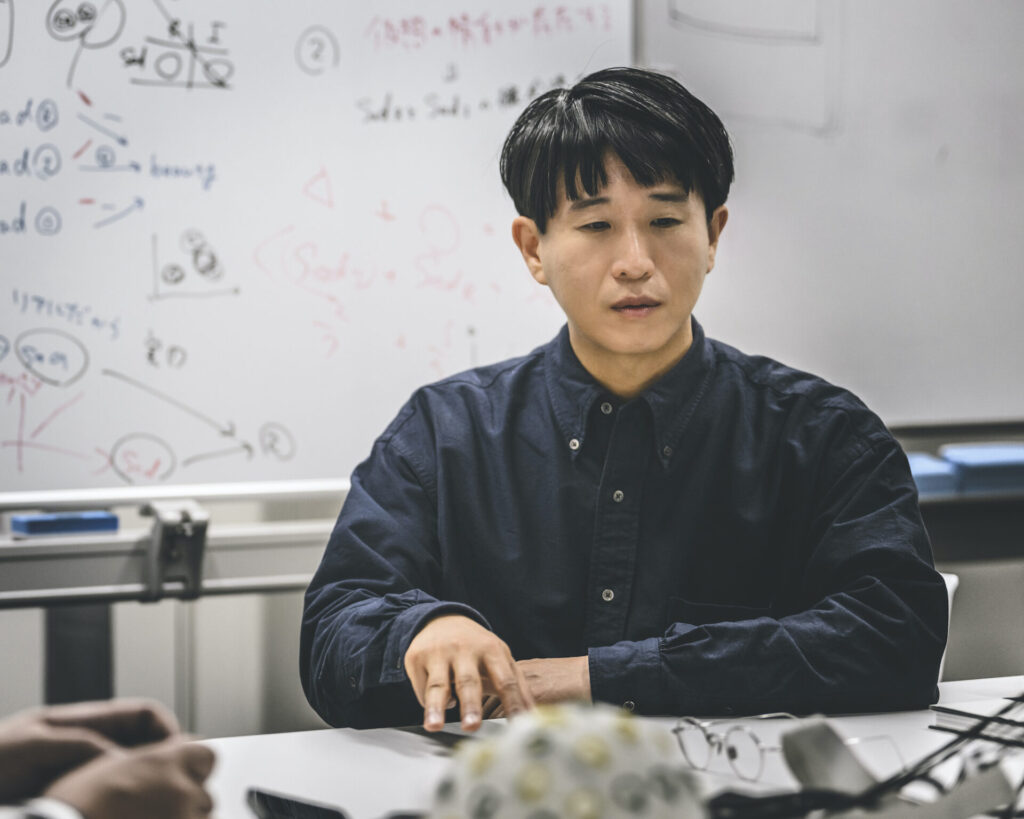
“I am once again confronting the deep gap between the ‘universal truths’ proclaimed by scientists and the ‘incurable pain’ carried by individuals.” (Ishizu)
Shigeta: I’ve been thinking about what I can do to help people overcome. There are many who simply conclude, “Your complexes are just part of your individuality.” But for the person living with them, that kind of platitude is impossible to accept. Complexes are not that easily resolved because they are deeply rooted in the spirit.
Moreover, they are not limited to physical appearance. They extend to one’s intellect, one’s technical abilities, and into every corner of the self. As a child, I was never particularly athletic, and that remained a source of anxiety for me for a long time.
Ishizu: Oh, really?
Shigeta: The only sports I could manage were swimming and skiing, and I really hated P.E. class. If someone had told me back then that “Being a slow runner is just part of who you are,” I would never have been able to accept it.
But later in life, I began consciously collecting what I call “seeds that deeply move me” and internalising them. By repeatedly going through this process, I found that these complexes gradually faded.
Ishizu: When it comes to “the pain of the person directly involved”, I have had a heart-wrenching experience that I will always remember. Some time ago, someone younger than me pointed out that “In the end, everything you study is someone else’s business — observing others’ sorrow from the outside.”

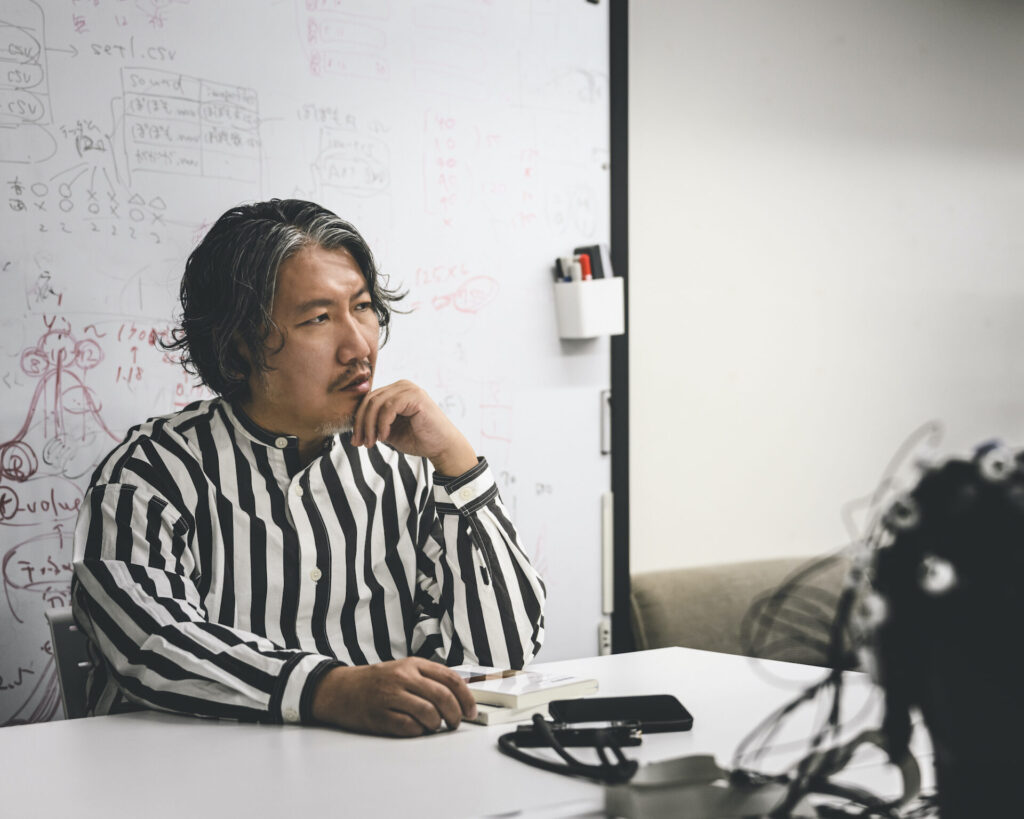
Shigeta: In what context?
Ishizu: Throughout my career, I have argued that the “beauty of sorrow” — which none of us can ultimately avoid — is essential to humanity, and that accepting this inescapable truth, we cultivate a spirit of care and a sense of awe.
But the person said to me, “You are always observing others’ sorrow from a distant, safe place.” That was the moment my scientific identity — my very foundation as a researcher — crumbled beneath me.
Shigeta: You were confronted with the fact that you were just observing from a distance.
Ishizu: And to make matters worse, a close colleague I had long researched the beauty of sorrow with experienced a personal misfortune. For years, we had repeated the phrase “No rain lasts forever.” But standing before him — soaked by that rain, knowing its coldness and pain firsthand — I could not bring myself to say those words.
In the face of a pain that can only be understood by becoming the one who suffers it, I realised how hollow and powerless the logic I have built as a researcher was.
Shigeta: For those who are trapped in absolute loneliness, with nothing against which to measure their suffering, even the phrase “no rain lasts forever” might sound like nothing but cruel, empty words.
Ishizu: Exactly. There are things one can understand only by getting drenched in the rain oneself. I am once again confronting the deep gap between the “universal truths” proclaimed by scientists and the “incurable pain” carried by individuals.
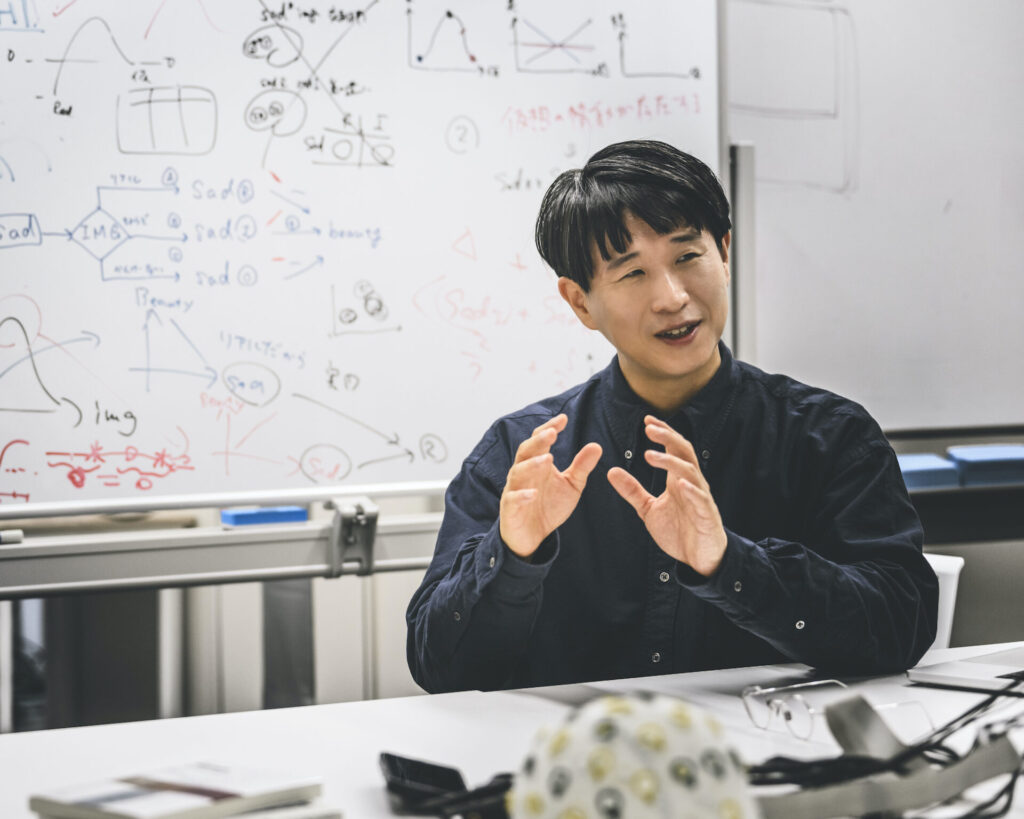
“If every member of humanity were to absorb another’s pain as their own and simply weep together, the world would be filled with people crying, and no one would be able to solve anything.” (Ishizu)
Shigeta: When I spoke with creative director Mr Kasatani —our guest in Vol.23 — about the boundary between art and design, one of the conclusions concerned the presence or absence of madness. Design, by nature, carries public function. Even if it appears to contain an element of madness, it is ultimately no more than a simulation of madness — otherwise it cannot fulfil its public role. Genuine madness would make design incapable of serving society.
Art, on the other hand, permits, or even affirms, true madness. Perhaps we are drawn to art because, by confronting its abnormal or transgressive expressions, we can acknowledge the madness and dissonance that lie within ourselves. Similarly, we recover from tragedy by using others as mirrors. Seeing that “someone else has survived their sorrow and continues to live” softens our sense of isolation. Even the irresponsible gazes of those around us become points of comparison, and through that contrast, the contours of our own existence gradually come into view — that’s how I see it.
Ishizu: So, by openly exposing one’s own pain, it may in turn become a mirror for someone else, and perhaps ease their burden.
Shigeta: When I am suffering, I too want someone to empathise with me. But whether that fundamentally changes anything is another story. Still, I can sincerely say “thank you” to someone who sits beside me in that moment.

Ishizu: That perspective is exactly the key to reconstructing my shattered identity. As you said, if every member of humanity were to absorb another’s pain as their own and weep together, the world would be filled with people crying, and no one would be able to solve anything.
Shigeta: So, “crying together” doesn’t always constitute salvation.
Ishizu: In science, when we fall into the exact same emotional state as another person, we call it emotional contagion, which is clearly distinguished from empathy.
True empathy involves taking a step back — drawing a boundary by thinking, “Your pain is not mine,” while still making the effort to understand the other person’s perspectives and feelings. It is the ability to comprehend someone’s suffering and extend a hand without being overwhelmed by it. By redefining my research as an attempt to understand this distanced empathy, I was finally able to reclaim my identity as a researcher.
Ishizu: Your remarks also reminded me of the 18th-century German philosopher Friedrich Schiller. He described the function of tragedy as a kind of “preparatory space” for inevitable misfortune. By vicariously taking on another’s sorrow in advance, we train our hearts to face real suffering when it arrives.
Shigeta: So, imagined sorrow becomes a kind of breakwater that protects us in real life.
Ishizu: Exactly. Yet in today’s world, even this “imagined sorrow” has become difficult for many people to endure unless they already know the ending. The recent popularity of stories centred on terminal illness is telling. Many viewers prefer narratives in which they know from the outset that a character will die, and some students even read the ending beforehand.
Many people today have become so emotionally fragile that they cannot tolerate unexpected sorrow, even if it is fictional.
(To be continued in the second half.)

Notes:
*Neuroaesthetics
Neuroaesthetics is the scientific study of brain activity during aesthetic experience — when encountering art, music, beautiful faces, or landscapes. Advances in brain imaging technologies in the 21st century, such as MRI, have enabled scientists to understand the neural basis of the experience of beauty. The field was pioneered by Professor Semir Zeki at University College London (UCL), a mentor of Professor Ishizu.
Profile
-
Tomohiro Ishizu
Tomohiro Ishizu is a professor of neuroaesthetics and experimental psychology at the Faculty of Letters, Kansai University. At the Faculty of Life Sciences, University College London (UCL), he conducted research under Professor Semir Zeki, who founded the field of neuroaesthetics — the study of brain mechanisms underlying aesthetic experience. He learned the spirit and intellectual discipline of being a scientist from his mentor, who remains active well past the age of 85 and is fond of saying, “Biology is my God.” Beginning in 2009, he conducted research at UCL using neuroimaging techniques such as MRI to explore how the brain perceives beauty and love. He later held several positions, including a research fellow at the University of Vienna and a senior research fellow at UCL, before taking his current position as a professor at Kansai University.
Publications
Shinkei Bigaku: Bi to Geijutsu no Nou Kagaku
(Neuroaesthetics: The Neuroscience of Beauty and Art)
Kyoritsu Shuppan, 2019Nakeru Shohi
(Tear-Jerking Consumption: Emotion and Consumer Behaviour)
Sunmark Publishing, 2025 -
Masakazu Shigeta
After working as an engineer in the music industry, Shigeta began his career as a cosmetics developer in 2001. From 2004, he worked on various cosmetics brands in the healthcare business of Nitto Denka Kogyo Co., Ltd., a metal surface treatment company founded by his great-grandfather. In 2017, he founded “OSAJI,” a skincare lifestyle brand, and became its brand director. In 2021, as a new store of “OSAJI,” he produced “kako,” a specialized shop for home fragrances and perfume in Kuramae, Tokyo. In the following year, he opened a combined shop of “OSAJI,” “kako,” and a restaurant, “enso,” in Kamakura, Kanagawa. In 2023, utilizing the technical skill of Nitto Denka Kogyo, he launched a pottery brand, “HEGE,” and in October of the same year, he became CEO of OSAJI Inc. He also has published books on beauty and held cooking classes and events focusing on food, which is the origin of beauty. He released a collaborative album with F.I.B JOURNAL called “Gensho hyphenated” in November 2024 and has been expanding the range of activities.
Publications
Taberu Biyou (Eating for Beauty) (SHUFU TO SEIKATSU SHA, 2024)
42-Sai ni Nattara Yameru Biyou, Hajimeru Biyou (Beauty cares to quit and start when you turn 42) (Takarajimasha, 2022)
Information
Shinkei Bigaku: Bi to Geijutsu no Nou Kagaku (Neuroaesthetics: The Neuroscience of Beauty and Art)
Published in 2019, this book by Tomohiro Ishizu offers a comprehensive exploration of the essence of art from the perspective of neuroaesthetics. It has been widely praised for vividly illuminating the mechanisms of beauty as they unfold on “the canvas of the brain.”
-
Photographs:Eisuke Komatsubara
-
Text:Masahiro Kamijo
-
Make-up:Yuya Goto (OSAJI)
NEWS LETTER
理想論 最新記事の
更新情報をお届けします
ご登録はこちら
ご登録はこちら
メールアドレス
ご登録ありがとうございます。
ご登録確認メールをお送りいたします。