
2026-02-10
Vol.24
jABBKLAB Founders & Directors
yurinasia & ayumugugu(part 1)
-
Where Individuality Explodes
-
Spontaneity over Experience
-
Frustration as Fuel
-
Stay True, and Someone Will Find You
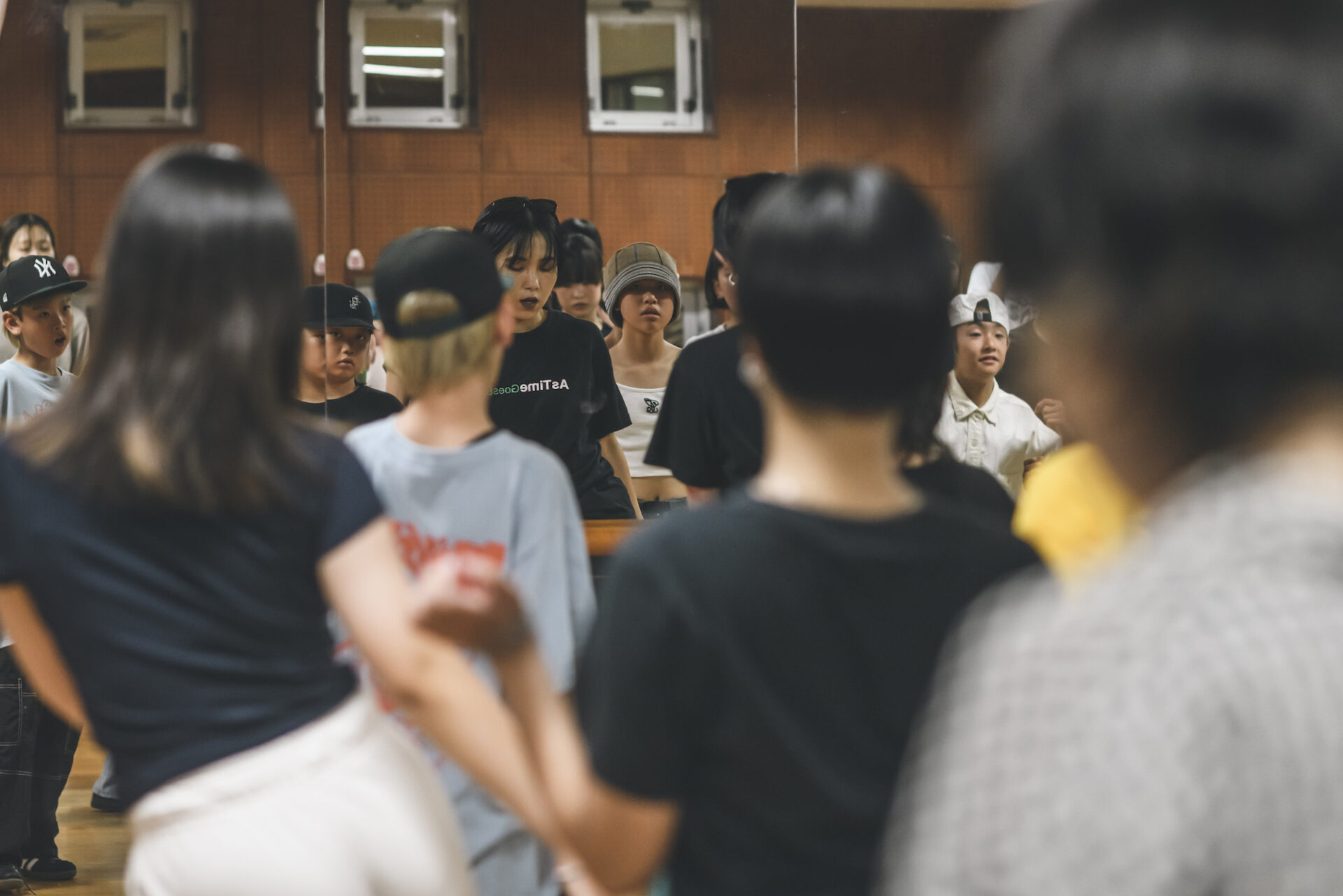
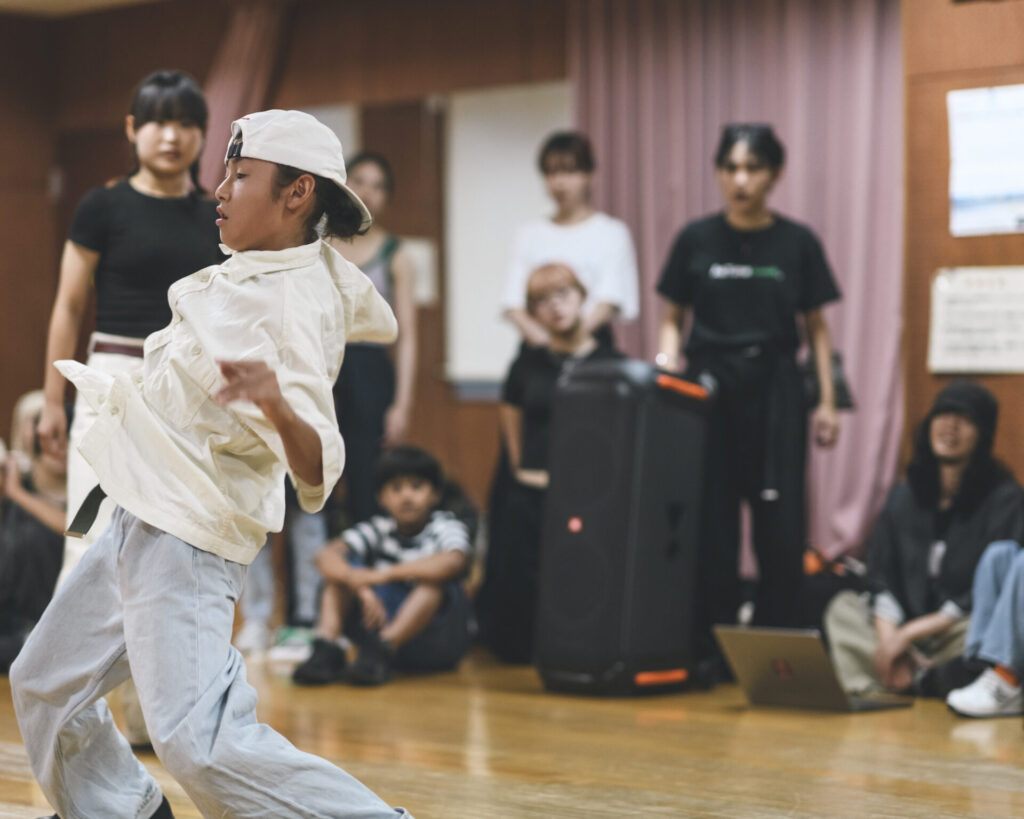
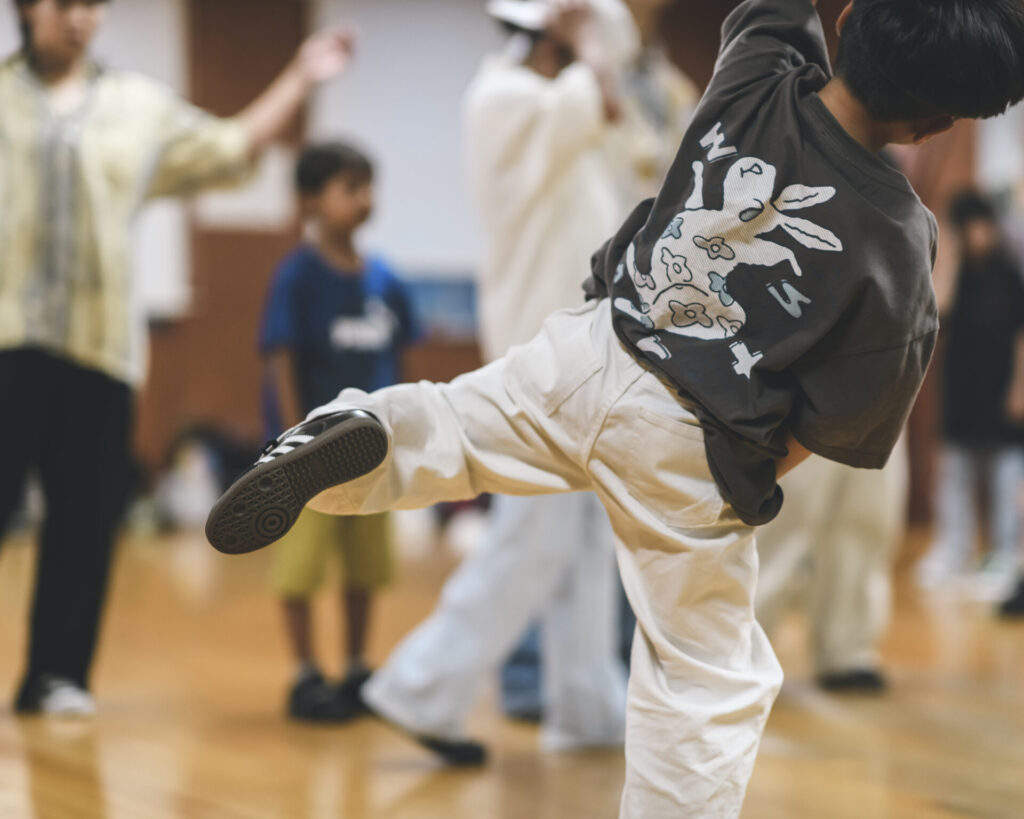
On Friday evenings, a local community center in a quiet rural town — about an hour’s drive from Hakata — erupts with energy. As music pounds through the speakers, dancers leap and spin on their backs and heads. No one holds back from striking bold poses, while dynamic movements unfold one after another. For less experienced children, adults offer encouragement with lively gestures and moves.
In Mizumaki Town, Fukuoka, there’s a place known as a sanctuary of dance. People of all ages — from preschoolers to adults — come together to dance and express themselves freely. Among the students — called members — many dancers have gone on to win national competitions or appear in music videos and TV commercials.
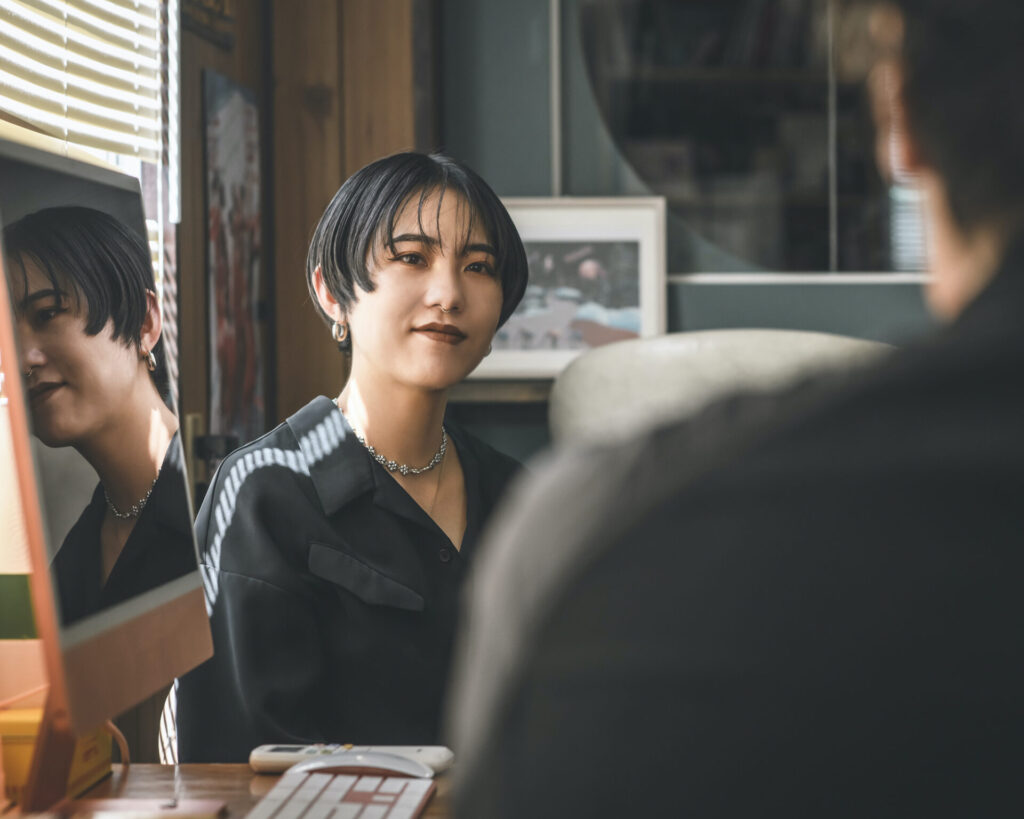
Our guests today are dancers yurinasia and ayumugugu, who run this unique dance hub, jABBKLAB. We spoke with them about their passion for dance, how their distinctive approach shines from Mizumaki to Tokyo and beyond, and why they continue to base their activities in this small town.
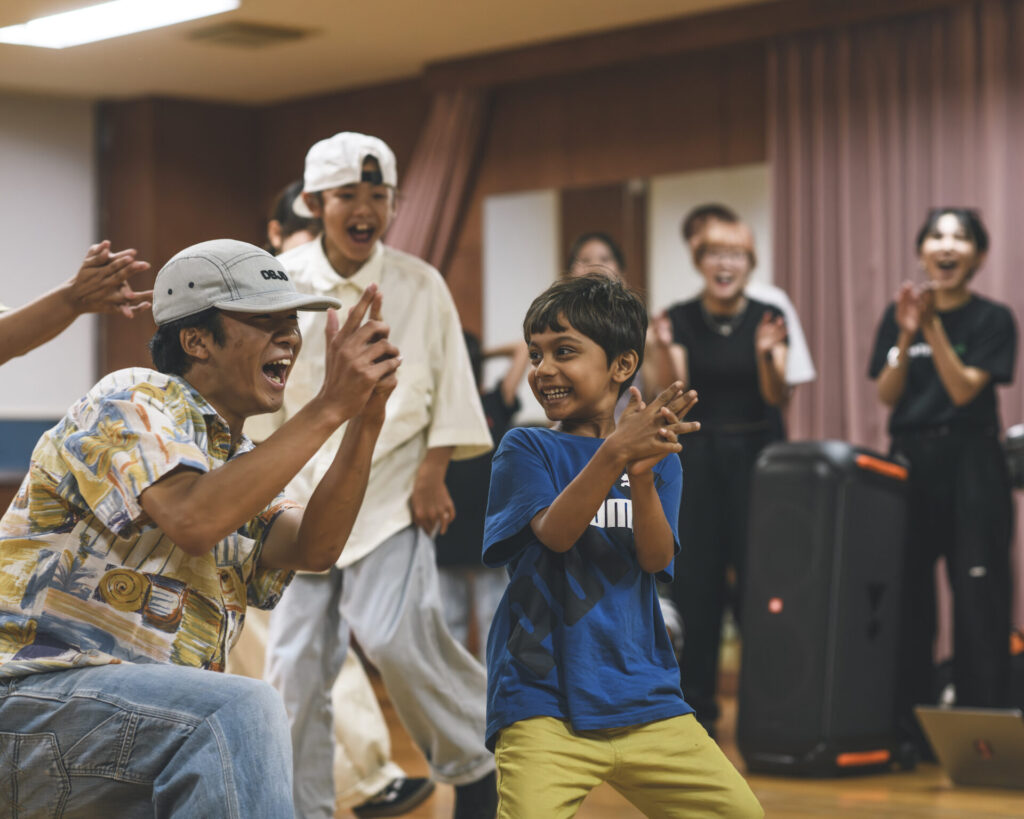
“Seeing children dancing with their individuality fully unleashed, I was astonished by the intense passion they held within.” (Shigeta)
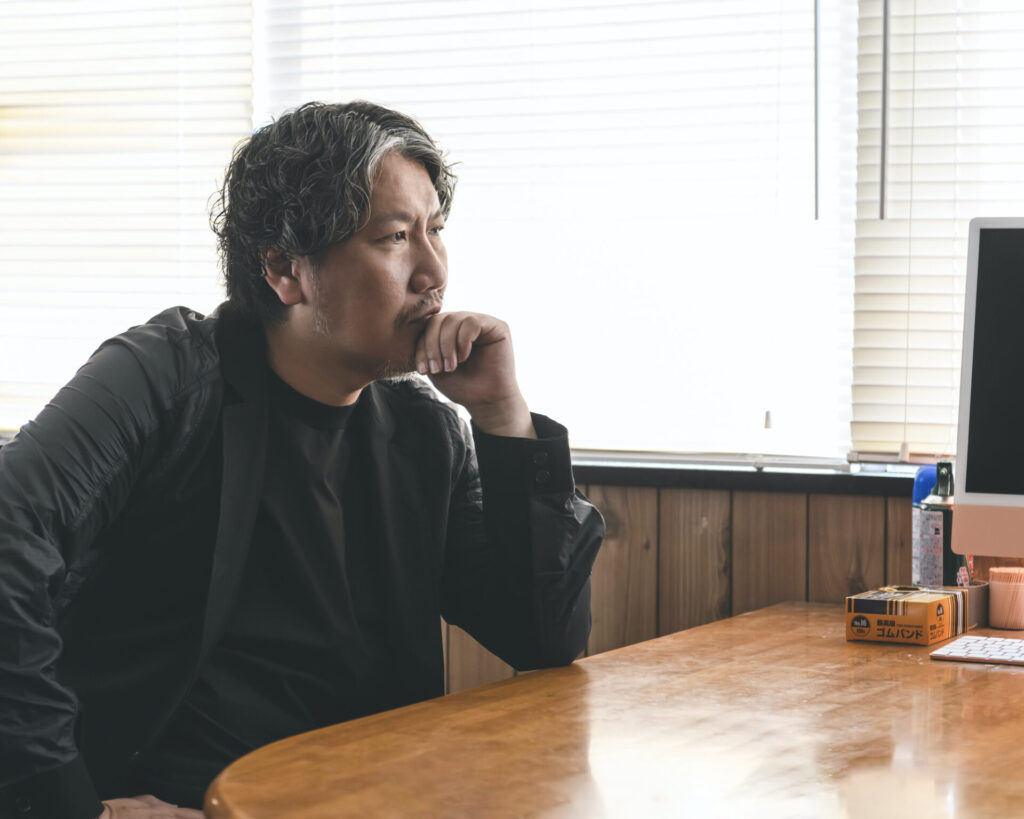
Masakazu Shigeta: The dance lesson you showed me at the community center last night was truly moving. Seeing each person’s individuality shine through, I found myself tearing up.
yurinasia: I’m so happy to hear that.
Shigeta: To be honest, before watching the lesson, I thought it might be tough to sit through three hours. But once it started, time really flew by.
yurinasia: You almost wish you had more eyes to watch everyone, right? They’re all so captivating. When Friday night comes around, I feel completely energized and recharged. If we skip even a week, I start to feel off.
ayumugugu: It really feels like a kind of therapy for us — it’s like our emotional anchor.
Shigeta: The other day, I was talking with my hairstylist about why people can’t enjoy their work more. He said, “Japanese people aren’t very good at expressing their individuality. So, before you can help them enjoy their work, it’s important to help them recognize it’s okay to enjoy themselves and actually get themselves into that mindset.” He also said, “No matter how much you tell someone to enjoy their work, they won’t be able to unless they’ve reached that mindset.”
Shortly after that conversation, I saw children dancing here with their individuality fully unleashed. I was astonished to see such intense passion within them — and at the same time, it genuinely made me happy. If even an adult like me feels that way, I’m curious about how children who visit here for the first time must feel.
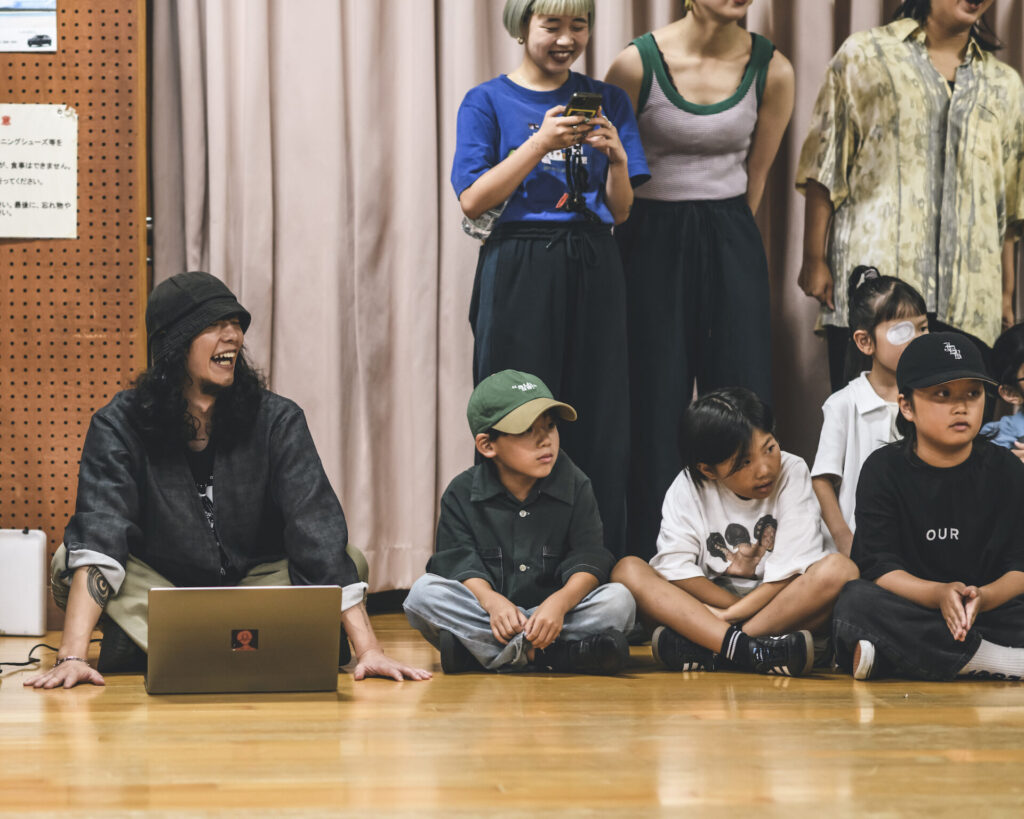
ayumugugu: At first, they’re usually overwhelmed by the atmosphere — both the children and their parents. Some even hesitate to join because of it. But if they stay and watch all three lesson periods, they’ll usually end up joining.
yurinasia: We make a point of actively talking with anyone who comes to watch the lesson here, and sometimes invite them to try dancing. Through that kind of interaction, I hope they start thinking, “I want to dance with those older sisters again.” Not just the staff, but all the students are so open and welcoming to new members, helping them grow, and that’s what I really appreciate.
ayumugugu: There was one student who started visiting the lesson before even entering elementary school, and only decided to join after becoming a second grader. Some children take two or three years to get used to the atmosphere.
yurinasia: It seems that getting used to the volume takes time as well.
Shigeta: Right, it was pretty loud.
yurinasia: Actually, the speakers here can’t fully keep up with it.
Shigeta: I was also impressed by how you called every student by name. Do you remember all of them?
yurinasia: Yes, I do.
Shigeta: That’s amazing. At my age, I often find my memory isn’t quite what it used to be. (laughs)
yurinasia: What matters is making the effort to remember. People are happy when you call them by name. Sometimes I even give them nicknames — like dancer names.
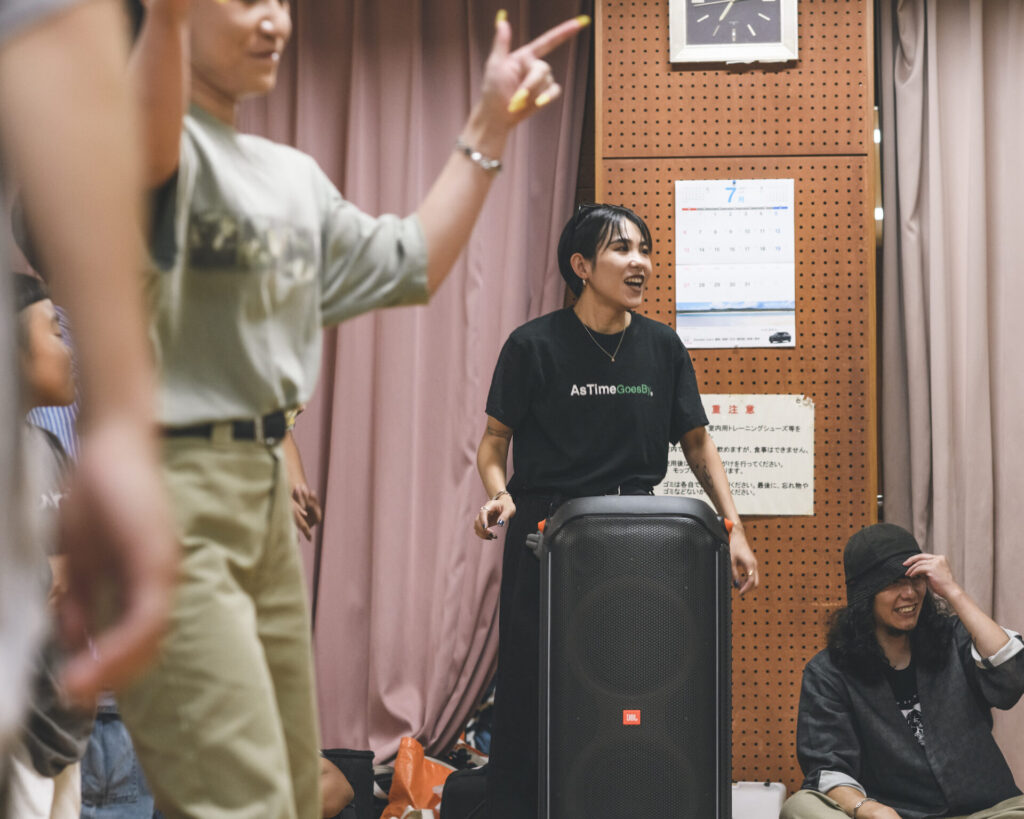
“Someone suddenly shows an expression that makes you think, ‘Has their mother ever seen that face before?’ When I see that, I can’t help but give them points, thinking ‘you’re amazing.'” (yurinasia)
Shigeta: Last night, you two also served as judges for the dance battle. What criteria do you use when making decisions?
ayumugugu: Since we also judge in dance competitions, there are times when we apply those standard criteria. But fundamentally, this place is meant to nurture people. So quite often, we judge with thoughts like, “If we give them a point now, it’ll boost their confidence and help them break through.”
yurinasia: It’s very much like a carrot-and-stick approach.
ayumugugu: I believe struggling and getting stuck are necessary at times. I want them to reach a point where they can enjoy the process of struggling itself.
——Do you also give high marks to performances that suddenly seize the atmosphere in the room?
yurinasia: Yes, there are moments when something happens, and the whole room erupts, “Whoa!” Someone might suddenly show an expression that makes you think, “Has their mother ever seen that face before?” It’s not really about skills — it’s about passion.
When I see that, I can’t help but think “You’re amazing,” and give them points. Some members grow dramatically from that very moment.
ayumugugu: Sometimes, a member who competes at a national level gets beaten by someone who just joined. I want to see more of that happening. That’s why we don’t divide people into classes based on experience or skill level.
yurinasia: It’s like mixed martial arts, but that mix-it-all-together energy is what makes it exciting.
Shigeta: Listening to what the two of you talked about, I think this is just like learning English conversation. No matter how many words and grammar you study at school, that doesn’t mean you can speak fluently. Learning something and being able to use it are two completely different things.
In the same way, even if you’ve built solid dance fundamentals, there’s no guarantee you’ll win a dance battle where individual personalities collide.
yurinasia: That happens here all the time. Dancers from other prefectures often can’t show what they’ve learned at all — they get completely thrown off and leave bewildered.
Shigeta: Do you offer guidance specifically aimed at improving technical skills?
ayumugugu: Rather than focusing on skill improvement, we think together about how they can achieve their desire to win or to achieve results.
For contest teams, yurinasia offers advice like “You might want to dance like this,” and we teach them how to digest that advice, reinterpret it, and adapt it in their own way so they can compete in real situations.
yurinasia: Last night, we started with a dance battle because we wanted to show you the moment of explosion first. Since the very first session was a battle, I believe everyone was thinking, “Oh no! Are we really doing this now?”
But usually, we begin by giving them an assignment and time to think. They discuss it within their teams, communicate with each other, and create their own choreography to the music in about 30 minutes.
ayumugugu: We usually challenge them to think so much that I felt it was good to change things up.
Shigeta: What kind of specific advice do you give when it comes to dancing to win?
ayumugugu: We teach approaches that work in competitive settings, like “move three-dimensionally” or “define the space and move within it.”
On the other hand, a completely silent performance — where you don’t use your voice — can sometimes be effective in competitions. Surprisingly, some really strong pieces are born from that kind of approach.
yurinasia: They explore using only gestures and movements — no voice at all.

“I was constantly frustrated by the Japanese dance scene, including pressure from senior dancers. I’ve grown entirely through my desire to push back against that.” (ayumugugu)
Shigeta: When I started working, I really disliked working in a society and organization where expressing individuality wasn’t welcomed — and that’s why I established my own company. In your career in dance so far, have you ever felt oppressed?
ayumugugu: Including pressure from senior dancers and others, I was constantly frustrated by the Japanese dance scene. I was repeatedly told, “If you’re in Fukuoka, you have to dance this way.” I feel like I’ve grown by pushing back against that.
yurinasia: Because we were constantly resisting, I think we were really disliked by the people around us.
ayumugugu: I‘m afraid we’re still disliked even now. It was really tough until we learned to feel comfortable with it. There were times when we had no choice but to humble ourselves.
yurinasia: We absolutely don’t want people in the current generation to feel that way.
Shigeta: How long did it take for jABBKLAB to become what it is today, through all your experiences along the way?
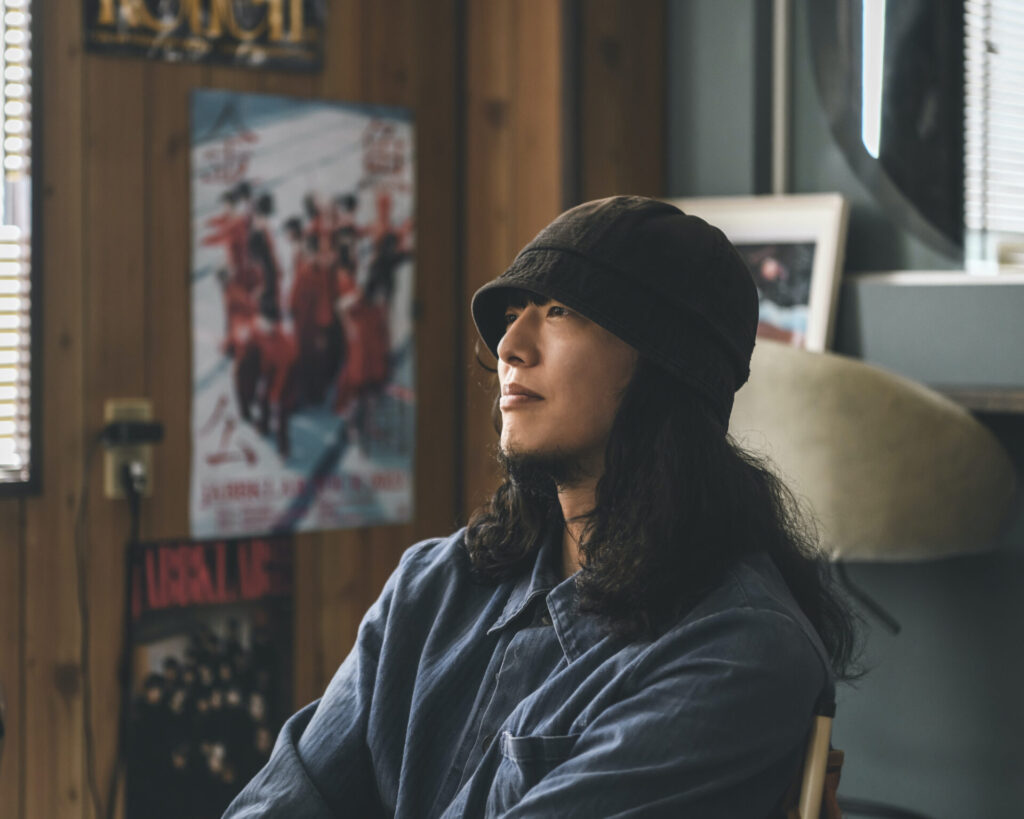
ayumugugu: I think it came together more quickly than you might imagine. I returned to Mizumaki after getting married and started being involved with jABBKLAB. At the time, there weren’t many students, but that energy of everyone getting hyped up together — that “Wow!” moment — was already there.
Compared to now, we were a bit more “well-behaved.” We reluctantly entered dance competitions run by people we didn’t really respect. When people asked us why, we’d say, “Well, we don’t wanna lose, after all.”
At first, we thought, “Hey, look at us being so mature.” But then we realized that reluctantly paying the entry fees just lines the organizers’ pockets and makes them more influential. There’s no point in staying in a place where cool things aren’t properly recognized. I remember us often saying to each other that we should compete where we would be fairly evaluated.
yurinasia: That was the biggest change after he joined jABBKLAB. I originally founded jABBKLAB, but he became the representative after I got married and became pregnant. I think jABBKLAB’s strength today is all thanks to the way he’s led everyone.
ayumugugu: I guess I was riding high back then. I was at my peak — representing Japan at a world breakdance competition — so I thought, “Let’s ride this wave!” In fact, I traveled to many countries, but I genuinely felt we were the coolest. I was absolutely convinced that if we stayed true to this path, we could become the world’s top dance hub.
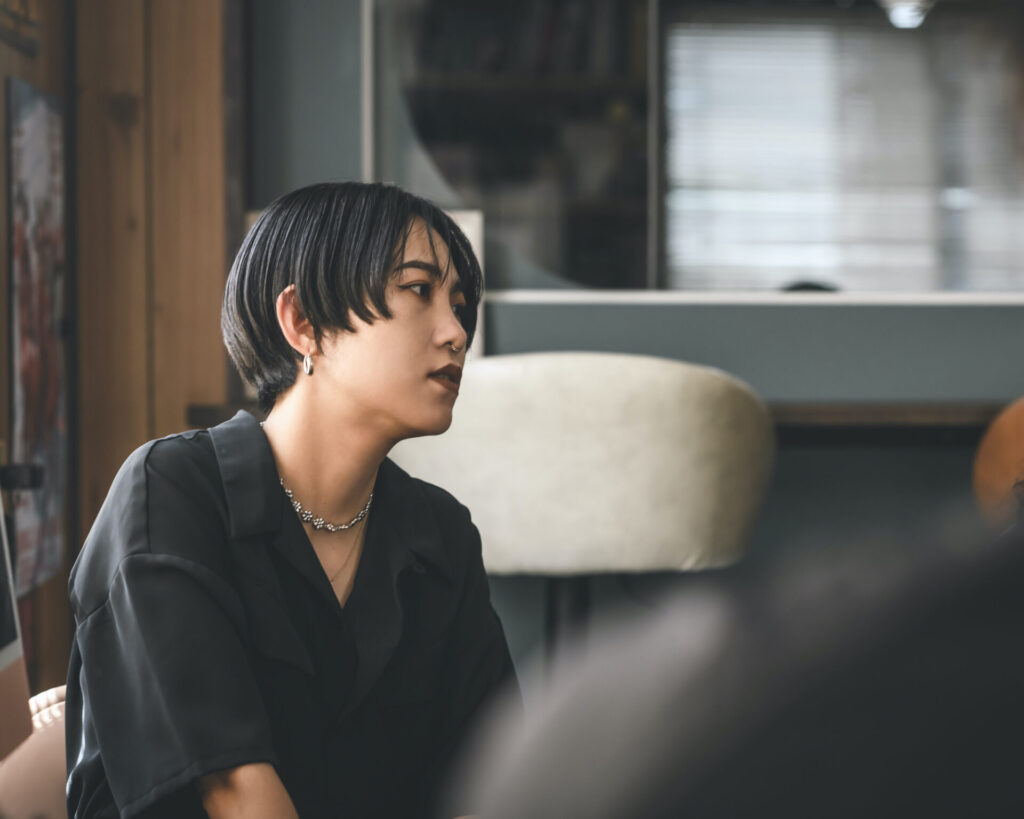
“We’ve been able to work with the people we genuinely want to work with.” (yurinasia)
Shigeta: Many of your members have appeared in music videos and TV commercials. How did you first start being involved in that kind of work?
yurinasia: It all started when people watched the videos we uploaded on social media and YouTube. Take musician TENDRE*, for example, we used his music in our dance videos. He saw it on Instagram, reached out to us, and that’s how we connected.
The Pocari Sweat projects also came about when the director, after watching our videos, approached us to work as a choreographer.
ayumugugu: In the beginning, we were simply uploading dance videos to show that this kind of dance hub exists in Mizumaki. Gradually, however, those videos started to catch the attention of artists and filmmakers. Recently, we’ve started to create them with specific companies or people we admire in mind.
——We watched YouTube videos where the two of you walk through the town of Mizumaki, talking in a Q&A style conversation. What really stuck with us was something you said — rather than trying to fit in, it’s important to stay true to your beliefs — because if you do, someone will eventually find you. Does it feel like that’s how you’ve actually built your connections with people?
yurinasia: We’ve been able to work with the people we genuinely want to work with, so I think that’s exactly how it’s been.
(To be continued in the second half.)
Notes:
*TENDRE
TENDRE is the solo project by multi-instrumentalist Taro Kawahara. The connection with jABBKLAB began when a dance video set to TENDRE’s track “DRAMA” was posted on jABBKLAB’s Instagram. This has led to collaborations in various forms, including yurinasia’s appearance in the music video for TENDRE’s track “SIGN” and TENDRE’s guest appearance at jABBKLAB’s dance show in Osaka in 2023.
Profile
-
yurinasia
Born in Fukuoka in 1992, yurinasia began attending a dance school at a local community center when she was in her third year of junior high school and, just a few months later, was promoted to instructor. In 2013, at the age of 20, she established jABBKLAB. The following year, she married dancer ayumugugu, and the two have operated the school together ever since.Together with ayumugugu, she has performed as the dance duo botanic, and they have won numerous awards at dance competitions, including being selected as a finalist at JAPAN DANCE DELIGHT vol.23 in 2016. In recent years, yurinasia has expanded her activities — appearing in music videos by well-known musicians and choreographing for TV commercials. She is also a mother of two.
ayumugugu
Born in Oita in 1988, ayumugugu first encountered breakdancing in his second year of high school. In his fourth year at university, he won the Japan qualifier for BATTLE OF THE YEAR — one of the world’s largest breakdancing competitions — and competed at the world finals representing Japan.Having performed as a backup dancer for BIGBANG, a renowned K-pop group, he is highly respected in Japan’s underground dance scene. In addition to his career as a breakdancer, he is also an active videographer, filming and editing dance videos from jABBKLAB’s lessons for same-day upload to YouTube.
He currently serves as the representative of jABBKLAB and head of the Fukuoka Branch of JDSF BREAKING (Japan DanceSport Federation BREAKING), deeply committed to nurturing the next generation of breakdancers.
-
Masakazu Shigeta
After working as an engineer in the music industry, Shigeta began his career as a cosmetics developer in 2001. From 2004, he worked on various cosmetics brands in the healthcare business of Nitto Denka Kogyo Co., Ltd., a metal surface treatment company founded by his great-grandfather. In 2017, he founded “OSAJI,” a skincare lifestyle brand, and became its brand director. In 2021, as a new store of “OSAJI,” he produced “kako,” a specialized shop for home fragrances and perfume in Kuramae, Tokyo. In the following year, he opened a combined shop of “OSAJI,” “kako,” and a restaurant, “enso,” in Kamakura, Kanagawa. In 2023, utilizing the technical skill of Nitto Denka Kogyo, he launched a pottery brand, “HEGE,” and in October of the same year, he became CEO of OSAJI Inc. He also has published books on beauty and held cooking classes and events focusing on food, which is the origin of beauty. He released a collaborative album with F.I.B JOURNAL called “Gensho hyphenated” in November 2024 and has been expanding the range of activities.
Publications
Taberu Biyou (Eating for Beauty) (SHUFU TO SEIKATSU SHA, 2024)
42-Sai ni Nattara Yameru Biyou, Hajimeru Biyou (Beauty cares to quit and start when you turn 42) (Takarajimasha, 2022)
Information
jABBKLAB
Founded in 2013, jABBKLAB is a dance hub based at a local community center in Mizumaki, Fukuoka Prefecture. The lessons bring together members of all ages — from preschoolers to adults — offering high-level training that emphasizes individuality and personal expression.
More than a conventional dance school, jABBKLAB fosters deep relationships of trust that extend beyond the classroom. It has produced many award-winning dancers in national competitions, while many of its members have also appeared in music videos and TV commercials.
In 2020, it was incorporated as jABBKLAB Inc., with ayumugugu serving as its representative. Since 2023, it has presented its independent dance performance series, Kingyo Kouen (literally “Goldfish Park”), touring cities such as Tokyo and Osaka, where its powerful performances have consistently captivated audiences.
The name jABBKLAB combines “JAB”, “CLUB”, and “LABO”.
https://www.jabbklab.com
-
Photographs:Eisuke Komatsubara
-
Text:Masahiro Kamijo

NEWS LETTER
理想論 最新記事の
更新情報をお届けします
ご登録はこちら
ご登録はこちら
メールアドレス
ご登録ありがとうございます。
ご登録確認メールをお送りいたします。