
2025-11-27
Vol.22
ADX CEO / Wood Creator
Kotaro Anzai(part 2)
-
Leaving Space for New Ideas
-
To Become Beautiful, Fall in Love
-
Making Marginal Utility Your Ally
-
Redefining Home
-
Scientific Knowledge and Physical Strength
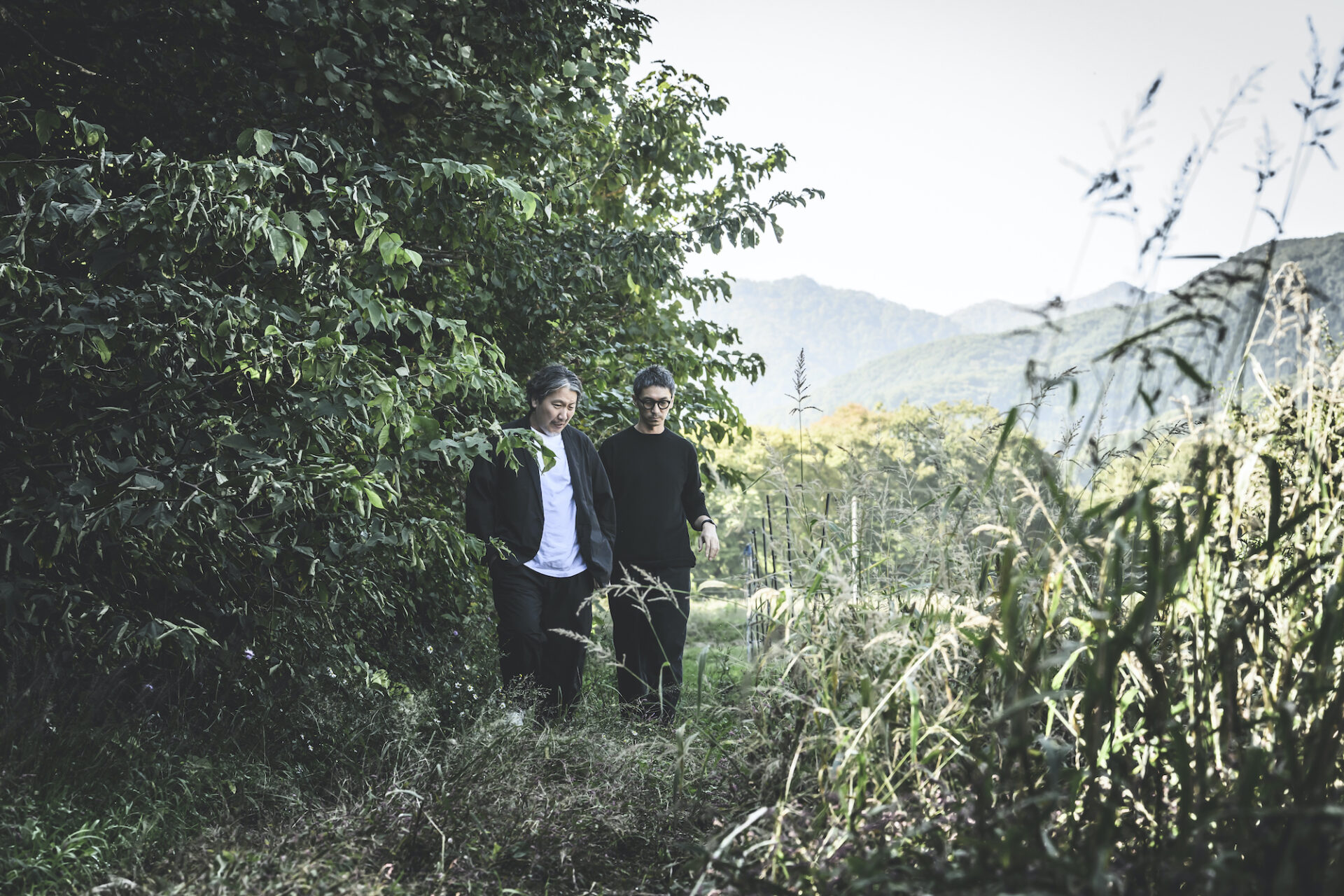
There’s a worldwide bestseller titled The Art of Choosing by Sheena Iyengar. The book focuses not only on the possibilities that the act of choosing brings, but also on the difficulties and inevitable costs that come with it. For a business leader who has just completed a business integration between his company and another, these difficulties must feel all too real, and the harsh reality of our times only adds to the pressure. But there’s no time to stand still — he must keep moving forward to realize his vision of “delivering high-quality homes to more people.” Our guest today is Kotaro Anzai, CEO of the architectural collective ADX, who is about to take another bold step toward the summit he seeks. From this dialogue emerges a message — when you’re in doubt, take a bold step forward.
(Click here for Part 1 of this interview)
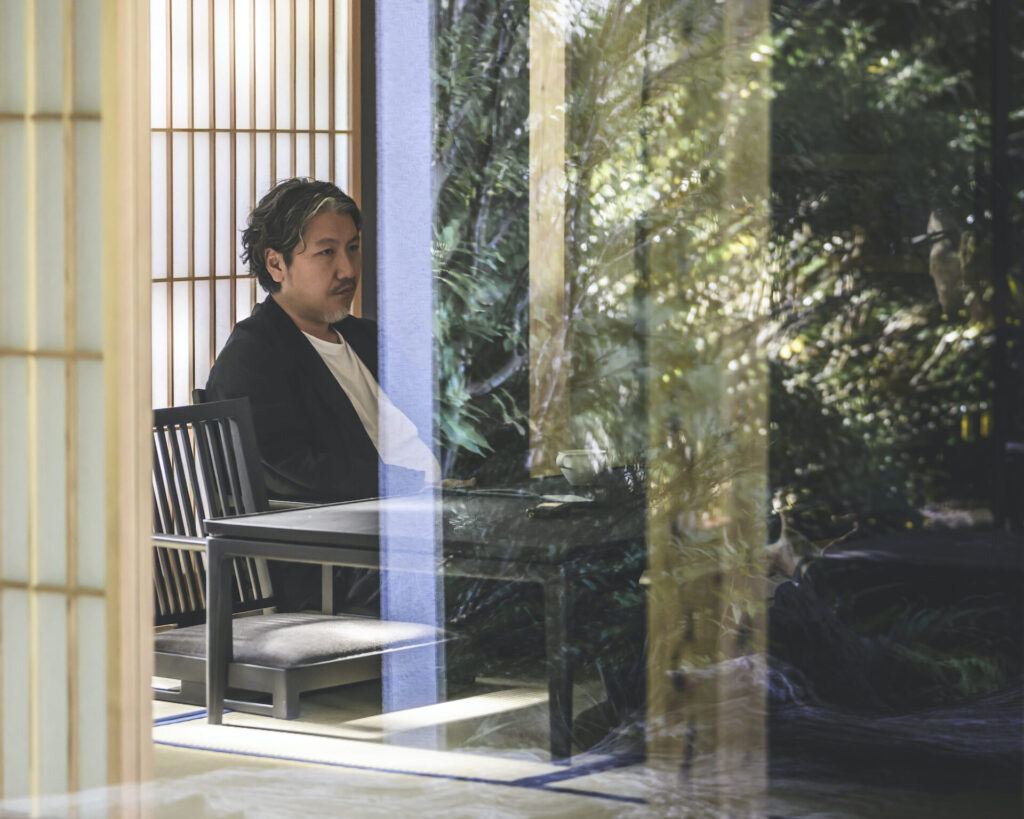
“Ideally, collaboration should satisfy both sides 100%. But if that’s not possible, it’s important to commit fully to whichever side can reach 100% satisfaction.” (Shigeta)
——Shirakaba-so — where we’re having this conversation today — is a space where Mr. Anzai handled the architecture and interior design at Mr. Shigeta’s request. Mr. Shigeta, where do you see Mr. Anzai’s style in this architecture?
Masakazu Shigeta: I think what makes up his “style” is precisely the fact that he doesn’t have a fixed style. As I mentioned earlier in this Idealism series, when I once had a drink with Mr. Anzai, he told me, “You know, Mr. Shigeta, I have this special ability to channel my clients — it’s almost like I let them possess me.” Hearing that, I realized, Ah, that’s what an architect’s job truly is.
If he had told me from the start of this project, “I’m interested in traditional Japanese architecture,” I would have rejected the idea right there. However, he perfectly channeled who I am, and as a result, “Japanese house” naturally emerged as a shared keyword between us.
At the same time, I was absolutely confident that Mr. Anzai would never do anything uncool, so I could simply entrust everything to him. What I really dislike is when detailed discussions lead to a watered-down compromise. Ideally, collaboration should satisfy both sides 100%. But if that’s not possible, it’s important to commit fully to whichever side can reach 100% satisfaction. During the creative process, I basically avoid communication that can’t achieve that goal.
Another important keyword is a furniture brand called Time & Style. By aligning our aesthetics with that brand’s style, we were able to stay on track.
Kotaro Anzai: That’s absolutely true.
Shigeta: The Shirakaba-so project didn’t start with any fixed idea of “it’s supposed to be this way.” It began more from a place of “I want to create something, but I don’t know where to start.” That’s exactly the kind of relationship I have with Mr. Anzai.
There’s still a long road ahead, and I feel like we’re only at about 30% of our whole vision. But I really do believe we’ve taken a strong first step toward the ideal world we envision.
——Mr. Anzai, what did you keep in mind when you designed this space?
Anzai: Mr. Shigeta has countless things he wants to do. So, I focused on leaving space — both physical and creative — for everything he wants to achieve. Creative ideas rarely come from something that’s fully finished. Rather, it’s the sense of “Something is still missing, isn’t it?” that sparks the new ideas. When something becomes perfect, it’s actually harder to develop an attachment to it. Giving Mr. Shigeta room to think, “We could still make this better this way,” or “We want to try this,” is what allows this place to keep living and evolving.
This is our answer for this year, but next year there will be another — that’s proof the architecture is alive. For this project, I intentionally aimed for architecture that isn’t perfectly finished — one that can incorporate the passage of time.
——It sounds like you could say the same thing about human relationships.
Anzai: Exactly. It’s easier to approach someone who isn’t perfect. People who are perfect in every way — like Dekisugi-kun from Doraemon (a perfect, know-it-all character) — feel almost like walking dictionaries. It’s the parts that are missing that make someone human.
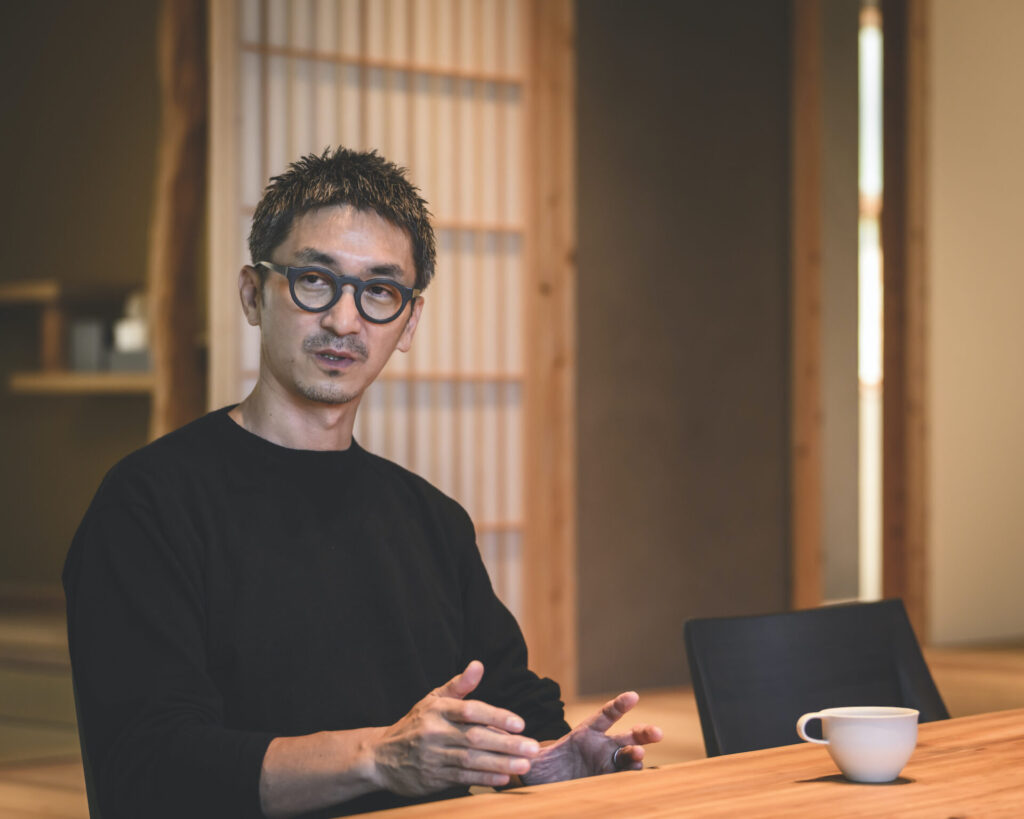
“Saying ‘not there yet’ means there’s room to grow — that you can still do better. That mindset drives the next action.” (Anzai)
——Mr. Anzai, I understand you learned about Mr. Shigeta from your wife. What made you want to meet him?
Anzai: First of all, I’ve always loved the world of physics and science. So, when my wife told me there was someone creating cosmetics by drawing on nature’s gifts and the power of science, I became very interested. On top of that, the person started making cosmetics for his own mother — that really struck a chord with me. I built up this image in my mind of what he must be like, only to find it completely different from what I had pictured.
Shigeta: (laughs)
Anzai: What fascinated me about him was that when I asked, “Do you carefully take care of your skin?” he replied, “Not at all.” He said he basically just washes his hair with shampoo and then rinses the rest with water. Then he added, “But what really makes someone beautiful is falling in love.” I’d never met anyone who said something like that before. But, he’s absolutely right — beauty doesn’t surface unless it comes from within. Ever since, I’ve often borrowed that phrase, “To become beautiful, fall in love.”
There are plenty of CEOs in the cosmetics industry who chase only numbers. But surprisingly few genuinely pursue real beauty. If you pursue real beauty, it’s only natural to become interested in food as well — for Mr. Shigeta, everything is deeply interconnected.
We think about architecture in a seamless way, from the moment it’s created to the way it’s used. You could even say we’re designing time itself. That’s why our relationship with architecture tends to be long-term.
Cosmetics are the same — you don’t become beautiful the moment you apply them. Food, emotions, and many other elements all come together, and beauty emerges over time. In that sense, both of us are in the business of designing time.
Mr. Shigeta often says somewhat hesitantly, holding one of his products, “This product is still not there yet.” I find that “not there yet” mindset incredibly fascinating. Saying “not there yet” means there’s room to grow — that you can still do better. That mindset drives the next action, and people are drawn to that. I truly mean that.
Shigeta: I’m really happy to hear that.
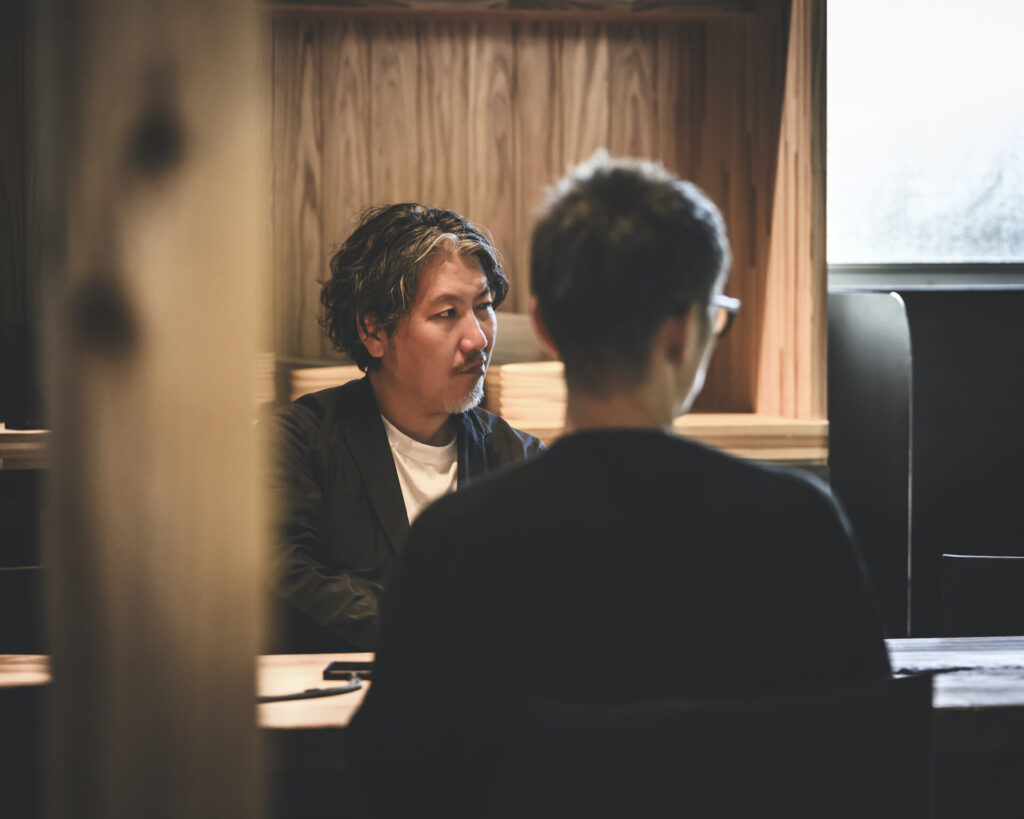
“We must not create something that causes customers’ desire to plummet the moment they buy or use it.” (Shigeta)
Shigeta: I’ve been thinking a lot about marginal utility these days. There are so many things we buy with high expectations, only to find ourselves satisfied the moment we purchase them, leaving them unused.
The same can be true of romantic relationships — when you’re always together, the initial excitement inevitably fades. But at the same time, the very nature of our desires changes. As time passes, different values and feelings will surely emerge. We have to consider this kind of paradigm shift when we make things. We must not create something that causes customers’ desire to plummet the moment they buy or use it.
I believe what matters is that, even after one desire is fulfilled, another desire or emotion naturally arises. As long as you can find an emotional connection as the value transforms, you can stay active for life. But that’s something incredibly profound; there is no such thing as a finished state.
Mr. Sadao Watanabe is 92, and he still says he wants to produce a better sound. His definition of a good sound has undoubtedly changed, but he still has the desire to keep creating better sound — that’s really remarkable. I think only those who have learned to make marginal utility their ally can discover what it means to remain active throughout their lives.
Of course, some might say, “You don’t need that” or “It’s different for everyone.” But ultimately, my own criterion when choosing something is whether I think it’s cool. Thinking about the life ahead of me, I only want to choose what I genuinely find cool — nothing else.
The energy to keep doing that with such a strong inner conviction is what truly matters. However, as I’ve said many times, it’s a very difficult era in which to hold on to such convictions. And precisely because these times are difficult, we have to properly confront this concept of marginal utility and think seriously about what we choose.
Anzai: Yes, I completely agree.
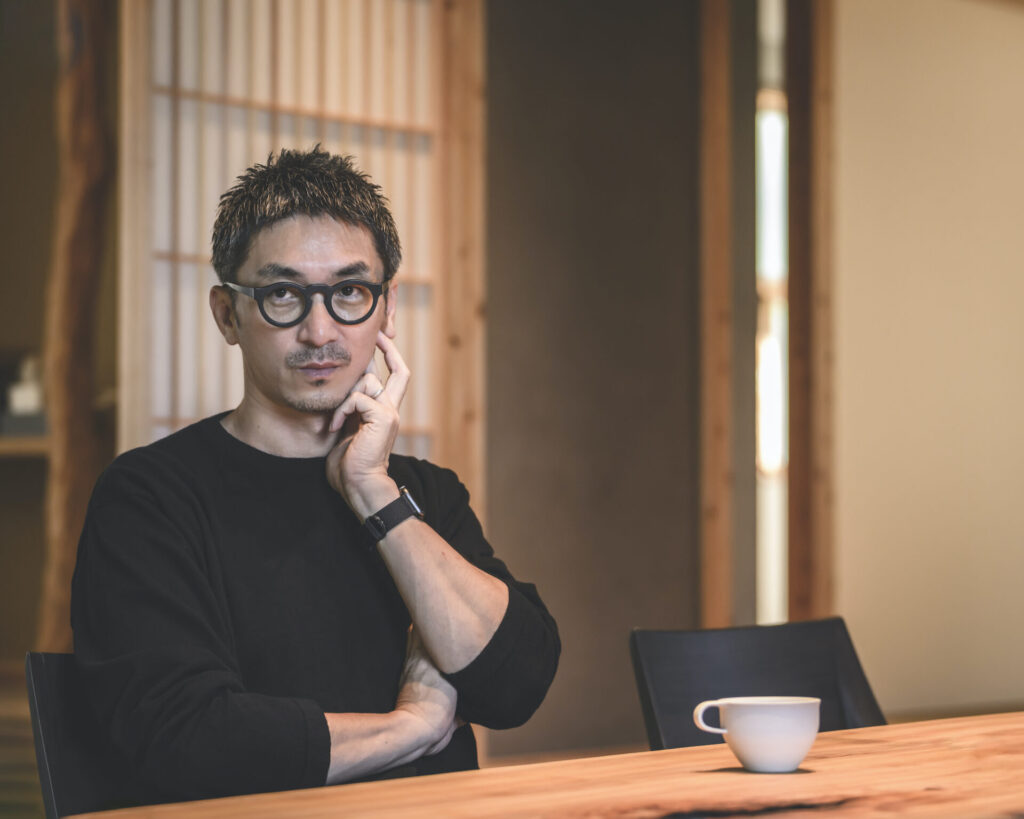
“A place that properly awakens the five senses we all possess — such architecture offers different experiences depending on where it stands, even if the structure itself looks the same.” (Anzai)
——Residential homes have become increasingly inaccessible, and you’re tackling this challenge by rethinking construction methods to make them more accessible. However, mass-produced homes tend not to prioritize the sense of excitement compared with custom-made houses. What ideas do you have to keep delivering that excitement to people?
Anzai: That’s exactly the challenges we’re facing. If we produce coffee cups or cars, mass-producing identical items doesn’t feel particularly strange. But in architecture, the word “mass-production” sounds oddly out of place — almost uncomfortable, you could say. Our mission is to figure out how to redesign that uncomfortable word itself.
If you trace the history of architecture, you’ll find that its original purpose was simply to protect people from rain and wind. But over time, the idea of lifestyle became attached to houses, and now homes have become something people use almost as a point of pride.
As people kept pursuing what they wanted, the question “What kind of house do you really want?” gradually turned into a comparison game — bigger than the neighbor’s, or more beautiful. We want to redefine the very idea of a house, including that mindset.
——Is there a more concrete image of your idea?
Anzai: What we create is extremely simple. In a word, it is a place where you can feel nature — a place that properly awakens the five senses we all possess. I believe such architecture offers different experiences depending on where it stands, even if the structure itself looks the same. I want to create designs with plenty of touchpoints with nature and opening outward.
Shigeta: These days, I feel our sense of comfort has become distorted. It’s like, “Do you really think a highly insulated house is comfortable?” or “Blocking all sunlight with blackout curtains is pleasant?”
Anzai: Exactly.
Shigeta: Our autonomic nervous system is closely linked to sunrise, changes in temperature, and seasonal transitions, and I believe these things sharpen our sense of comfort. I’m confident that Mr. Anzai will rediscover that in New Zealand.
Anzai: Recently, I’ve received so many contradictory requests — people want to feel nature but also want tightly sealed houses, or they want an eco-friendly house but also want all rooms equipped with AC.
Of course, we put every request on the table first, but what we ultimately choose is based on imagining the next 10 or 30 years. Otherwise, I’m afraid that truly unthinkable, problematic designs will emerge. We install what will remain essential over time — and we never consider it complete. Those are the two principles we prioritize in design.
By “never complete,” I mean leaving space — not only inside the building, but also in relation to its surroundings and the natural environment. When that becomes possible, I believe people will naturally start paying more attention not just to the building itself, but to what it means to live with architecture and to the relationship between architecture and nature.
Shigeta: Hearing this, what I just realized is that, in short, everyone wants to control everything — the cold, the heat, all of it. But nature was never meant to be controlled.
Anzai: We can’t control nature. All we can do is follow it. We will never be able to make it rain, make the sun rise, or create cloudy skies.
I love insects living in nature because they have many abilities that we humans don’t. What really shocked me was when pictures of insects completely disappeared from the covers of the Japonica study notebook (a popular Japanese study notebook). Apparently, some teachers and parents had requested the change because the insects on the cover were considered gross, and they didn’t want children using them.
Hearing that was terrifying — not only because some people actually complained about it, but also because there were people who didn’t even realize what was going on. Even after a paradigm shift in which we begin valuing nature again, I don’t know if these people will return to nature’s side.
We often say that our work aims to enrich nature through business and redefine its value. But we’re always struggling with this question: How far do we need to go in our designs to ensure our intention truly reaches people? That’s the challenge we tackle every day.
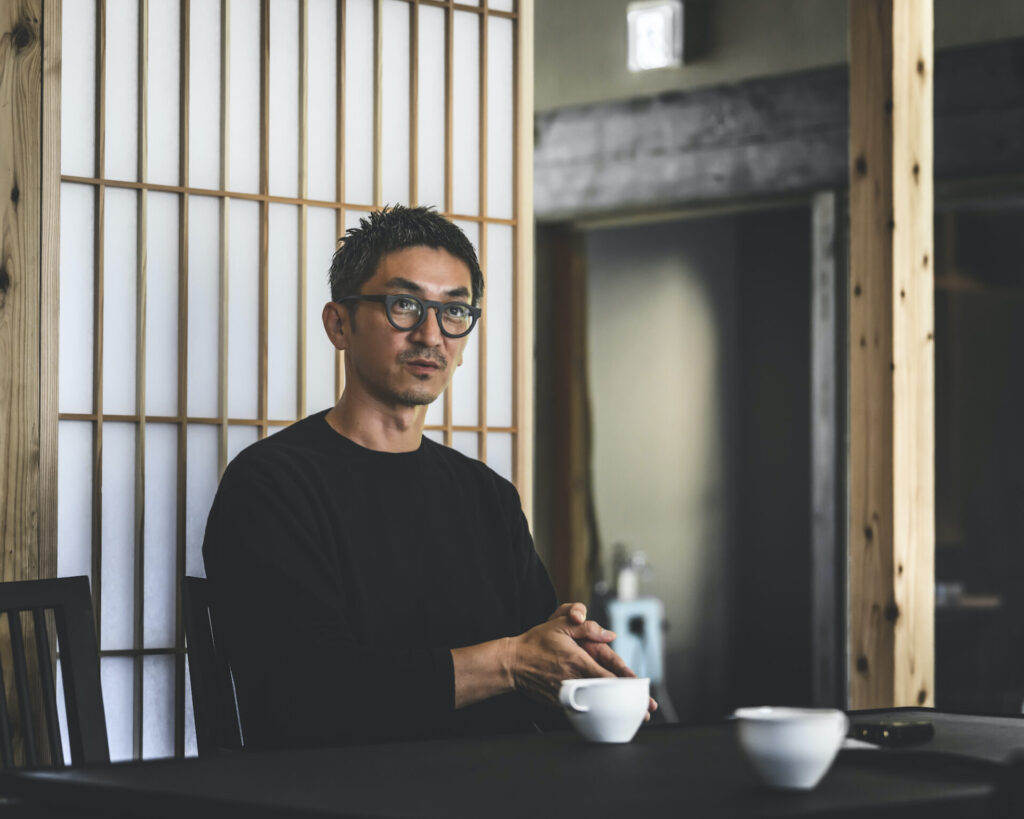
“Climbing a mountain is not about reaching the summit. The more you climb with your own legs, the more time you can spend in dialogue with yourself.” (Anzai)
——Mr. Anzai just said he likes insects because they have abilities we humans don’t. If two of you could exchange characteristics with each other and acquire something you don’t have, what would it be?
Anzai: I’d like to have Mr. Shigeta’s knowledge of science and food. To me, food is basically science. You can control flavor and taste through how you use basic seasonings and their proportions. If I had that ability, I might come up with ideas that I can’t even imagine, like combining shoji screens, wood, and something completely unexpected.
Architecture tends to follow historical styles, and there are many rules that you’re supposed to follow. But cooking is much more casual and free. In cooking, it’s quite natural to combine things like sugar and salt, even though they have totally different properties. If you translate that into architecture, it would be like integrating something very strong and something very weak, which is hard to imagine.
However, if I had the right scientific knowledge and a proper methodology, maybe it would be possible. With that kind of knowledge, I feel I could create a whole new world of architecture.
Shigeta: What would I want from him…? Well, I really admire his physical strength. I’m not very strong physically, so mountain climbing isn’t a high priority for me. I sometimes wonder if that might narrow my field of vision. He’s invited me for mountain climbing many times, but I always give him a vague answer like, “Yeah…someday.”
If I were to add one more thing, that would be his ability to attract people. He’s an incredibly charming person, and many people are drawn to him — of course, I’m one of them.
——I believe you’re quite charming, too.
Shigeta: Well, we have different kinds of charm.
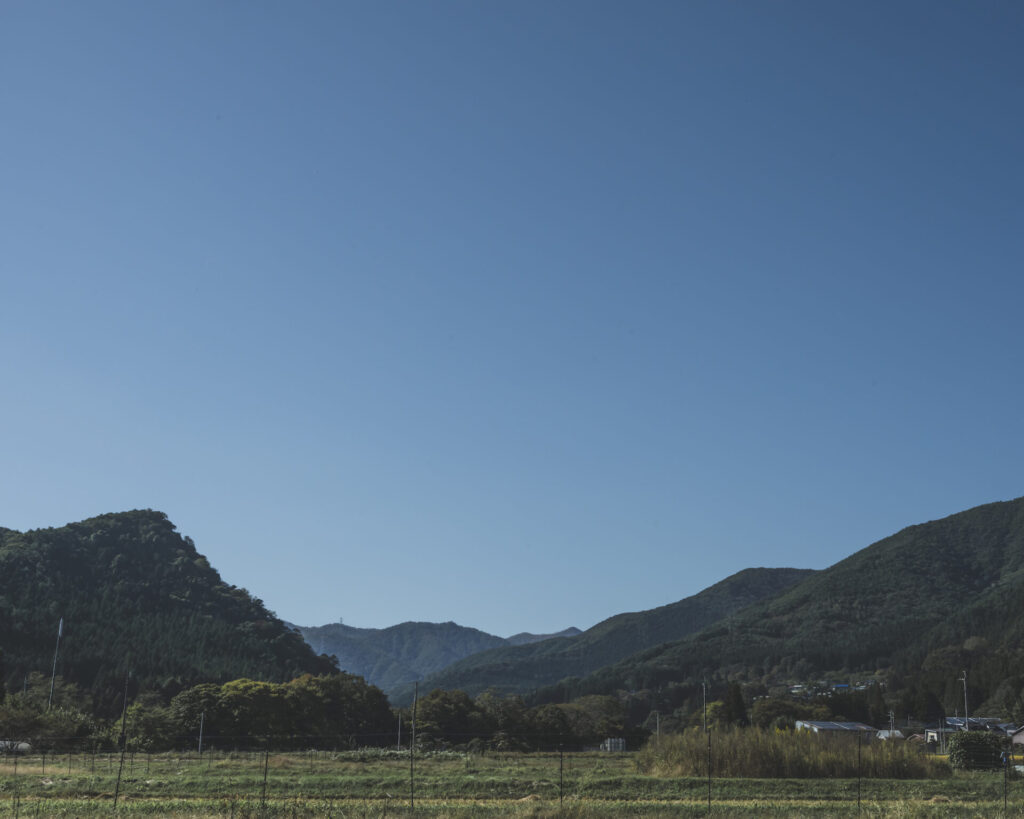
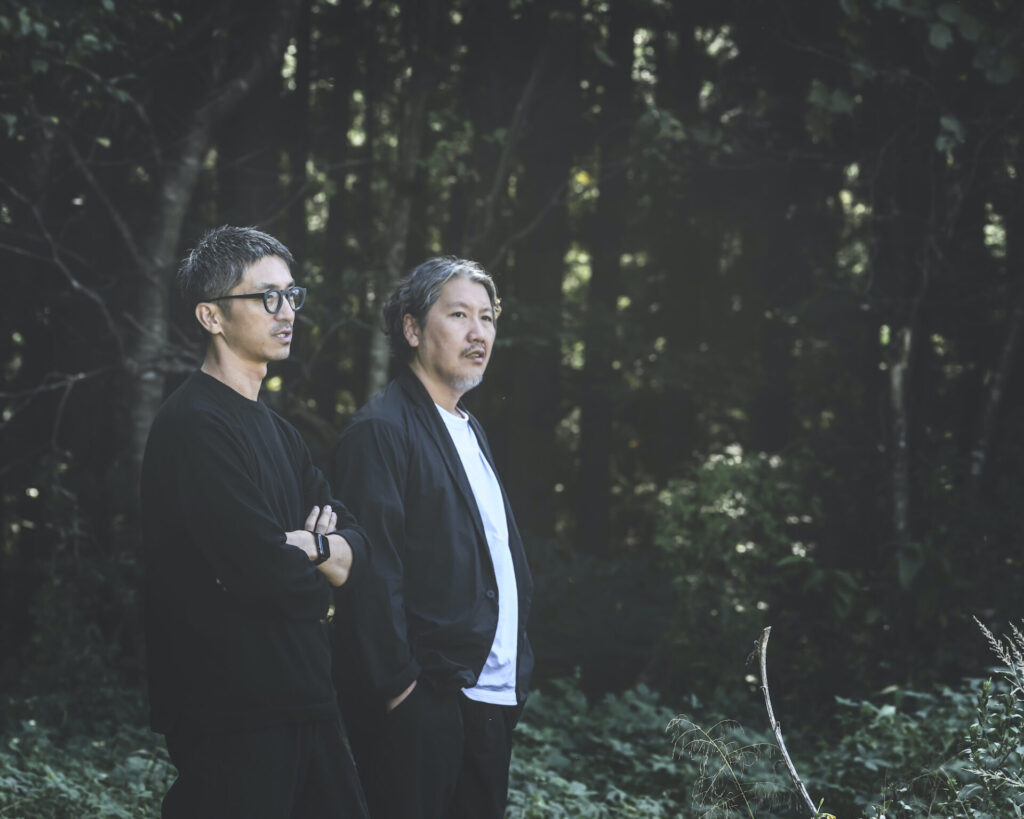
Anzai: I definitely want to take him to the mountain one day. The view you get from the mountains is incredible. Everyone starts with the same view, but the scenery changes with every step you climb. There’s something truly rewarding about using your own body to reach that view.
Of course, it can be tough sometimes, but when you push through it, the reward — the breathtaking view — gives you real confidence. I’m going up the mountain with several people tomorrow, and I’m sure their perspectives will shift before and after the climb.
Climbing a mountain is not about reaching the summit. The more you climb with your own legs, the more time you can spend in dialogue with yourself. I believe that’s the real joy of mountain climbing.
——Of course, you’ll go mountain climbing in New Zealand as well?
Anzai: Yes, of course.
Anzai: Taking this opportunity, I’d also like to ask you something, Mr. Shigeta — What are you planning to do next?
Shigeta: I’m really not sure. But what I do know is that I truly want to pursue the ultimate form of product-out approach. Whether it’s cosmetics, food, or a service, what matters is how I move the pieces toward the goal.
Hearing your story about the Japonica study notebook, I realized something — even though we all need to protect ourselves, some people speak as if they’re always protected by someone else. To protect yourself is, in other words, to seize your own freedom and to take responsibility for your own way of living. But I felt that, in manufacturing, people sometimes reinforce the consumers’ idea that “we are always protected.”
Of course, we must never create products that can cause harm. Nevertheless, if manufacturers adopt the stance that “we take full responsibility for everything,” both manufacturers and consumers can end up unhappy. I believe we’re reaching a point where people need to start realizing this.
In the cooking class I host, I always take the stance that I’m teaching people the skills to protect themselves. No matter what happens to the economy, the skills you are learning here will be what saves you.
Cosmetics themselves don’t make you beautiful on their own, either — if your skin condition improves, it comes from how you engage with the act of caring for your skin. In that sense, cosmetics are merely tools that help you recognize every day that “I love myself this much.”
Based on that belief, I want to create products on my own terms — that’s the image I currently have of the ultimate product-out approach.
Anzai: I really resonate with your idea.
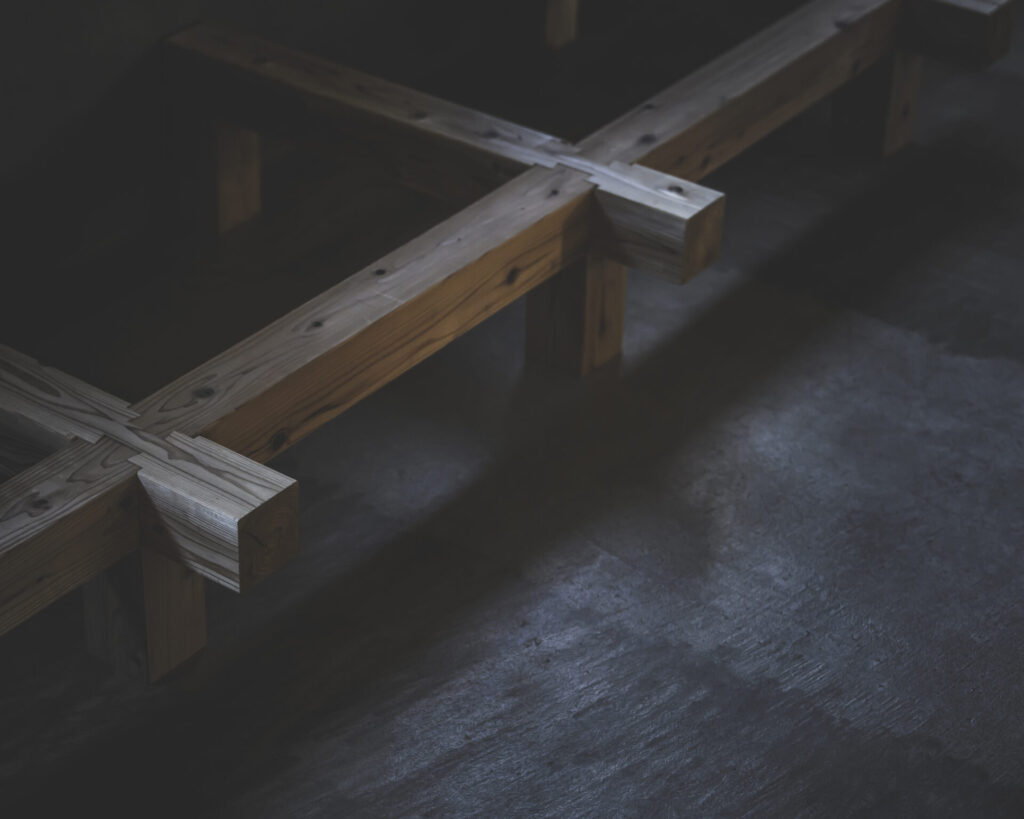
Shigeta: A house is, in a way, a product that protects oneself.
Anzai: We can’t create good architecture by simply taking in and executing clients’ requests. Of course, we always take them into account, but what architecture truly needs must come from the designer’s side. But today, that relationship has flipped.
This might sound like a creator’s ego, but through architecture, we want to move people. To do that, we want to create architecture that provides spaces that awaken the five senses while growing alongside their users. Otherwise, all we’ll end up with are perfectly sealed buildings that even insects wouldn’t want to enter.
Sometimes I get messages like, “There was a bug inside.” It’s only natural because it’s built in the middle of nature. But whenever I receive that kind of message, my mind just freezes for the rest of the day. There’s a bug? What do you expect me to do…?
If you don’t like insects, you shouldn’t choose to live in a place like that in the first place. I’m genuinely at a loss about how to handle those kinds of situations.
——You might encounter several difficulties in New Zealand as well.
Shigeta: Then, I’ll visit Kotaro Anzai in New Zealand when he’s having a hard time — and I’ll cook for him.
Anzai: I’m really looking forward to that.
Notes:
Shirakaba-so
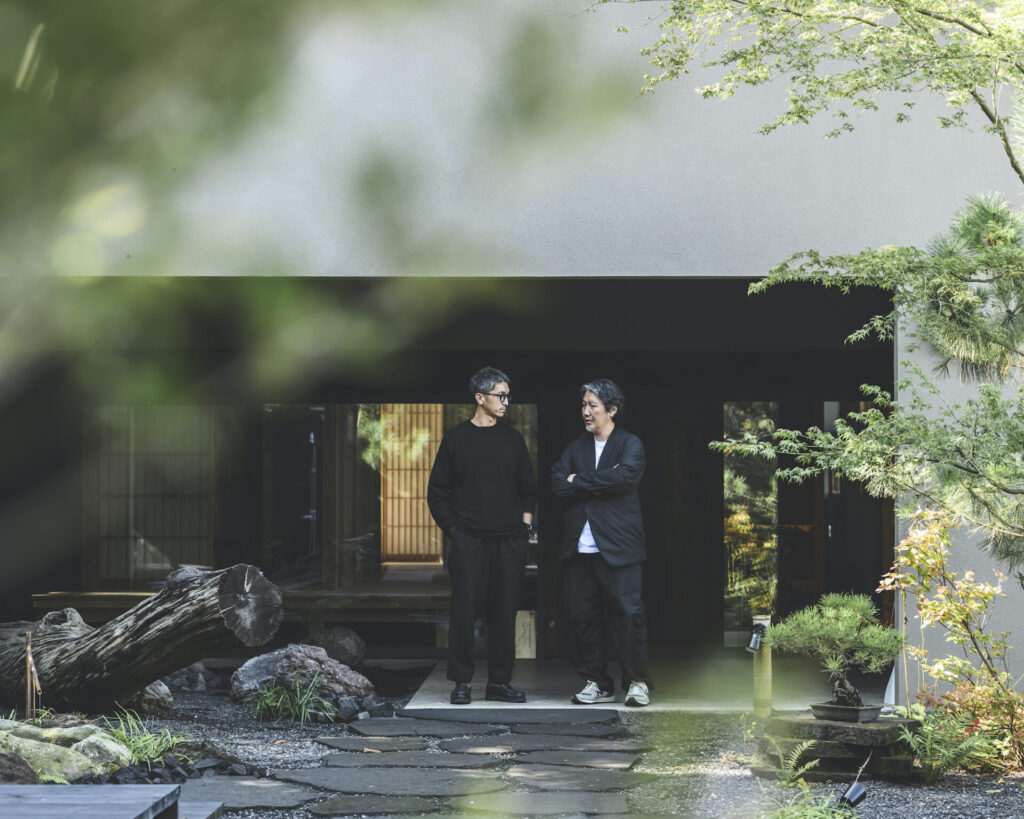
A standalone lodging facility in Minakami, Gunma Prefecture. The property, which previously operated under the same name, was acquired by Masakazu Shigeta, brand director of OSAJI, and underwent renovations over about two years starting in 2023.
Profile
-
Kotaro Anzai
Born in 1977 in Fukushima Prefecture, he is the third-generation successor of Anzai Construction Industry, a family business in Nihonmatsu City that has been operating since his grandfather’s time. In 2006, he founded Lifestyle Studio Anzai Construction Industry and became its CEO. The company was renamed ADX in 2019. As CEO, he engages in eco-friendly architecture that seeks harmony between people and nature throughout the entire building lifecycle — from design and construction to operation, renovation, and demolition. Having grown up surrounded by wood, he is known for his profound knowledge of timber and wooden architecture. He also gives lectures at universities and companies, both in Japan and abroad, as a wood creator. Mountain climbing is his lifelong passion. Starting in Spring 2026, he plans to spend a year living in New Zealand with his two-year-old son.
-
Masakazu Shigeta
After working as an engineer in the music industry, Shigeta began his career as a cosmetics developer in 2001. From 2004, he worked on various cosmetics brands in the healthcare business of Nitto Denka Kogyo Co., Ltd., a metal surface treatment company founded by his great-grandfather. In 2017, he founded “OSAJI,” a skincare lifestyle brand, and became its brand director. In 2021, as a new store of “OSAJI,” he produced “kako,” a specialized shop for home fragrances and perfume in Kuramae, Tokyo. In the following year, he opened a combined shop of “OSAJI,” “kako,” and a restaurant, “enso,” in Kamakura, Kanagawa. In 2023, utilizing the technical skill of Nitto Denka Kogyo, he launched a pottery brand, “HEGE,” and in October of the same year, he became CEO of OSAJI Inc. He also has published books on beauty and held cooking classes and events focusing on food, which is the origin of beauty. He released a collaborative album with F.I.B JOURNAL called “Gensho hyphenated” in November 2024 and has been expanding the range of activities.
Publications
Taberu Biyou (Eating for Beauty) (SHUFU TO SEIKATSU SHA, 2024)
42-Sai ni Nattara Yameru Biyou, Hajimeru Biyou (Beauty cares to quit and start when you turn 42) (Takarajimasha, 2022)
Information
ADX
Led by Kotaro Anzai under the philosophy of “Living with the Forest,” ADX is an architectural design team engaged in “eco-friendly architecture” that seeks harmony between people and nature. The team works under the motto of being involved in every stage of a building’s lifecycle, from design and construction to operation, renovation, and eventual demolition. Their representative works include Home in Izura, One Year Project, K5, KITOKI, and SANU 2nd Home. ADX has also received numerous awards, such as the Wood City TOKYO Model Architecture Award Grand Prize and the iF DESIGN AWARD 2024. In August 2025, the firm completed business integration with SANU, with which it had collaborated on projects such as SANU 2nd Home.
https://adx.jp
SANU
Founded in 2019, SANU is a startup built on the vision of “Live with nature.” As a lifestyle brand dedicated to fostering a society where people and nature coexist, the company shares ideas for how people can live joyfully, healthily, and in harmony with nature, through the proposal of new lifestyles. Founder and brand director Takahiro Honma shares both Fukushima roots and a love of the mountains with Anzai.
https://corp.sa-nu.com/
-
Photographs:Eisuke Komatsubara
-
Text:Masahiro Kamijo

NEWS LETTER
理想論 最新記事の
更新情報をお届けします
ご登録はこちら
ご登録はこちら
メールアドレス
ご登録ありがとうございます。
ご登録確認メールをお送りいたします。