
2025-11-20
Vol.22
ADX CEO / Wood Creator
Kotaro Anzai(part 1)
-
Lost in Life
-
Beyond Completion: Watching Over What We Build
-
Designing to Reach the Many
-
Staying Active for Life
-
Why New Zealand?
There’s a worldwide bestseller titled The Art of Choosing by Sheena Iyengar. The book focuses not only on the possibilities that the act of choosing brings, but also on the difficulties and inevitable costs that come with it. For a business leader who has just completed a business integration between his company and another, these difficulties must feel all too real, and the harsh reality of our times only adds to the pressure. But there’s no time to stand still — he must keep moving forward to realize his vision of “delivering high-quality homes to more people.” Our guest today is Kotaro Anzai, CEO of the architectural collective ADX, who is about to take another bold step toward the summit he seeks. From this dialogue emerges a message — when you’re in doubt, take a bold step forward.
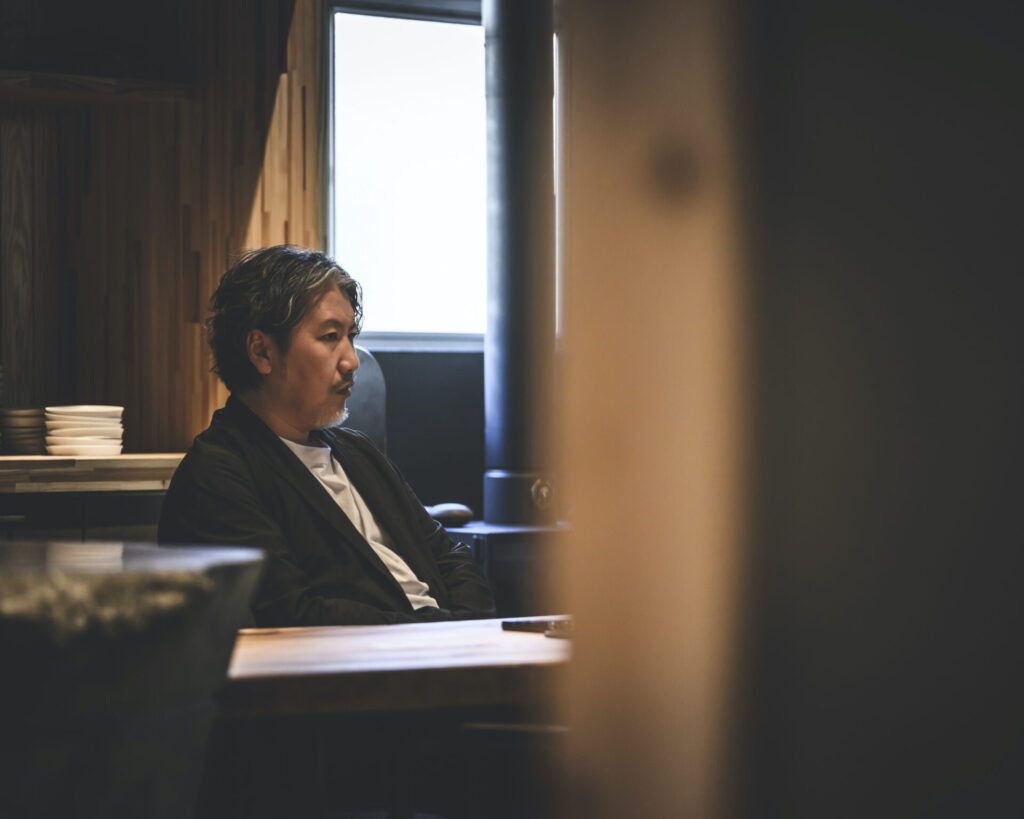
“I’d like to hear honestly about where he is now — his current thoughts and feelings as he navigates a major turning point in his life.” (Shigeta)
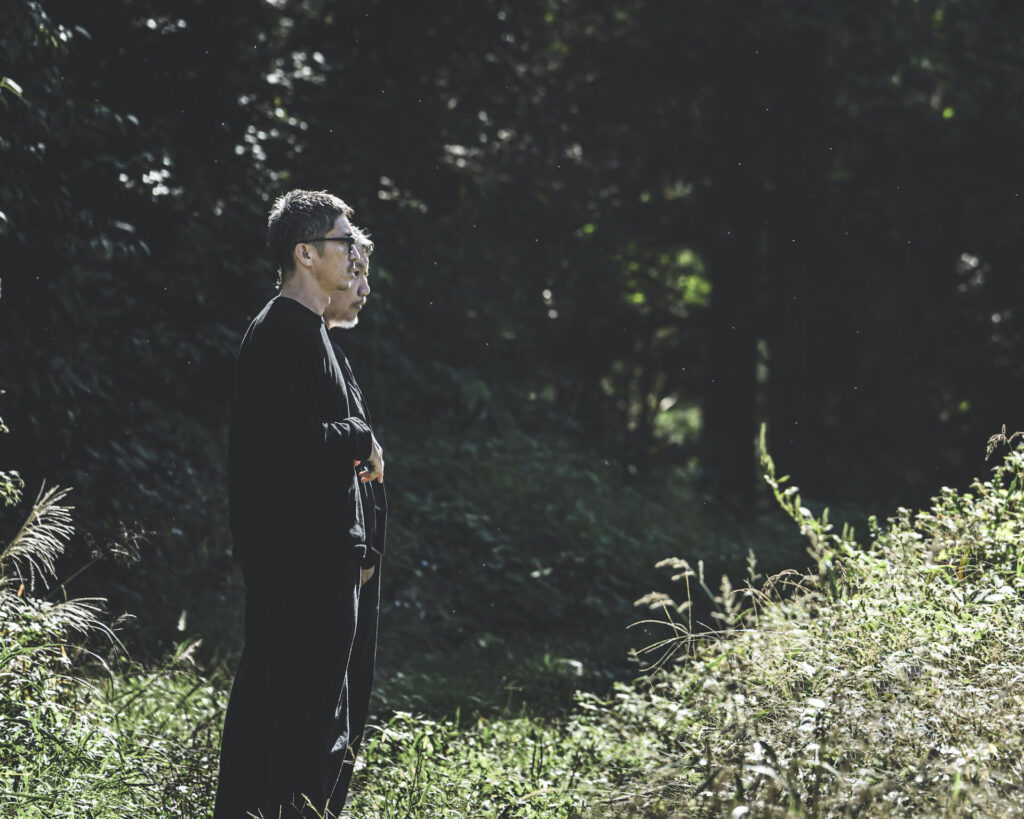
——Today’s guest is Mr. Kotaro Anzai, whose name has been mentioned several times throughout this Idealism series. Many readers must be interested in learning more about who he is, so I’d like to reveal more about him today.
Kotaro Anzai: I’m afraid I must look like someone who’s completely lost his way in life these days.
Masakazu Shigeta: But, that’s exactly what makes you even more fascinating, right?
——Does that sense of being “lost” connect with your plan to move to New Zealand next year?
Anzai: Absolutely — they’re completely connected.
——First of all, I’d like to know how the two of you met each other.
Shigeta: Originally, his wife and I knew each other. She’s an exceptionally talented marketer, and during the COVID pandemic, we’d talk about collaborating someday. That eventually led me to meet Mr. Anzai — he said he’d like to meet me.
Anzai: That’s right.
Shigeta: We had lunch together in the Gaienmae area and hit it off completely. I remember we talked something like, “We should collaborate on something together someday.” A few years passed, and it was just about two years ago that we finally started working together — around the time this Idealism series began.
It was also when we decided to renovate this property in Minakami, where we’re talking today, and I reached out to Mr. Anzai to take on this project. So for the past two years, while the Idealism series has been ongoing, we’ve also been steadily working behind the scenes on this renovation project together.
——You two also had a conversation on the OSAJI Journal about two years ago.
Shigeta: Yes. To me, Mr. Anzai is like “a professor of the forest.” Back then, we talked mainly about forests — their diversity and the forest monitoring project handled by ADX. But today, I’d like to hear more honestly about where he is now — his current thoughts and feelings as he navigates a major turning point in his life.
——By “major turning point,” you mean the business integration between SANU — which operates a subscription-based shared vacation home service — and ADX, the company Mr. Anzai has led.
Shigeta: That’s right. I also went through something similar about two years ago, when I decided to form a business alliance and accept investment from a major trading company. So, I can imagine how complicated this period must feel for him.
That’s why I want to know what he’s been thinking lately — how his mindset has shifted, and what kind of vision he has now for the future. As a friend, I want to hear his stories behind the press releases.
Anzai: That means a lot to me.
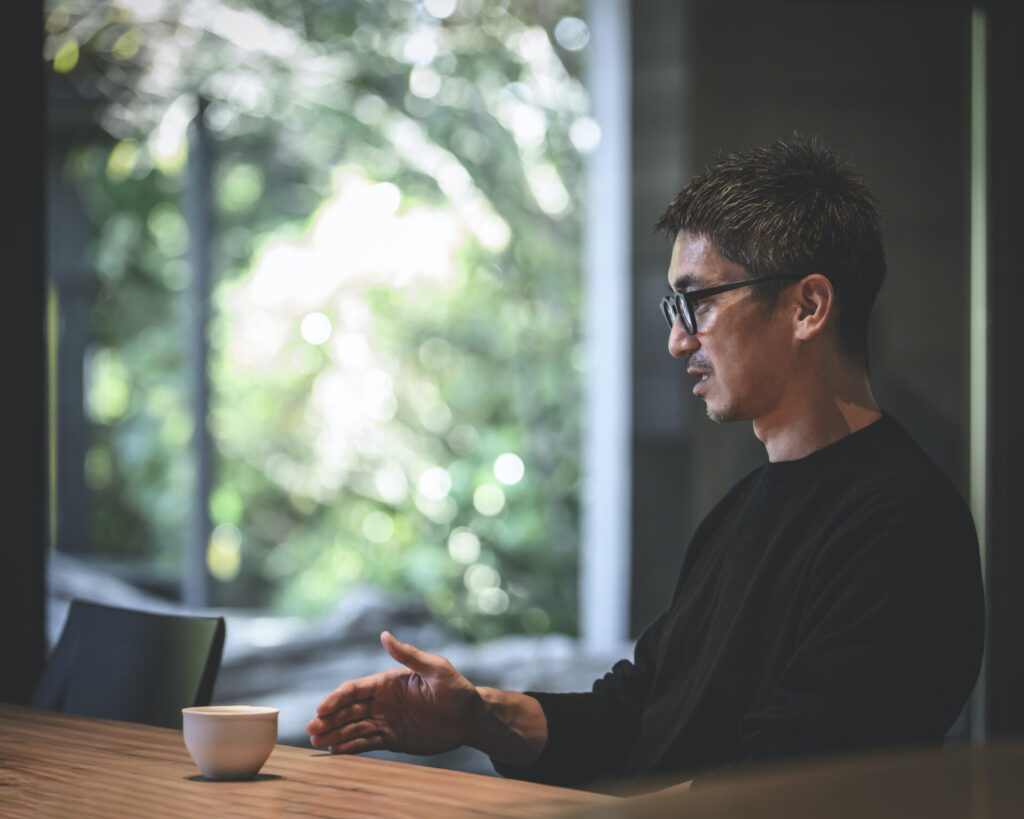
“I’ve always wanted to stay connected with what we build for as long as possible — to keep watching over it after completion.” (Anzai)
——Mr. Anzai, you’ve been collaborating with SANU as an architectural design partner since they first started their business. What made you decide to have business integration at this very time?
Anzai: ADX is not just a design firm or a construction company — we do everything end-to-end, from design through construction.
When I talk about this, people often assume we cover the whole process from start to finish — but that’s not true. In architecture, the life of buildings continues long after they’re built — they can be used across generations. However, designers and builders usually just leave once construction is finished, saying a simple “goodbye,” cutting off their relationship with what they’ve created.
Personally, I’ve always wanted to stay connected with what we build for as long as possible — to keep watching over it after completion. I believe that’s part of the creator’s responsibility.
It was around that time, while I was thinking that way, that the idea of integrating with SANU — which operates SANU 2nd Home*, a shared vacation-home platform — came up. I realized that it would allow us to stay involved with the buildings we design and build, and I thought that was exactly what I’ve always wanted to do.
——So, it was you who proposed the business integration?
Anzai: Yes, that’s right. I’ve always been a bit of a worrier. I can’t help but wonder how the buildings we create are used after completion. In the past, I’d try to ease that anxiety by moving on to new projects, overwriting the old ones, but I started to feel that no longer fits the times.
It was around then that I met Takahiro Honma, the founder of SANU, who’s from Fukushima, just like me. He asked me to help out with some design work, and that’s how our relationship began.
What they were trying to achieve deeply resonated with our business vision. So, I started visiting them every day, even proposing ideas that weren’t requested. I suppose it became difficult for them to ignore this senior architect who kept showing up with new ideas every day, and that eventually led to the creation of SANU CABIN, the accommodation unit for SANU 2nd Home.
If that was the starting point, we’re now somewhere in the middle of the goal. I feel that this business integration marks the beginning of a new stage for both of us.
——You’ve finally got a way to realize your goal. One would think that must fill you with hope — but instead, it brought you a sense of uncertainty. Why is that?
Anzai: I thought we had been giving deep thought to how architecture can endure over time — but in truth, we hadn’t thought enough at all, and realizing it hit me hard.
I believed we had chosen materials and methods with time in mind, but if you ask me whether I had considered whether those techniques would still exist 30 or 40 years from now, I have to say my foresight wasn’t enough.
Meanwhile, technological advances have made buildings last longer almost automatically. So then comes the question: Who will look after these structures after 40 years? We need to respond to it with a new system that includes operations, rather than leaving it to someone else.
But we haven’t yet found the answer to what kind of system would be appropriate. I think that’s also causing my sense of doubt.
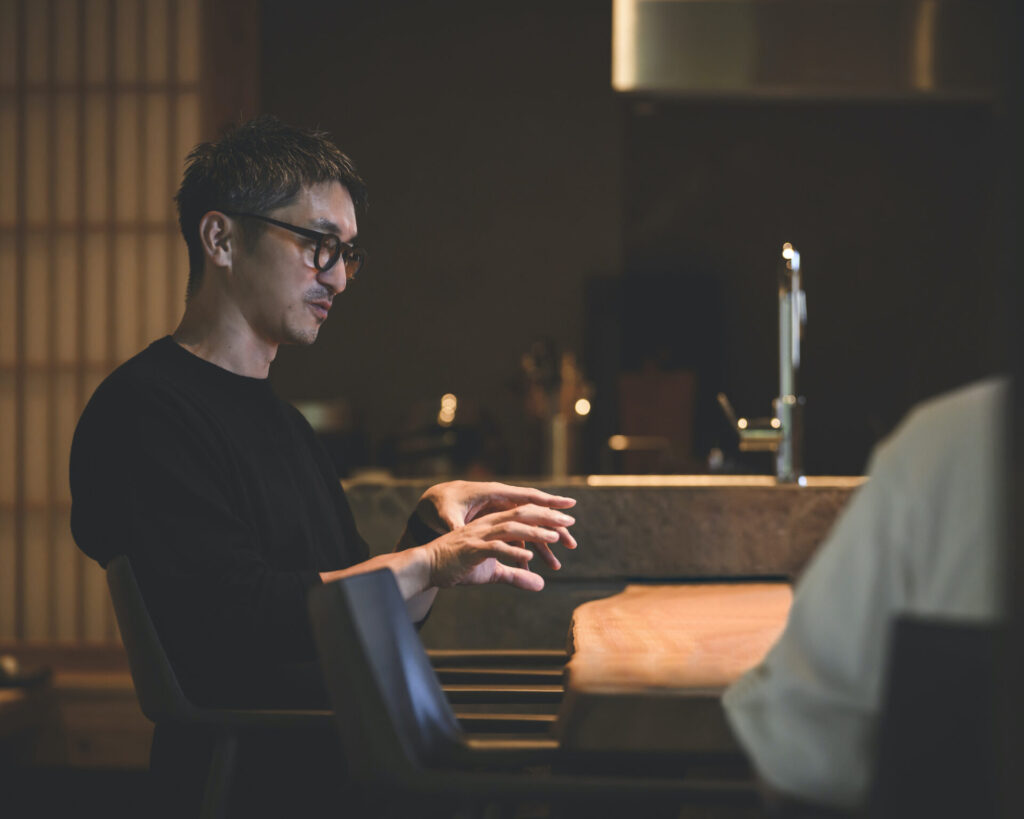
“When it comes to the theme of delivering that quality to many people, you suddenly face big hurdles — including issues of mass production and distribution. There’s so much to solve — not only how to build, but how to deliver.” (Anzai)
——Mr. Anzai, did you consult with Mr. Shigeta about this business integration in advance?
Anzai: When the plan for business integration first came up, I was so fired up that, rather than consulting him, I was more like, “Mr. Shigeta, I’m going to do this amazing thing!” I was always talking about these exciting, dream-like ideas. I think building a factory must have been one of those topics.
Mr. Shigeta was also envisioning a cosmetics factory, and we, who are from the same generation, got excited and talked a lot about the same kind of ideas. I remember feeling, “We’re really on the same wavelength.”
As for why I wanted to build a factory for architecture, it’s because I want to deliver high-quality residences to more people. I love things that are handmade and carefully crafted one by one — and that’s what architecture has traditionally been. We’ve always built one-off structures, then moved on to the next.
But when it comes to the theme of delivering that quality to many people, you suddenly face big hurdles — including issues of mass production and distribution. There’s so much to solve — not only how to build, but how to deliver. I think that’s part of what makes me Kotaro Anzai, who’s full of doubt.
——Mr. Shigeta, did you give any advice to Mr. Anzai about this business integration?
Shigeta: I don’t think I gave him any specific advice — I mostly just listened to his vision. But when I heard his idea of producing cabin-like buildings in a fully robotic factory, I thought it was incredibly future-oriented and romantic.
My image of Mr. Anzai is someone who can beautifully blend technological innovation with timeless, traditional values — and elevate that fusion into something deeply romantic.
In fact, there are many experts in technology and science around him, and he always tries to channel that collective knowledge into something deeply emotional and romantic. I’ve always found that incredibly inspiring — and that’s probably why I could so easily understand his vision of a fully automated architectural factory.

“As I started to feel that I’m unable to perform as I did when I was younger, I started to wonder what would remain for me in the end.” (Shigeta)
Shigeta: I don’t really like saying “now that I’m at this age,” but recently I’ve been asking myself what would help me stay active for life. Mr. Sadao Watanabe, who I deeply admire, still plays the saxophone at 92, Mr. Min Tanaka continues to dance on stage at 80, and King Kazu (Kazuyoshi Miura, a professional footballer) keeps kicking the ball at 53.
In the past, I didn’t place much value on pursuing the same thing for long. But as I started to feel my physical limits — unable to perform as I did when I was younger — I began to wonder what would remain for me in the end, and I’ve come to respect those who keep going no matter what.
Both Mr. Anzai and I have always had to balance management and creativity. In fact, that’s how I’ve approached my work until now. But when I was forming a capital partnership with a major trading company, I found myself asking, if I had to choose between management and creativity, which would I choose?
I still haven’t found a clear answer to this question. If possible, I want to continue doing both. But doing both halfway would only inconvenience those around me, so that’s not an option.
Seeing the remarkable growth of SANU in recent years, which Mr. Anzai chose as the partner for business integration, I can’t help but think that CEO Mr. Gen Fukushima is truly a genuine management genius. I’m sure you feel the same way, and that’s why you’ve decided to entrust the management side to him, and instead devote yourself to creativity for life.
Creativity is not only about designing architecture, but also factory construction and how buildings are delivered — it’s the entire philosophy for making things. To be honest, I envy Mr. Anzai for making that decision.
Having said that, people generally can’t make clean-cut decisions. That’s why we hesitate. When you take a new step forward, you’ll inevitably face all kinds of realities and doubts. I believe that’s exactly how Mr. Anzai feels right now.
——You had to choose between management and creativity, and, as a result of choosing creativity, you’ve decided to integrate your business with SANU. Is that right?
Anzai: Yes, that’s exactly right.
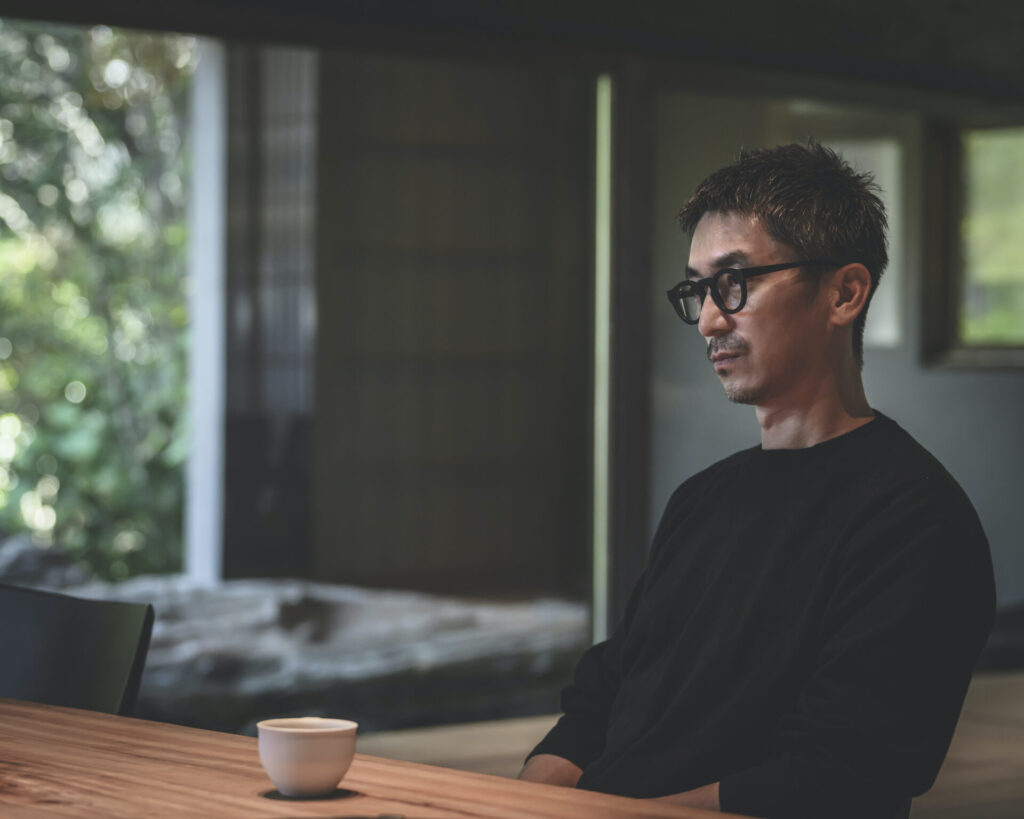
Shigeta: At our level, it’s no longer about what we want to do. We can’t help but decide based on whether there’s someone else who can replace us.
Anzai: For me, the decision of business integration was relatively simple — after all, I just wanted to focus more on and study what I do. I feel my creative work still has room to grow, and I want to pursue that.
As for management, I’ve never formally studied it or had anyone teach me. So, if there’s someone skilled in that area, I thought entrusting it to that person would be better for the company’s growth. That’ll also help protect the company’s future.
That said, once management was taken off my hands, half of my schedule, which used to be packed with back-to-back meetings and other tasks every 30 minutes, suddenly disappeared. I first thought I’d finally have time to think about creative work, but instead, I found myself unsure what to do. I realized that the combination of management and creativity was what had shaped me. These days, I spend the extra time walking. (laughs)
Perhaps it will take me another six months to fully adapt to this new situation. During that time, I want to reflect on what I should do next — and what my true value is.
——Mr. Shigeta, you’ve accepted investment from another company, but you haven’t stepped down from the management.
Shigeta: That’s right. I’ll keep handling both for the time being. But to be honest, times are so tough that there are days I wish I could let go of one of them. I feel like giving up sometimes, because things have gotten so difficult.
Take a factory, for example, the construction costs have more than doubled in just a few years. Even when we want to invest in infrastructure for the future, our investment simply can’t keep up. And of course, large investments eventually affect product prices. That leads to another problem — we have to think about whether consumers can actually afford it.
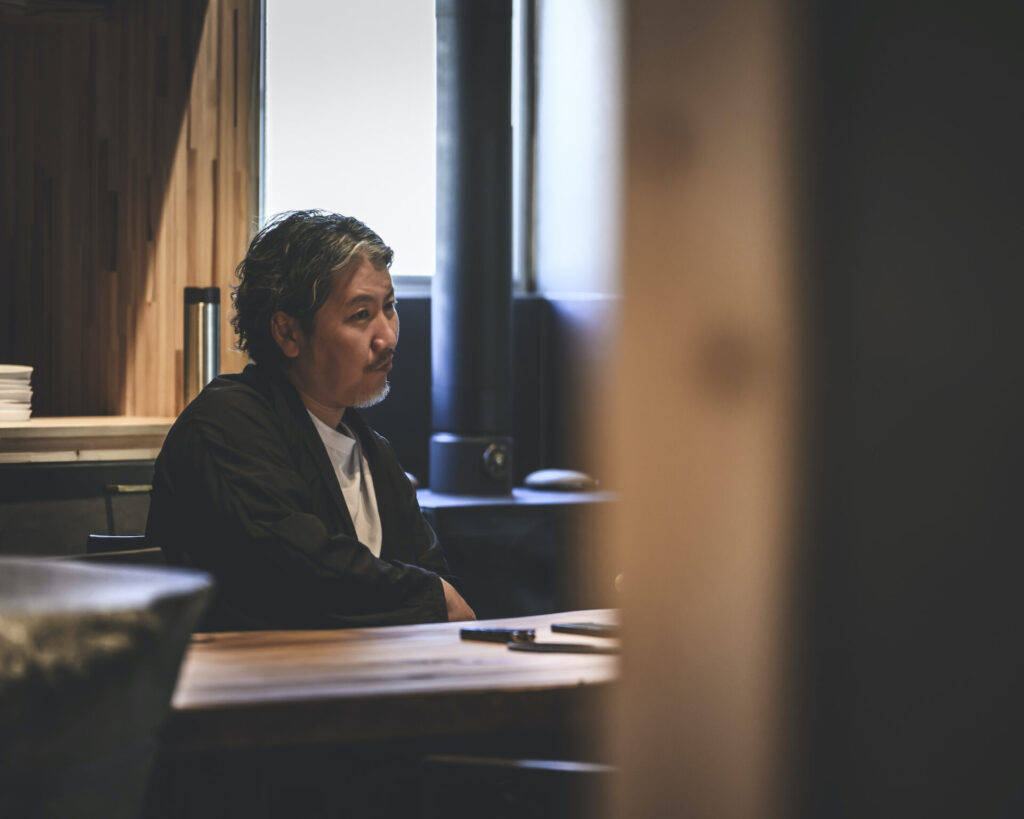
Anzai: I’ve also been struggling with that same issue of price pass-through.
Shigeta: This is not just a matter of inflation. You could say that the distortions we’ve ignored for years are finally correcting themselves — and that means prices won’t easily go back to what they once were.
We have to reconsider everything — cost structures, pricing, relationships with business partners, and how we work with our staff. So much of my brain resources go into those things that creative thinking gets pushed into the corner — and that’s really painful for me.
Anzai: I understand exactly what you mean. We’re currently creating a new architecture model, and when we think about how to make it accessible to more people, cost is always the key issue.
If something we offer is desirable but out of reach, that’s not the business we’ve tried to build. We have to manage costs carefully. But the reality is, I find the costs rise every morning I wake up. I have to think about how to keep it under control when prices climb day by day.
If I try to handle too many things on my own, I’ll never find the answer. I need to focus deeply on one thing — otherwise, we can’t fulfill our promise to deliver architecture to everyone. The pace of change today is just that fast.
It’s horrible, isn’t it — when something you used to buy becomes unaffordable, or when techniques you relied on no longer work. In the field of architecture, we’re seeing more cases where the designs we develop using the methods and materials we once relied on no longer achieve the intended output.
We know the goal, but we can’t decide which path we should take — and that constant back-and-forth is deeply unsettling.

“To pass our craft on to the next generations, we need to develop new solutions that allow buildings to be made without relying too much on individual skills.” (Anzai)
Anzai: In today’s architectural world, the topics of value engineering and cost reduction dominate. The question everyone is asking is, how can we reduce costs while still enhancing the value of buildings?
Much of the design and construction process is now devoted to that kind of communication, and these tasks are challenging because it’s more like paring down dreams rather than realizing them.
My current task is to create a new framework for design and construction that can lessen that pain, even if slightly. Achieving that would mean fulfilling our promise to deliver high-quality architecture to more people.
——So, building up full automation with robotics is a way to achieve that goal?
Anzai: Yes, robotics is undoubtedly one of the means. But before that, I believe we have to start with changing the wooden framework construction method, which uses pillars, beams, and braces, and is used in most Japanese wooden houses.
The method was originally developed to train more carpenters, but it’s not something just anyone can master. It made sense when there were many skilled carpenters around, but in today’s aging and shrinking workforce, the technique itself has become a burden.
To pass our craft on to the next generations, we need to develop new solutions that allow buildings to be made without relying too much on individual skills. That’s the core of technological innovation we’re aiming for.
——It connects with the words by Jean Prouvé —the 20th-century designer who put value on production and construction process — “Never design anything that cannot be made.”
Anzai: Exactly. Drawing something that can’t be built is like writing a love letter and getting rejected — very heartbreaking, isn’t it? So, I’m doing my best not to get rejected (laughs).
——As we mentioned earlier, you’re moving to New Zealand with your son next year. Why now? I understand there was some opposition to that decision.
Anzai: Yes, even my wife asked, “Why now?” (laughs)
Some even joked, “Did he lose motivation after the business integration and decide to take a break?” But that’s not it at all — we’ll be there for only one year.
I’m planning to live in the mountains with my two-year-old son. I don’t speak much English, so I know I’ll face many difficulties — from shopping to dealing with my son getting sick. I won’t be able to expect much help from others. But I believe it’s only by putting myself in that kind of environment that I’ll truly gain new insights.
As AI technology advances, the world will become even more convenient. We’ll soon live in an age where someone — or something — does everything for you. When that actually happens, even words like “thank you” will become a mere template, detached from genuine feeling.
If, in a place where I can’t speak the language, a kind neighbor lady were to offer me just one cookie, I’d probably be moved to tears. In that moment, I’d be able to say thank you from the bottom of my heart.
So, moving to New Zealand is my way of rediscovering the meaning of thank you, and of resetting myself — to bring that sense of gratitude back into how I approach architectural design.
——Are you going to continue working while you’re there?
Anzai: Yes, I’ll keep doing my job. But what we truly want to deliver through our work is “nature.”
No matter how often we say “nature is wonderful,” if we spend all our time in front of a PC, we’ll never design anything that truly captures nature’s wonder. I believe we have to experience the beauty and joy and find ways to weave that spirit into architecture, so that it can live on as a story passed down to future generations.
(to be continued in the second half)
Notes:
SANU 2nd Home
The service offers shared second homes in Japan’s beautiful natural landscapes, custom-built to suit the lifestyle of each individual under the concept of “Another Home in Nature.” In 2024, the company launched SANU 2nd Home Co-Owners, a co-ownership model for second homes, and, as of November 2025, it operates 218 units in 35 locations across Japan.
Profile
-
Kotaro Anzai
Born in 1977 in Fukushima Prefecture, he is the third-generation successor of Anzai Construction Industry, a family business in Nihonmatsu City that has been operating since his grandfather’s time. In 2006, he founded Lifestyle Studio Anzai Construction Industry and became its CEO. The company was renamed ADX in 2019. As CEO, he engages in eco-friendly architecture that seeks harmony between people and nature throughout the entire building lifecycle — from design and construction to operation, renovation, and demolition. Having grown up surrounded by wood, he is known for his profound knowledge of timber and wooden architecture. He also gives lectures at universities and companies, both in Japan and abroad, as a wood creator. Mountain climbing is his lifelong passion. Starting in Spring 2026, he plans to spend a year living in New Zealand with his two-year-old son.
-
Masakazu Shigeta
After working as an engineer in the music industry, Shigeta began his career as a cosmetics developer in 2001. From 2004, he worked on various cosmetics brands in the healthcare business of Nitto Denka Kogyo Co., Ltd., a metal surface treatment company founded by his great-grandfather. In 2017, he founded “OSAJI,” a skincare lifestyle brand, and became its brand director. In 2021, as a new store of “OSAJI,” he produced “kako,” a specialized shop for home fragrances and perfume in Kuramae, Tokyo. In the following year, he opened a combined shop of “OSAJI,” “kako,” and a restaurant, “enso,” in Kamakura, Kanagawa. In 2023, utilizing the technical skill of Nitto Denka Kogyo, he launched a pottery brand, “HEGE,” and in October of the same year, he became CEO of OSAJI Inc. He also has published books on beauty and held cooking classes and events focusing on food, which is the origin of beauty. He released a collaborative album with F.I.B JOURNAL called “Gensho hyphenated” in November 2024 and has been expanding the range of activities.
Publications
Taberu Biyou (Eating for Beauty) (SHUFU TO SEIKATSU SHA, 2024)
42-Sai ni Nattara Yameru Biyou, Hajimeru Biyou (Beauty cares to quit and start when you turn 42) (Takarajimasha, 2022)
Information
ADX
Led by Kotaro Anzai under the philosophy of “Living with the Forest,” ADX is an architectural design team engaged in “eco-friendly architecture” that seeks harmony between people and nature. The team works under the motto of being involved in every stage of a building’s lifecycle, from design and construction to operation, renovation, and eventual demolition. Their representative works include Home in Izura, One Year Project, K5, KITOKI, and SANU 2nd Home. ADX has also received numerous awards, such as the Wood City TOKYO Model Architecture Award Grand Prize and the iF DESIGN AWARD 2024. In August 2025, the firm completed business integration with SANU, with which it had collaborated on projects such as SANU 2nd Home.
https://adx.jp
SANU
Founded in 2019, SANU is a startup built on the vision of “Live with nature.” As a lifestyle brand dedicated to fostering a society where people and nature coexist, the company shares ideas for how people can live joyfully, healthily, and in harmony with nature, through the proposal of new lifestyles. Founder and brand director Takahiro Honma shares both Fukushima roots and a love of the mountains with Anzai.
https://corp.sa-nu.com/
-
Photographs:Eisuke Komatsubara
-
Text:Masahiro Kamijo

NEWS LETTER
理想論 最新記事の
更新情報をお届けします
ご登録はこちら
ご登録はこちら
メールアドレス
ご登録ありがとうございます。
ご登録確認メールをお送りいたします。